
Glossary:
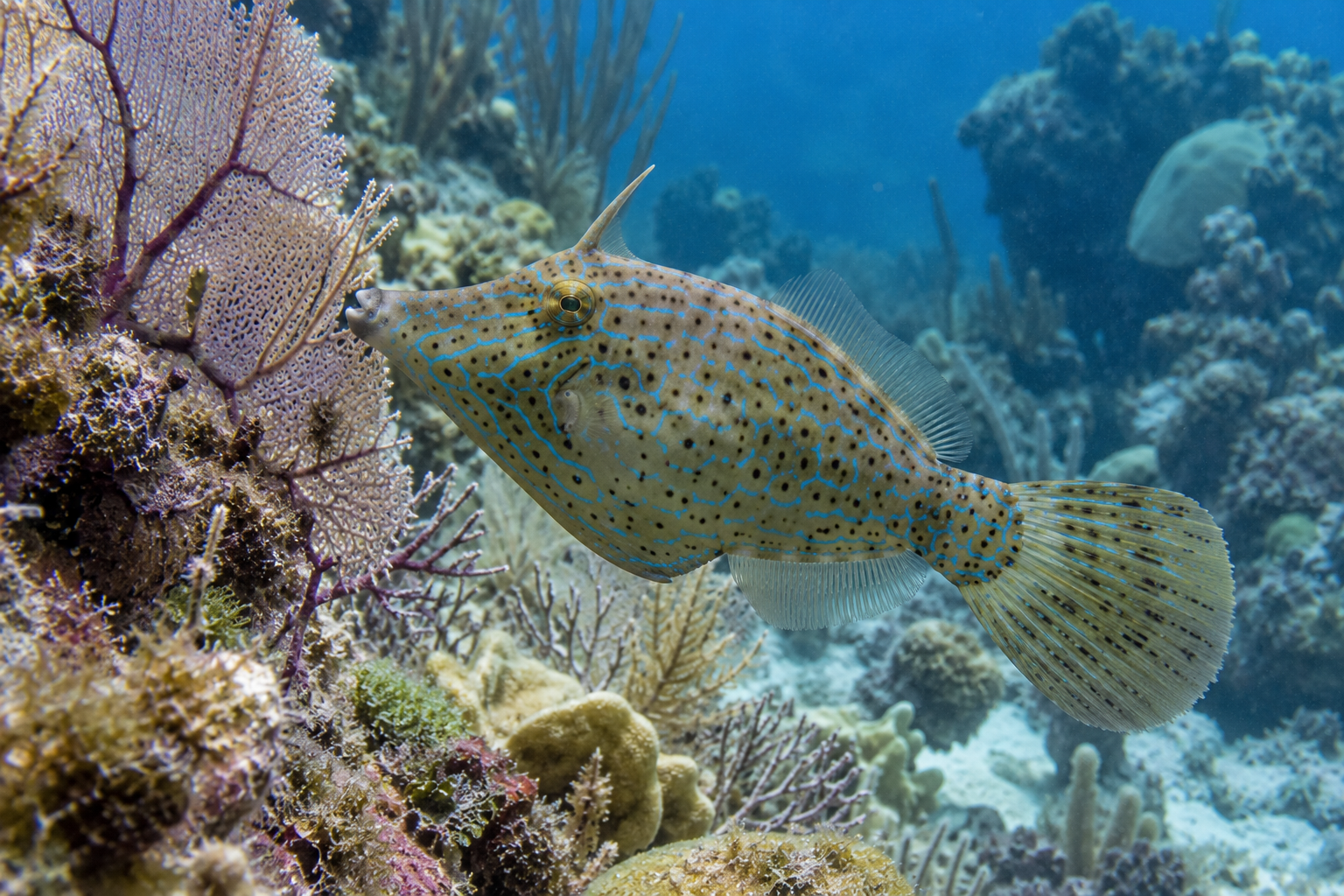
The Scrawled Filefish (Aluterus scriptus) is a large, unusual saltwater fish known for its long, flattened body, tube-shaped snout, and maze-like blue markings across a gray, olive, or tan background. It is sometimes called the Scribbled Filefish because its body appears covered in hand-drawn lines. Juveniles can look very different from adults and may drift among floating debris or seaweed, using their shape and coloration to camouflage themselves.
This species can become an impressive centerpiece in a large fish-only aquarium, but it is not a casual addition for the average home reef tank. Scrawled Filefish grow much larger than most commonly sold filefish, require substantial swimming room, and can be unpredictable around corals and invertebrates. They are best suited for experienced aquarists with a large, mature system and a plan for their full adult size.
No, the Scrawled Filefish is not considered reef safe. It may nip at soft corals, large-polyp stony corals, gorgonians, colonial anemones, sponges, tunicates, and other sessile invertebrates. It can also eat or injure ornamental shrimp, crabs, snails, clams, and other smaller invertebrates.
While some individuals may appear well-behaved at first, their natural feeding habits make them too risky for coral-heavy reef aquariums. A fish-only-with-live-rock setup is usually the better choice. In a large fish-only tank, the Scrawled Filefish can explore rockwork and graze naturally without putting expensive corals or cleanup crew animals at risk.
Scrawled Filefish are omnivores with broad natural feeding habits. In the wild, they may graze on algae, seagrass, sponges, tunicates, hydroids, soft-bodied invertebrates, corals, and small crustaceans. In captivity, they need a varied diet that includes marine algae sheets, spirulina-based foods, frozen herbivore blends, mysis shrimp, chopped clam, squid, shrimp, scallop, and high-quality omnivore pellets. Feeding two smaller meals daily is usually better than offering one oversized meal, especially as the fish grows. Their large appetite and messy feeding style can create substantial waste, so strong filtration, regular water changes, and careful portion control are important for maintaining water quality.
A Scrawled Filefish can grow to more than 3 feet long in the wild. Although many aquarium specimens remain smaller, this is still a large fish that needs significant open water and room to move around rockwork comfortably.
A tank of at least 300 gallons is a more realistic starting point for long-term care. Larger systems are preferable because this fish needs swimming space, substantial filtration, and enough room to coexist with similarly sized tank mates.
Keeping multiple Scrawled Filefish together is generally not recommended for most home aquariums. Their size, feeding demands, and potential territorial behavior make a single specimen the safer choice.
A pair may be possible only in an exceptionally large aquarium with extensive swimming space, multiple feeding areas, and carefully monitored introductions. For most aquarists, one Scrawled Filefish is more manageable and reduces the likelihood of competition or stress.
The exact lifespan of Scrawled Filefish in home aquariums can vary widely because they are not commonly kept long-term compared with smaller reef fish. With stable water conditions, proper nutrition, and an appropriately large environment, they can live for many years.
Their long-term success depends on planning for adult size. A fish that outgrows its aquarium may experience stress, poor body condition, and declining water quality. Providing the correct tank size from the beginning is one of the most important parts of responsible care.
Scrawled Filefish are generally considered semi-aggressive. They are not usually known for relentlessly chasing large tank mates, but they can defend themselves and may become more assertive around food. Their biggest concern is not aggression toward large fish but their tendency to nip or feed on corals and invertebrates.
They do best with robust fish that are not easily intimidated and with an aquarium that provides enough food and space for everyone. Underfeeding can make their behavior less predictable, especially around smaller invertebrates.
Scrawled Filefish are less commonly available than smaller filefish species, and their price can vary significantly depending on size, condition, rarity, shipping distance, and retailer. Smaller juveniles may be listed for a few hundred dollars, while larger specimens or fish that have been conditioned to eat prepared foods can cost much more.
The initial purchase price is only part of the commitment. A Scrawled Filefish needs a large aquarium, powerful filtration, substantial food, and tank mates that can safely coexist with a fish that may eventually exceed 2 feet in length. Before purchasing one, make sure you have the space and long-term budget needed for a large marine predator-style system.
Scrawled Filefish should be kept with larger, durable fish that are not likely to attack them or fit inside their mouth. They are often more defensive than openly aggressive, but they can become stressed if housed with highly territorial predators or fish that constantly compete for food.
Potential tank mates include:
Avoid ornamental shrimp, crabs, snails, clams, delicate corals, and small passive fish. Tiny gobies, dartfish, juvenile clownfish, and other narrow-bodied fish may be stressed or eventually viewed as food. Very aggressive triggerfish and large predatory groupers are also poor tank mates because they may harass or injure the filefish.
Scrawled Filefish are not available as consistently as many smaller saltwater fish, so availability may vary. Look for a fish that is alert, eating prepared foods, and showing no signs of damaged skin, cloudy eyes, or labored breathing.
The Scrawled Filefish can be a memorable addition to a very large saltwater aquarium, but it requires serious planning. Its adult size, feeding habits, and lack of reef compatibility make it best for experienced aquarists with a spacious fish-only system and a long-term care plan.