Glossary:
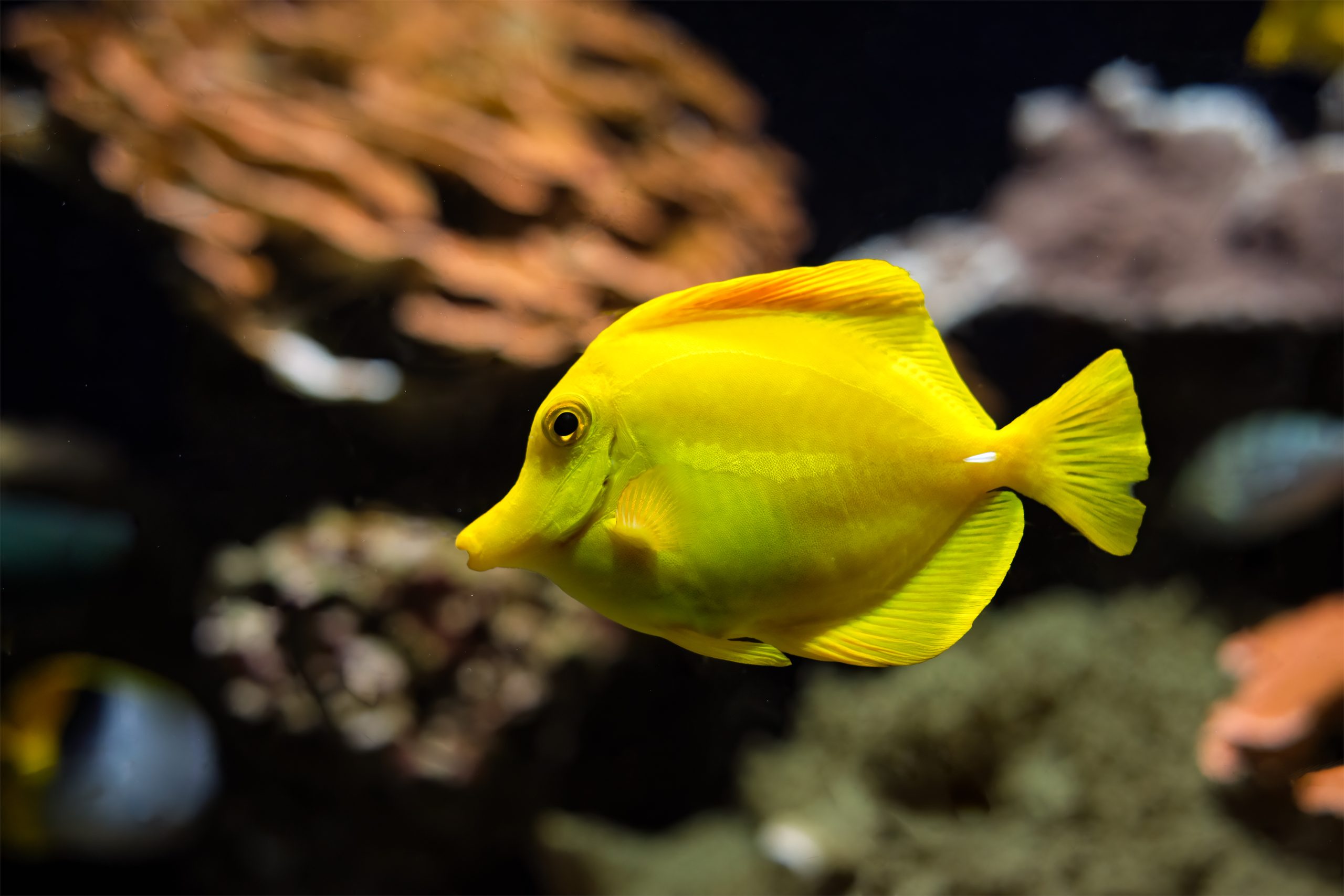
The Yellow Tang (Zebrasoma flavescens) is one of the most recognizable fish in the saltwater aquarium hobby. Its solid, bright yellow body, disc-shaped profile, and constant grazing behavior make it a standout choice for large reef and fish-only aquariums. Native to the Pacific Ocean, including the Hawaiian Islands, Yellow Tangs are active daytime swimmers that spend much of their time searching rockwork for algae.
This species is often considered a strong choice for an established marine aquarium because it is hardy once acclimated, generally reef compatible, and easy to feed when given a proper algae-based diet. However, Yellow Tangs are not small community fish. They need open swimming space, mature live rock, stable water quality, and thoughtful tank mate selection. Their territorial side can also become more noticeable as they mature.
Yellow Tangs are generally considered reef safe. They do not normally eat coral tissue, both clam mantles, or prey on ornamental shrimp, snails, or crabs. Their primary interest is grazing on algae and biofilm growing across live rock, aquarium glass, and other hard surfaces.
In a well-established reef tank, a Yellow Tang can help manage some nuisance algae while adding constant movement to the aquarium. The main concern is its activity level rather than direct coral damage. This fish may accidentally bump loose frags or unstable rockwork while swimming, so corals should be securely mounted and the tank should include open areas for cruising.
Yellow Tangs are primarily herbivores and should receive marine algae every day. Their regular diet should include dried seaweed such as nori, spirulina-based flakes or pellets, algae sheets, frozen herbivore blends, and naturally occurring algae on mature live rock. Offering nori on a feeding clip lets the fish graze throughout the day, which better reflects its natural behavior. Small amounts of mysis shrimp, enriched brine shrimp, copepods, and quality omnivore foods can be included occasionally for variety, but algae-based foods should remain the foundation of the diet. Feeding several smaller portions throughout the day can support digestion, coloration, immune health, and long-term body condition.
Yellow Tangs can reach around 7 to 8 inches long as adults. Their tall body shape and constant movement mean they need more room than their juvenile size may suggest.
A 75-gallon aquarium is generally a practical minimum for one Yellow Tang, but a 100-gallon or larger system is a better long-term choice. A longer tank provides more room for natural swimming behavior and reduces stress as the fish matures.
Keeping multiple Yellow Tangs together can be challenging. In a standard home aquarium, two adults may compete for the same grazing areas and become aggressive toward one another.
Groups can sometimes work in very large aquariums when several similarly sized Yellow Tangs are introduced at the same time. However, this requires extensive swimming room, multiple algae feeding stations, and close observation. For most aquarists, one Yellow Tang is the simplest and most reliable setup.
With stable water quality, a proper algae-rich diet, enough swimming space, and disease prevention, Yellow Tangs can often live 10 to 20 years in captivity. Their lifespan depends heavily on long-term tank stability and consistent nutrition.
Stress, poor water conditions, inadequate food, and repeated aggression from tank mates can shorten their lifespan. Quarantine and careful acclimation are also important because Yellow Tangs can be vulnerable to marine ich and other stress-related illnesses.
Yellow Tangs are generally peaceful toward unrelated fish, but they can be territorial toward other tangs and similar algae-eating species. Their aggression is often most noticeable in tanks that are too small or where multiple fish are competing for the same food and swimming space.
Their behavior is easier to manage in a large aquarium with open swimming lanes, stable rockwork, and regular access to marine algae. Introducing the Yellow Tang after more peaceful fish have already settled into the aquarium may also help prevent it from claiming the entire tank as territory.
Yellow Tang pricing can vary substantially based on size, origin, availability, retailer, shipping requirements, and whether the fish is captive bred or quarantined before sale. Captive-bred specimens may cost more than standard wild-collected fish, but they can be especially appealing for aquarists looking for a more sustainable option.
When choosing a Yellow Tang, prioritize health over the lowest listed price. Look for a fish that is actively swimming, grazing on surfaces, eating prepared foods, and maintaining a full body shape. Avoid fish with faded color, visible white spots, a pinched stomach, damaged fins, cloudy eyes, or heavy breathing.
Yellow Tangs are available through specialty marine livestock retailers and local saltwater aquarium stores. Before purchasing one, make sure your aquarium is mature, large enough for an adult tang, and stocked with a reliable supply of algae-based foods.
The Yellow Tang remains a favorite among aquarists who want a colorful, active fish that thrives in a large reef or fish-only aquarium. With ample swimming space, stable water conditions, daily algae-based feeding, and compatible tank mates, it can become a healthy and long-lived part of a saltwater system.