Glossary:
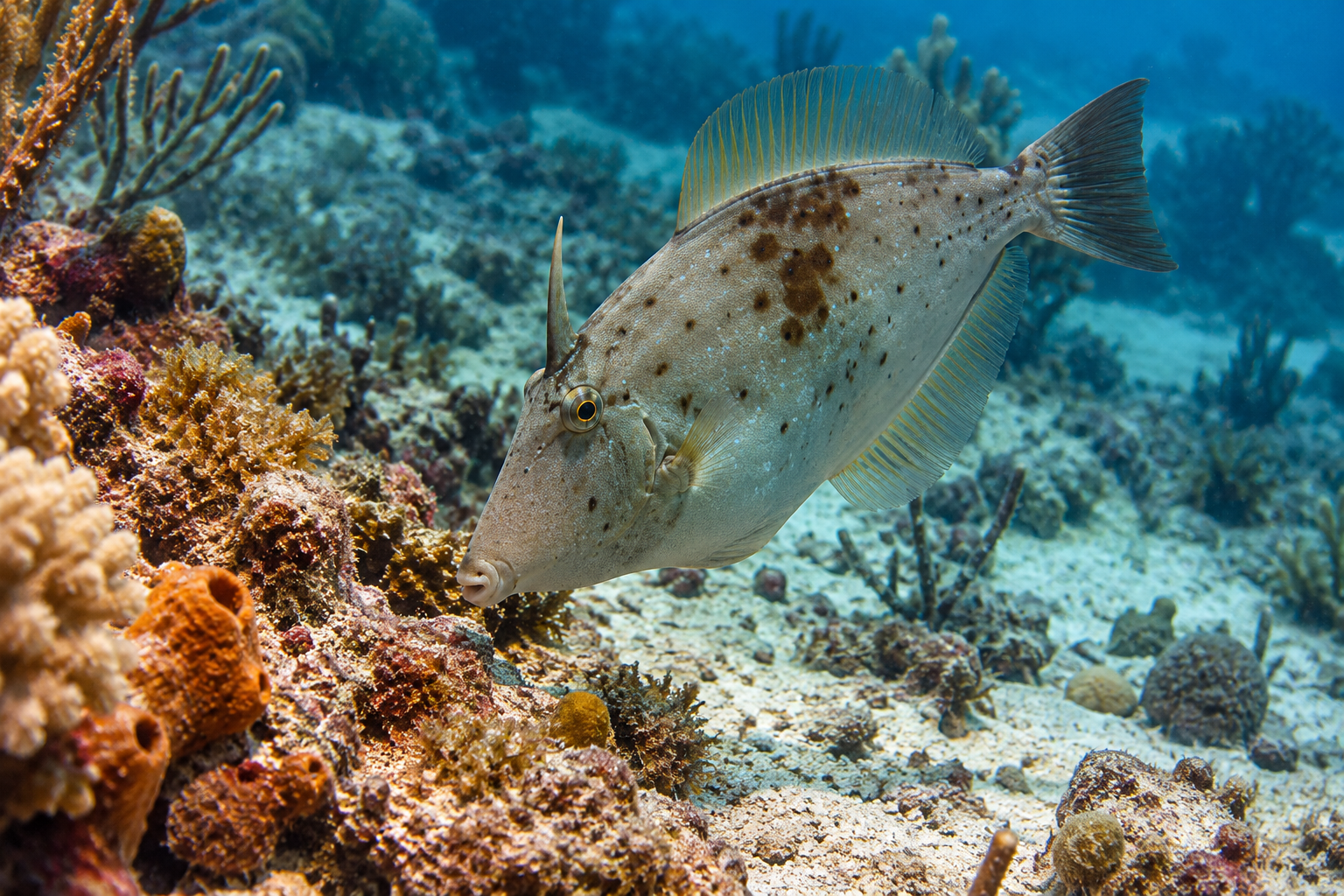
The Unicorn Filefish (Aluterus monoceros) is a large, uncommon saltwater species with a tall, flattened profile, a narrow snout, and a small horn-like projection near the forehead that gives the fish its name. Its coloration is typically muted rather than flashy, ranging from pale gray and blue-gray to olive or tan, often with subtle mottling that helps it blend into open reef environments.
This is not a typical home aquarium filefish. Unicorn Filefish can grow into very large, active adults and need an aquarium sized accordingly, with feeding needs and long-term behavior in mind. While juveniles may look manageable at first, they eventually require expansive open water, strong filtration, and carefully selected tank mates. They are best suited for experienced aquarists maintaining very large fish-only marine systems.
No, Unicorn Filefish are not considered reef safe. They may nip at soft corals, large-polyp stony corals, gorgonians, sponges, tunicates, clam mantles, and other sessile invertebrates. Their natural feeding behavior involves picking at a wide range of living material, making them an unpredictable choice for a reef aquarium.
They may also eat or injure ornamental shrimp, crabs, snails, clams, and other smaller invertebrates. Even when an individual appears harmless at first, that behavior can change as it matures and begins exploring more of the aquarium. A fish-only-with-live-rock setup is generally the safest environment for this species.
Unicorn Filefish are omnivores with broad feeding habits. In the wild, they may consume algae, sponges, tunicates, soft invertebrates, and small crustaceans. In captivity, they should receive a varied diet that includes marine algae sheets, spirulina-based pellets or flakes, frozen herbivore blends, mysis shrimp, chopped clam, squid, shrimp, scallop, and quality omnivore pellets. Feed smaller portions once or twice daily instead of offering one oversized meal. Their large appetite and messy feeding style can produce significant waste, so strong filtration and regular water changes are important for maintaining stable water quality.
Unicorn Filefish can reach approximately 30 inches in length. Their bodies are long and compressed, but they still require a great deal of open water to swim, turn, and move comfortably around rockwork.
A 300-gallon aquarium is a realistic minimum for a smaller individual, but a much larger system is a better long-term choice for an adult. An aquarium with an eight-foot footprint or more gives this species a more suitable swimming lane and helps reduce stress as it matures.
Keeping multiple Unicorn Filefish together is not recommended for most home aquariums. Their large size, heavy feeding requirements, and possible territorial behavior can make competition difficult to manage.
A pair may only be practical in an exceptionally large public-style system with ample swimming room, multiple feeding areas, and constant monitoring. For most aquarists, one Unicorn Filefish is the safest and most responsible long-term arrangement.
The exact captive lifespan of Unicorn Filefish is not as well-documented as that of more common aquarium fish. With an appropriately sized system, stable water conditions, a varied diet, and limited stress, they can live for many years.
Their lifespan is closely tied to whether their adult needs are met. A fish that outgrows its aquarium may experience chronic stress, reduced immunity, poor water quality, and feeding-related problems. Planning for full size before purchase is essential.
Unicorn Filefish are generally considered semi-aggressive. They may coexist peacefully with unrelated large fish, but they can become territorial around food or toward similarly shaped filefish. Their biggest compatibility issue is often their tendency to nip at corals and invertebrates rather than to engage in outright aggression toward larger fish.
A spacious tank, a regular feeding schedule, and tank mates with different body shapes and feeding patterns can help keep their behavior more predictable.
Unicorn Filefish are not always available, so inventory may change from one supplier to another. Look for a healthy fish that is alert, eating prepared foods, and free of damaged fins, skin lesions, cloudy eyes, or labored breathing.
The Unicorn Filefish can be a fascinating centerpiece in the right fish-only aquarium, but it requires major space, consistent care, and a realistic plan for its adult size. For experienced aquarists who can provide a large, stable system, this unusual filefish can become a memorable long-term resident.
Unicorn Filefish are less common in the aquarium trade than smaller filefish, and prices can vary widely based on size, availability, collection location, and shipping requirements. Smaller specimens may be offered in the $150 to $300 range, while larger or conditioned fish may cost more.
The purchase price is only one part of the commitment. A full-grown Unicorn Filefish needs an exceptionally large aquarium, substantial filtration, frequent maintenance, and a steady supply of varied foods. Before purchasing one, make sure you have room for the adult fish rather than planning around the size of the juvenile you see at the store.
Unicorn Filefish need tank mates that are large, resilient, and unlikely to harass them or compete too aggressively for food. They are usually more defensive than openly combative, but their size and feeding habits mean they should not be paired with fragile livestock.
Potential tank mates include:
Avoid small fish, delicate reef species, ornamental shrimp, crabs, snails, clams, and corals. Highly aggressive triggerfish, very large groupers, lionfish, and predatory puffers may also be poor choices because they can harass or injure the filefish.
Unicorn Filefish are not always available, so inventory may change from one supplier to another. Look for a healthy fish that is alert, eating prepared foods, and free of damaged fins, skin lesions, cloudy eyes, or labored breathing.
The Unicorn Filefish can be a fascinating centerpiece in the right fish-only aquarium, but it requires major space, consistent care, and a realistic plan for its adult size. For experienced aquarists who can provide a large, stable system, this unusual filefish can become a memorable long-term resident.