Glossary:
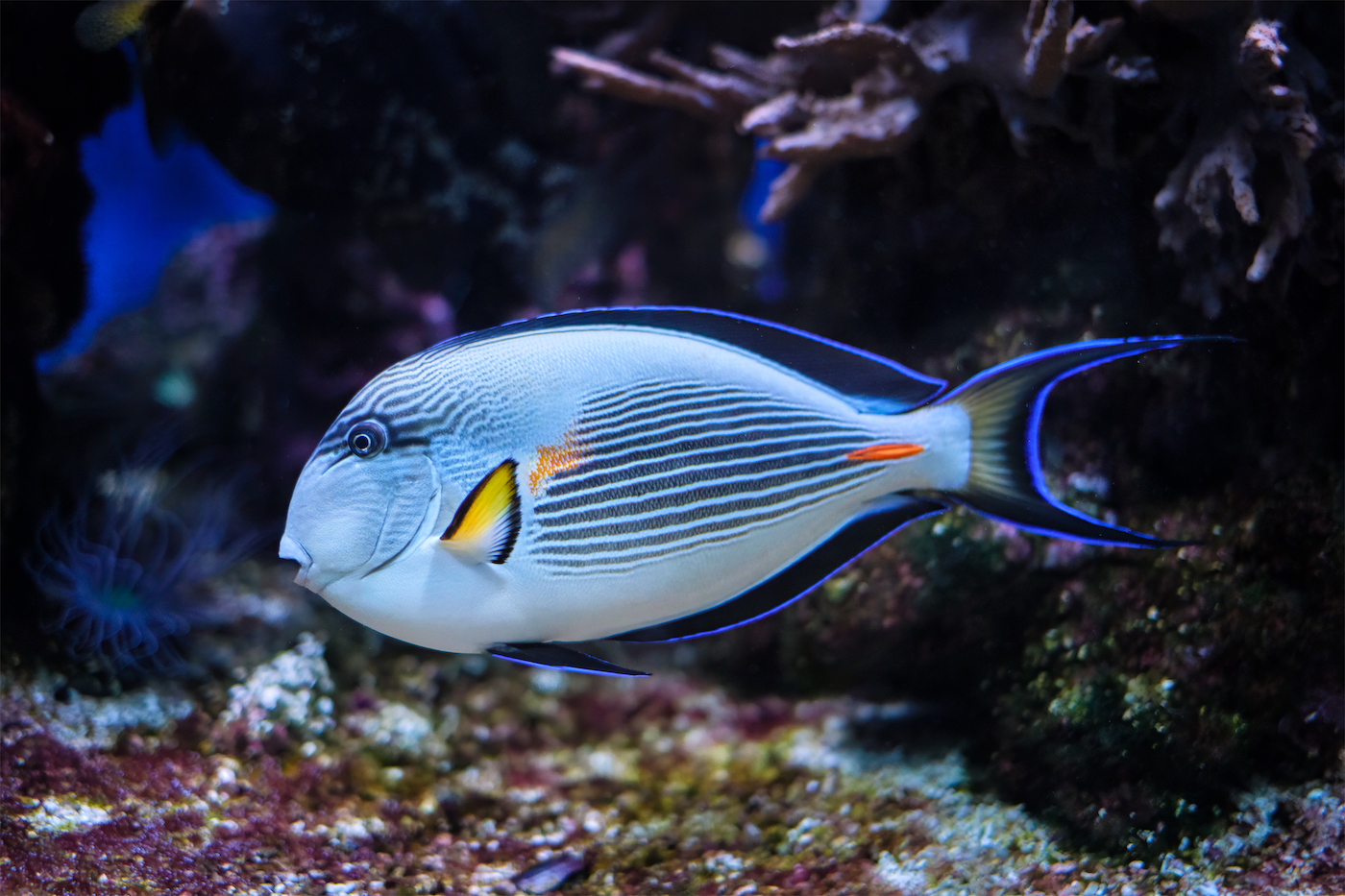
The Sohal Tang (Acanthurus sohal) is one of the most striking and demanding surgeonfish in the saltwater aquarium hobby. Native to the Red Sea and Gulf of Aden, this species is known for its bold black-and-white horizontal striping, blue facial markings, and bright blue accents along the fins. Its appearance is unmistakable, but its personality can be just as noticeable.
Sohal Tangs are large, highly active fish that need a great deal of space, strong filtration, and carefully planned tank mates. They are not recommended for typical community reef aquariums because they become increasingly territorial as they mature. A healthy adult Sohal Tang can dominate a large aquarium, especially when other tangs or algae-grazing fish are present. This species is best for experienced aquarists with a very large fish-only or carefully managed reef system.
Sohal Tangs are generally reef safe in terms of coral and invertebrate behavior. They do not normally eat coral tissue, nip at clam mantles, or hunt ornamental shrimp and crabs. Their diet is primarily centered on algae, biofilm, and plant material growing on rocks and aquarium surfaces.
The concern in a reef aquarium is their size and aggression rather than direct coral damage. A large Sohal Tang can swim forcefully through the tank, knock over unsecured coral frags, and claim a large section of the aquarium as its territory. Reef tanks housing this species should have firmly mounted corals, wide open swimming lanes, and enough space to keep the Sohal Tang from constantly confronting other fish.
Sohal Tangs are primarily herbivorous and should be fed marine algae daily. Their regular diet should include dried seaweed such as nori, spirulina-based pellets or flakes, algae sheets, frozen herbivore blends, and naturally occurring algae growing on mature live rock. Seaweed placed on a feeding clip allows the fish to graze throughout the day, which better matches its natural feeding behavior. Small amounts of mysis shrimp, enriched brine shrimp, copepods, and high-quality omnivore foods can be included occasionally for variety, but algae-based foods should remain the main part of the diet. Multiple small feedings each day can support digestion, color, immune health, and long-term body condition.
Sohal Tangs can reach around 16 inches long as adults. They are powerful swimmers with a long, active body shape that needs a substantial amount of open water.
A 300-gallon aquarium is a practical minimum for long-term care, although a larger tank is strongly preferred. An aquarium with an eight-foot footprint provides more suitable swimming room and gives other tank mates more opportunity to avoid the Sohal Tang’s territory.
Keeping multiple Sohal Tangs together is not recommended in home aquariums. They are highly territorial toward members of their own species, and aggression can become severe as the fish mature.
Even a very large aquarium may not prevent fighting between two adults. For the safest long-term setup, keep one Sohal Tang as the only member of its species and avoid adding other surgeonfish with a similar appearance or feeding style.
With stable water quality, an algae-rich diet, disease prevention, and enough swimming space, Sohal Tangs can live well over a decade in captivity. Some healthy individuals may live 15 to 20 years or longer when maintained in exceptional conditions.
Their lifespan depends heavily on avoiding chronic stress. Cramped tanks, poor nutrition, repeated aggression, and unstable water conditions can reduce long-term health. Quarantine and careful acclimation are also important because surgeonfish can be vulnerable to marine ich and other stress-related illnesses.
Yes, Sohal Tangs are highly aggressive compared with many other tang species. They may tolerate unrelated fish in a large aquarium, but they are often hostile toward other tangs, rabbitfish, algae grazers, and fish that enter their preferred territory.
Their aggression usually increases as they mature. A spacious aquarium, reliable algae feedings, and a carefully planned stocking list can help reduce conflict, but this species should always be treated as a dominant fish rather than a peaceful community tang.
Sohal Tangs are often more expensive than many common surgeonfish because of their Red Sea origin, limited availability, and shipping requirements. Prices commonly range from around $250 to $500 or more, depending on the size of the fish, condition, retailer, shipping costs, and whether the tang has already been quarantined or conditioned.
The purchase price should be considered only one part of the investment. A Sohal Tang requires a very large aquarium, strong filtration, substantial algae-based food, and careful stocking decisions. A healthy fish should be actively swimming, grazing, eating prepared foods, and maintaining a full body shape. Avoid fish with visible spots, torn fins, cloudy eyes, labored breathing, faded color, or a pinched stomach.
Sohal Tangs should only be housed with large, durable fish that can tolerate an assertive tank mate. Even in a spacious aquarium, this species may chase or attack fish that resemble tangs, graze on algae, or enter its preferred swimming areas. There are no guaranteed tankmates for a mature Sohal Tang, so every introduction should be closely monitored.
Potential tank mates in very large fish-only systems include:
Avoid keeping Sohal Tangs with other tangs, rabbitfish, similarly shaped algae grazers, timid community fish, small gobies, firefish, or delicate reef fish. Other surgeonfish are especially risky because the Sohal Tang may view them as direct competition for territory and food.
Sohal Tangs are available from specialty saltwater livestock retailers and some local aquarium stores. Before purchasing one, make sure your aquarium is large enough for its adult size and that you are prepared for its territorial behavior.
The Sohal Tang is a remarkable saltwater fish for advanced aquarists with the space and experience to meet its needs. Its bold pattern, strong personality, and active grazing behavior can make it a centerpiece in a very large aquarium, but success depends on realistic planning for its adult size, diet, and aggressive nature.