
Glossary:
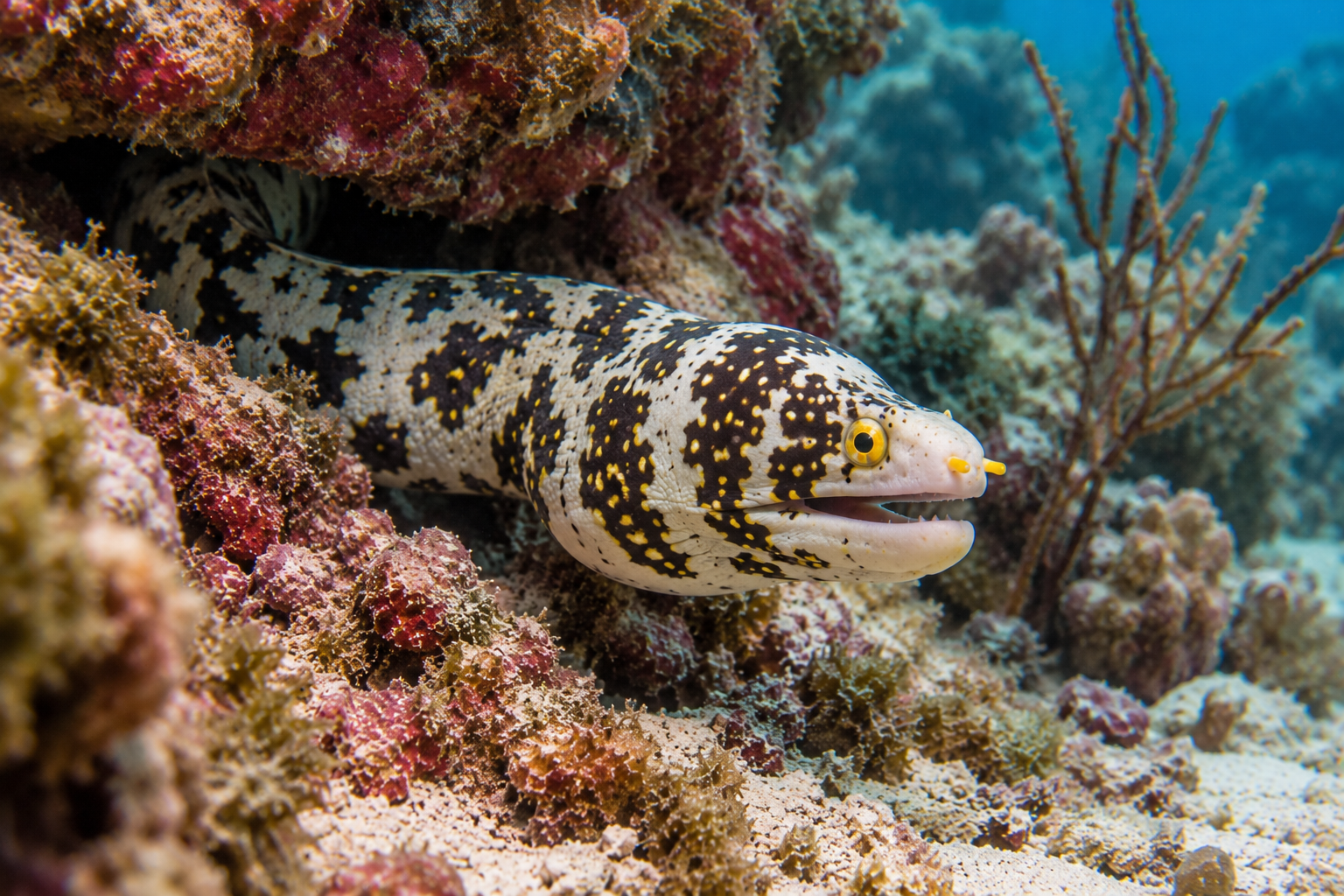
The Snowflake Eel (Echidna nebulosa) is one of the most popular moray eels for home saltwater aquariums. Also called the Clouded Moray Eel or Starry Moray Eel, this species is recognized by its pale body covered in dark, branching markings with yellow accents around the face. Its unusual pattern and curious behavior can make it a memorable centerpiece in a large fish-only aquarium.
Compared with many moray eels, the Snowflake Eel is usually more manageable in captivity. It is not as large or predatory as species such as the Green Moray Eel, and its rounded teeth are designed primarily for crushing crustaceans rather than catching fish. Still, this eel requires a large, secure tank, consistent feeding, and carefully selected tank mates. A Snowflake Eel is not a beginner fish simply because it is smaller than other morays.
Snowflake Eels are reef-safe, but use caution. They usually leave corals alone and are not known for nipping coral tissue or damaging reef structures. However, they are not safe with many common reef invertebrates. Shrimp, crabs, snails, clams, and other mollusks or crustaceans can eventually become food for a hungry Snowflake Eel.
A fish-only-with-live-rock aquarium is often the most dependable setup for this species. In a reef tank, an eel may coexist with corals, sea urchins, and some larger non-crustacean invertebrates, but there is always a risk to cleanup crews and ornamental shrimp. Secure all rockwork directly on the tank bottom before adding sand, as a Snowflake Eel may dig beneath rocks or push against structures while exploring.
Snowflake Eels are carnivorous and require a varied diet of marine-based, meaty foods. Their natural diet includes crustaceans, mollusks, and other hard-shelled prey, so suitable aquarium foods include chunks of shrimp, squid, clams, mussels, scallops, krill, and occasional pieces of marine fish. Feed an adult Snowflake Eel two or three times per week rather than offering food every day. Overfeeding can lead to poor water quality and obesity, while underfeeding may make the eel more likely to hunt tank mates. Use feeding tongs or a feeding stick instead of your hands, as Snowflake Eels can bite quickly when they smell food and may mistake fingers for a meal.
Snowflake Eels commonly reach around 24 to 30 inches in captivity. In the wild, they can grow longer, with some individuals approaching 39 inches. Their body may look narrow at first, but an adult eel needs room to turn, explore rockwork, and retreat into caves.
A 75-gallon tank is generally considered the minimum for a smaller Snowflake Eel, but a 125-gallon aquarium or larger is a better long-term choice for a full-grown adult. The tank should include sturdy caves, large PVC sections, or secure rock tunnels where the eel can rest during the day.
It is sometimes possible to keep more than one Snowflake Eel in a very large aquarium, especially when both eels are similar in size and introduced at the same time. However, this setup requires substantial space, multiple hiding areas, and close observation.
For most home aquariums, keeping one Snowflake Eel is the safer option. Two eels may compete for caves, food, or territory, particularly if the tank is too small. Never add a much smaller eel to an aquarium with an established larger eel.
With stable water quality, a suitable diet, and an appropriately sized aquarium, Snowflake Eels can often live 10 to 15 years in captivity. Some may live longer with exceptional long-term care.
Their lifespan depends heavily on safe housing. Escapes, poor water quality, improper diet, and injuries from incompatible tank mates are common preventable problems. A secure lid and reliable filtration are essential for helping a Snowflake Eel live a full lifespan.
Snowflake Eels are generally considered less aggressive than many other moray eels. They usually spend much of the day tucked away in caves and are not known to actively hunt large fish. However, they are still predatory animals and will eat shrimp, crabs, clams, snails, and small fish when given the opportunity.
Most aggression occurs during feeding or when the eel is hungry. Feed it consistently with tongs, avoid hand-feeding, and choose tank mates that are too large to be viewed as prey. This helps keep the eel’s behavior more predictable in a community fish-only aquarium.
Snowflake Eels are usually moderately priced compared with other marine eels. Smaller specimens may commonly cost $80 to $150, while larger, well-conditioned fish can be more expensive. Price varies based on size, retailer, shipping distance, and whether the eel has already been quarantined or trained to accept prepared foods.
When choosing a Snowflake Eel, focus on condition rather than size alone. A healthy eel should have clear eyes, intact skin, steady breathing, and a strong feeding response. Avoid an eel that appears excessively thin, has visible injuries around the mouth, or seems weak after shipping.
The best tank mates for a Snowflake Eel are sturdy marine fish that are too large to fit in the eel’s mouth and confident enough to coexist with an active predator. The eel is usually most peaceful when it is well fed, but fish that are small enough to be swallowed should never be considered safe long-term.
Potential tank mates include:
Avoid keeping Snowflake Eels with ornamental shrimp, crabs, snails, clams, scallops, or small fish. Tiny gobies, dartfish, juvenile clownfish, and other narrow-bodied fish may eventually be eaten. Tank mates should be introduced thoughtfully, and the aquarium must have enough space for every fish to establish its own area.
Snowflake Eels are commonly available through marine livestock retailers and local saltwater aquarium stores. Before purchasing one, make sure the aquarium has a fully secure lid, strong filtration, and no small invertebrates or fish that could become prey.
The Snowflake Eel can be a rewarding addition to a large saltwater aquarium when its natural behavior is respected. It is best suited for a secure fish-only system with sturdy tank mates, a meaty diet, and plenty of protected hiding spaces. With thoughtful care, this distinctive moray can remain a long-term centerpiece for many years.