Glossary:
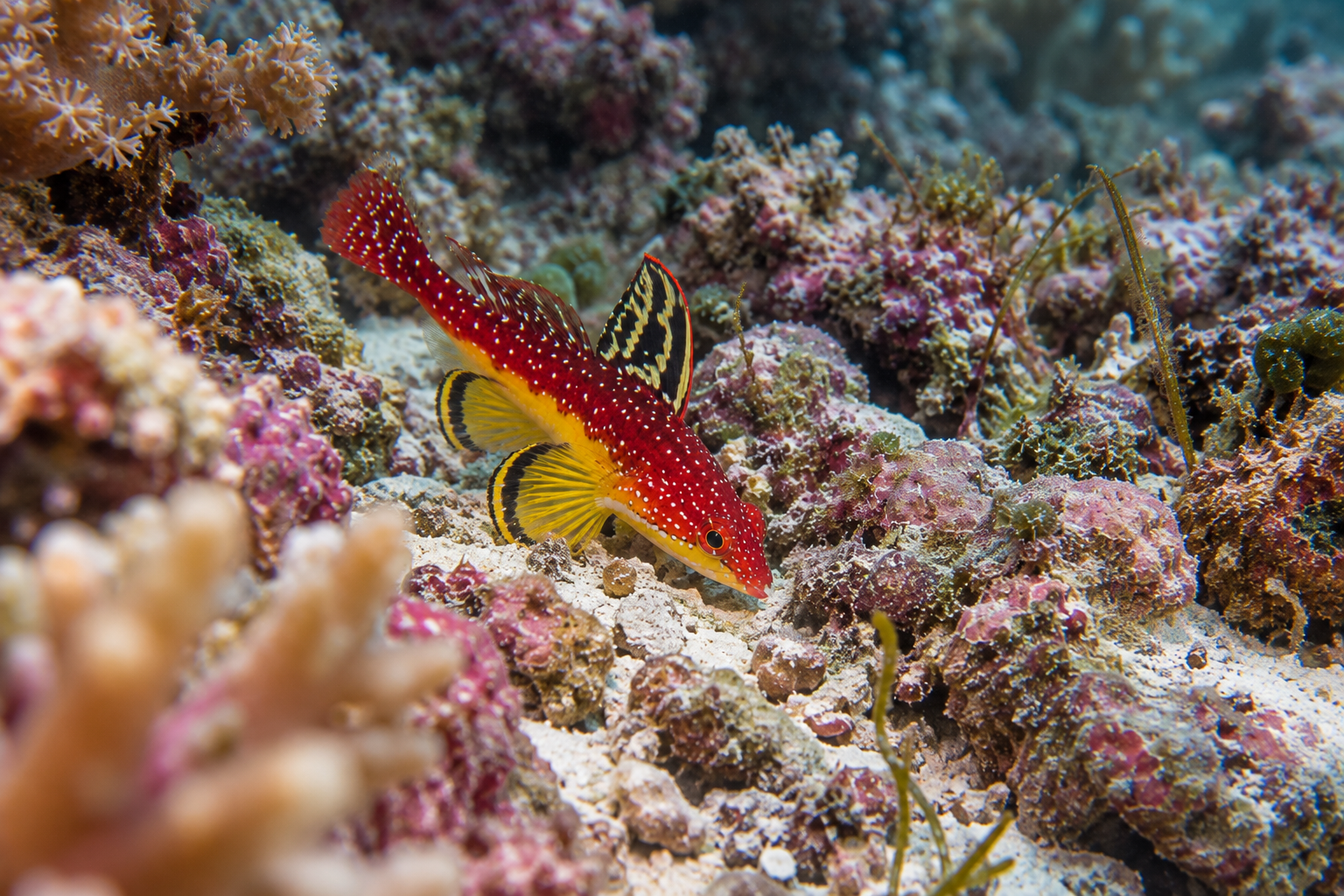
The Ruby Red Dragonet (Synchiropus sycorax) is a small but intensely colored saltwater fish that stands out because of its deep red body, lighter facial markings, and yellow accents around the fins. Also called the Ruby Dragonet, this species is found in the tropical western Pacific, including the Sulu Archipelago region of the Philippines. Its compact size and peaceful behavior can make it tempting for smaller reef tanks, but its feeding needs require more planning than many aquarists expect.
Like other dragonets, the Ruby Red Dragonet spends much of the day picking through live rock and sand in search of tiny prey. It is not a fish that thrives simply because a tank is cycled. It needs a mature aquarium with a dependable supply of copepods, amphipods, and other small organisms. When its diet is handled correctly, this colorful fish can become a calm and fascinating addition to a peaceful reef system.
Ruby Red Dragonets are considered reef safe. They do not typically nip at corals, damage clam mantles, or chase ornamental fish around the aquarium. Their slow, deliberate movement and small mouth make them far more interested in tiny organisms living on rockwork and sand than in larger tank inhabitants.
They can coexist with many reef invertebrates, but very small crustaceans may be eaten if encountered. The greater concern is protecting the dragonet from potential predators. Large anemones, aggressive corals, predatory fish, and territorial tank mates can create problems because Ruby Red Dragonets may not recognize danger quickly enough to escape.
Ruby Red Dragonets are carnivores that naturally graze on copepods, amphipods, small worms, and other microfauna throughout the day. A mature aquarium with established live rock and a productive sand bed is the best foundation for their diet. Many newly imported fish will not immediately recognize frozen foods, flakes, or pellets as food, which is why they can slowly starve in tanks that seem healthy at first glance. Some specimens can be trained to eat enriched brine shrimp, small mysis shrimp, chopped seafood, or prepared dragonet foods, but these should be viewed as supplements rather than a replacement for live grazing. Watch the fish’s body shape closely. A healthy Ruby Red Dragonet should have a rounded body and no sunken area behind the head.
Ruby Red Dragonets usually grow to around 2 to 2.5 inches long. Their small adult size does not make them ideal for a newly established nano tank. Their feeding requirements make a mature aquarium more important than simply meeting a minimum gallon recommendation.
A 30-gallon aquarium can work for one Ruby Red Dragonet when it has substantial live rock and a healthy pod population. A larger, well-established system provides more natural food and gives the fish a better chance of maintaining weight over the long term.
A male and a female Ruby Red Dragonet may be kept together in a large, mature aquarium with a strong, dependable pod population. The tank must be able to support twice the feeding demand, since both fish will spend the day searching for the same tiny prey.
Keeping two males together is not recommended. Males may become territorial toward one another, particularly in smaller tanks with limited rockwork and feeding areas. For most aquarists, one Ruby Red Dragonet is the simplest and safest long-term choice.
With excellent nutrition, stable water conditions, and low stress, Ruby Red Dragonets can often live around 4 to 6 years in captivity. Their lifespan is frequently shortened by inadequate feeding rather than disease or aggression.
A fish that appears active may not be receiving enough food. Regularly check for a pinched stomach, weight loss, or reduced interest in hunting. Maintaining a steady pod population is the most important factor in helping this species reach its full lifespan.
Ruby Red Dragonets are generally peaceful toward corals, invertebrates, and unrelated community fish. They do not usually chase tank mates or defend large territories in the way damsels, clownfish, and dottybacks may.
They can show territorial behavior toward other dragonets, especially another male of the same species. Outside of these situations, they are more likely to be outcompeted for food than to become a problem for other fish.
Ruby Red Dragonets are usually more expensive than standard Mandarin Dragonets because they are less common in the aquarium trade. Prices often range from approximately $60 to $130, depending on size, availability, retailer, and shipping conditions. Fish that have been conditioned to accept prepared foods may command a higher price because they are often easier to acclimate.
Before purchasing one, make sure your tank can support it long term. The initial cost of the fish is only one part of the investment. A mature aquarium, pod cultures, refugium space, or routine live-food additions may be necessary to keep a Ruby Red Dragonet from becoming thin over time.
Ruby Red Dragonets do best with peaceful fish that will not harass them or compete heavily for the same pod population. Because they are slow feeders, tank mates should not overwhelm them during feeding or constantly hunt the same areas of rockwork.
Suitable tank mates include:
Avoid aggressive dottybacks, six-line wrasses, large wrasses, lionfish, groupers, triggerfish, eels, and other predatory fish. It is also best to avoid keeping Ruby Red Dragonets with several other pod-dependent fish unless the aquarium is large enough to maintain an abundant natural food supply.
Ruby Red Dragonets are sometimes available through specialty marine livestock retailers and local saltwater aquarium stores. Select a fish with clear eyes, intact fins, a full body shape, and visible interest in grazing or feeding.
Where to buy Ruby Red Dragonet:
The Ruby Red Dragonet is a beautiful reef-safe fish for aquarists prepared to meet its specialized dietary needs. A mature aquarium with live rock, consistent microfauna production, peaceful tank mates, and close monitoring can turn this small dragonet into one of the most rewarding fish in a saltwater reef tank.