Glossary:
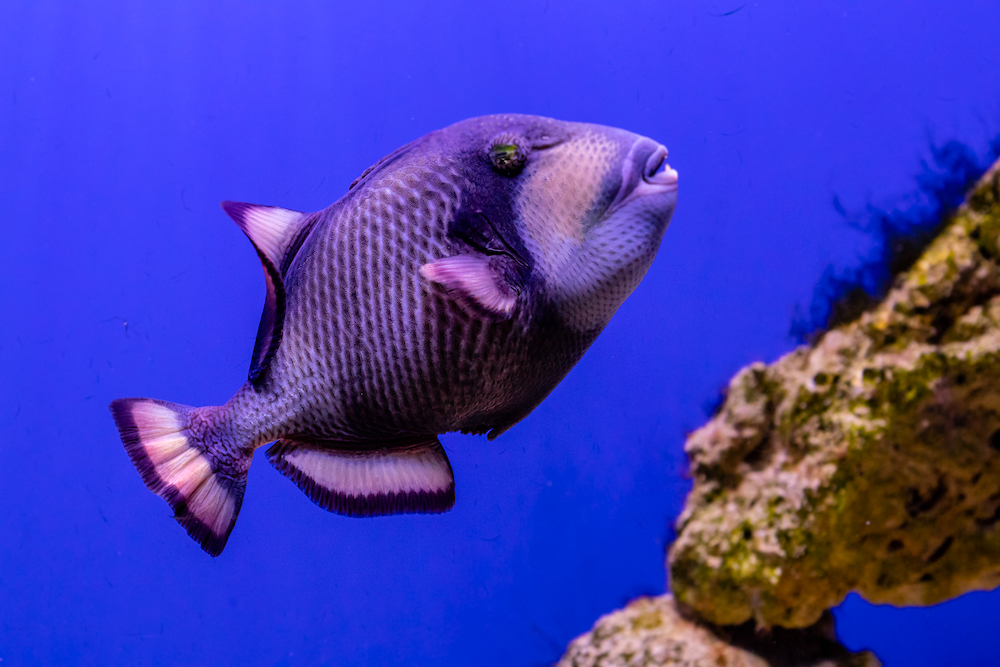
The Niger Triggerfish (Odonus niger), also known as the Redtooth Triggerfish or Blue Triggerfish, is a large, open-water marine fish known for its deep blue to blue-green body, long trailing fins, and reddish teeth. Native to the Indo-Pacific, Niger Triggerfish are often seen swimming above reef slopes and drop-offs, where they feed on plankton and small marine organisms carried through the water.
Compared with many triggerfish, Niger Triggerfish are often considered less aggressive, but they are still large, powerful fish with a strong appetite and a bold personality. They need a spacious aquarium with plenty of open water, secure rockwork, strong filtration, and compatible tank mates. A Niger Triggerfish can become a beautiful centerpiece in a large saltwater aquarium, but it is best suited for aquarists who are prepared for its adult size and long-term needs.
Niger Triggerfish are considered reef safe with caution. They usually leave coral tissue alone and are not commonly known for nipping at corals or clam mantles. However, they may eat ornamental shrimp, crabs, snails, clams, sea urchins, and other small invertebrates if given the opportunity.
A reef aquarium can work for a Niger Triggerfish when the focus is primarily on corals and larger fish rather than a delicate cleanup crew. Still, a fish-only-with-live-rock aquarium is often the more predictable setup. Niger Triggerfish are active swimmers and may accidentally knock over loose corals or unstable rockwork, so everything in the aquarium should be firmly secured.
Niger Triggerfish are omnivores with a strong preference for meaty marine foods. In the wild, they feed on zooplankton, small crustaceans, mollusks, algae, and other drifting food sources. In captivity, provide a varied diet of mysis shrimp, enriched brine shrimp, chopped clam, shrimp, squid, scallop, krill, frozen carnivore blends, and high-quality marine pellets. Include occasional shell-on foods such as clams or shrimp to support natural feeding behavior and help wear down the teeth. Feed smaller portions once or twice each day, adjusting the amount based on the fish’s size and activity level. Their feeding can create a significant amount of waste, so strong filtration, protein skimming, and regular water changes are important.
Niger Triggerfish can grow to approximately 15 to 18 inches long as adults. Their long trailing fins, active swimming style, and substantial body mass mean they need a large footprint and plenty of open water.
A 180-gallon aquarium is a reasonable minimum for a smaller individual, but a 240-gallon or larger aquarium is a better long-term choice for an adult. A larger system provides more room for the fish to swim and gives tank mates a better chance to avoid territorial conflict.
Keeping more than one Niger Triggerfish together can be difficult in a home aquarium. They may tolerate one another in a very large system, especially when introduced at the same time, but competition for food and swimming space can become a problem as they mature.
For most aquarists, one Niger Triggerfish is the safest and most reliable choice. Multiple triggerfish should only be attempted in a very large aquarium with extensive swimming room, several feeding areas, and close monitoring for aggression.
With stable water quality, appropriate tank space, a varied diet, and compatible tank mates, Niger Triggerfish can often live around 10 to 15 years in captivity. Some may live longer in exceptionally well-maintained aquarium systems.
Their lifespan depends heavily on long-term care. Poor water quality, limited space, inconsistent feeding, and aggressive tank mates can create stress that affects health over time. Planning for the fish’s full adult size is essential before bringing one home.
Niger Triggerfish are generally considered semi-aggressive. They are often more peaceful than many other triggerfish, but they can still become territorial around food, caves, or preferred swimming areas.
Their aggression is usually more manageable in a large aquarium with open swimming space, stable rockwork, and tank mates that are not timid or small enough to be viewed as prey. They should still be treated as a large predatory-style fish rather than a peaceful community species.
Niger Triggerfish are generally more affordable than many large triggerfish species, although pricing can vary based on size, origin, retailer, availability, and whether the fish has been quarantined or conditioned before sale. Smaller specimens are often less expensive, while larger adults may cost more because of their shipping and holding needs.
A healthy fish is more important than finding the lowest price. Look for a Niger Triggerfish that is actively swimming, eating prepared foods, breathing normally, and showing clear eyes and intact fins. Avoid fish that appear thin, have torn fins, remain hidden constantly, or show signs of heavy breathing or skin damage.
Niger Triggerfish do best with medium to large fish that can coexist with an active, semi-aggressive tank mate. They are often more tolerant than Clown Triggerfish or other highly territorial triggerfish, but they can still become assertive around food or toward smaller fish.
Potential tank mates include:
Avoid housing Niger Triggerfish with ornamental shrimp, crabs, snails, clams, small gobies, firefish, or other fish small enough to be swallowed. Highly aggressive triggerfish, large predatory puffers, and fish that relentlessly compete for food can also create stress and conflict.
Niger Triggerfish are commonly available through specialty saltwater livestock retailers and local aquarium stores. Before purchasing one, make sure your aquarium has enough open swimming room, strong filtration, and tank mates that can safely coexist with a large triggerfish.
Where to buy Niger Triggerfish:
The Niger Triggerfish can be a striking and rewarding addition to a large saltwater aquarium. Its open-water swimming style, bold blue coloration, and comparatively manageable temperament make it appealing, but it still requires major space, careful tank mate selection, and consistent long-term care.