Glossary:
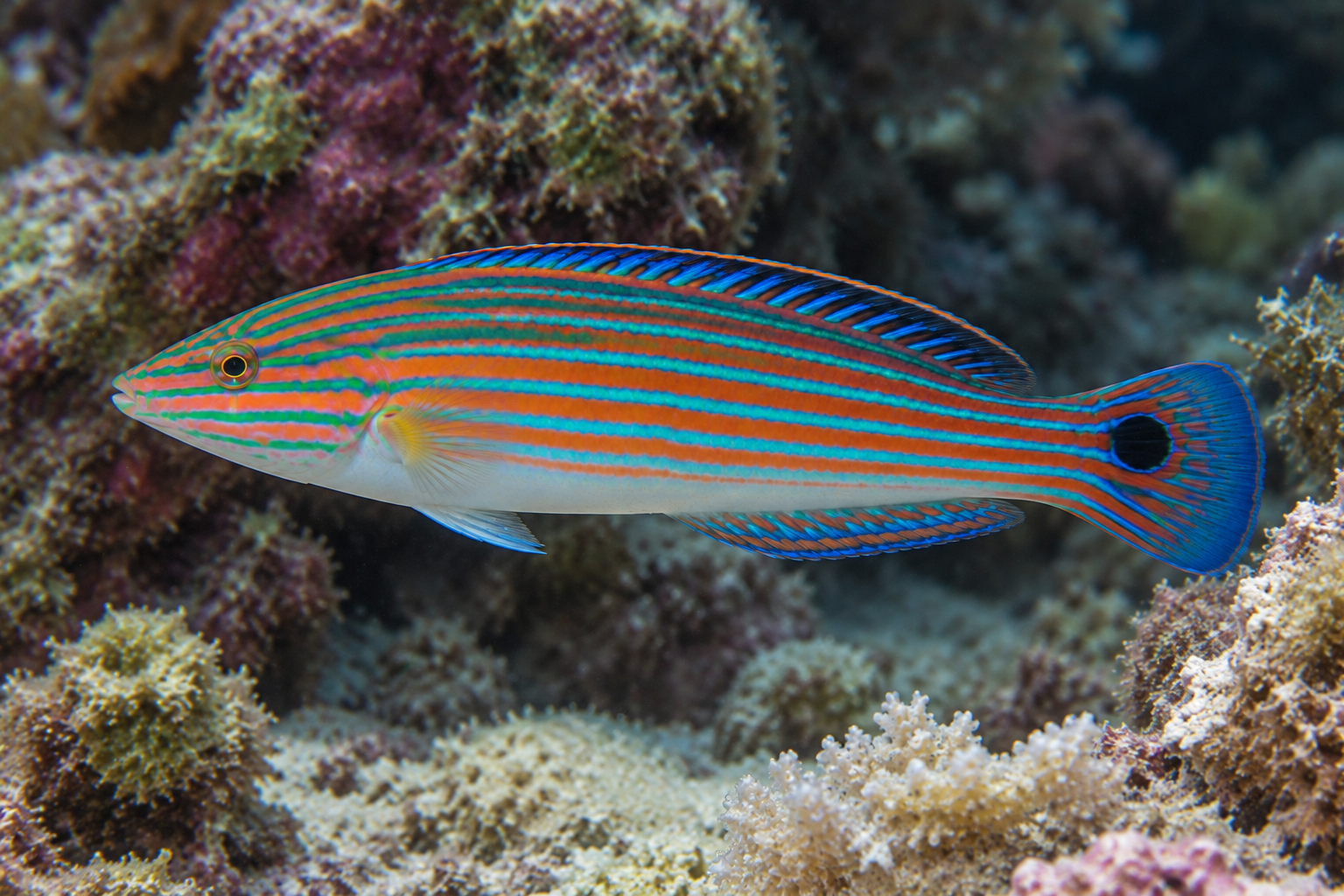
The Melanurus Wrasse (Halichoeres melanurus), also called Hoeven’s Wrasse, is a colorful and energetic saltwater fish prized for its bright blue, green, yellow, and orange striping. Native to the Indo-Pacific, this wrasse spends much of its day gliding through rockwork, inspecting the sand bed, and searching for small invertebrates to eat. Its activity level and bold pattern make it a popular addition to larger reef aquariums.
Melanurus Wrasses are known for being hardy once established, but they still need a thoughtfully prepared aquarium. They require a soft-sand sleeping bed, secure rockwork, peaceful to moderately assertive tank mates, and a tightly fitting lid. This species is often valued for helping control certain aquarium pests, but it should not be purchased solely as a cleanup solution. A healthy Melanurus Wrasse needs a stable, mature aquarium and a balanced diet to thrive long term.
Melanurus Wrasses are generally reef safe with caution. They do not normally nip at coral tissue or damage clam mantles, making them compatible with many coral-focused reef aquariums. Their active hunting behavior can even make them useful around live rock and sand beds, where they may eat flatworms, small worms, nudibranchs, pyramid snails, and other unwanted invertebrates.
However, this species is not completely safe with every reef inhabitant. A Melanurus Wrasse may eat very small ornamental shrimp, tiny crabs, feather dusters, fan worms, snails, and other small invertebrates it can catch. Larger established shrimp are sometimes left alone, but compatibility is never guaranteed. Reef aquarists should view this fish as coral-safe, but not necessarily cleanup crew-safe.
Melanurus Wrasses are carnivores that naturally feed on small crustaceans, worms, mollusks, and other tiny invertebrates found around reefs and sand beds. In captivity, offer a varied diet of frozen mysis shrimp, enriched brine shrimp, copepods, chopped clam, shrimp, squid, scallop, and high-quality marine carnivore pellets. Feed small portions once or twice daily, providing enough food to maintain the wrasse’s active lifestyle without allowing excess food to degrade water quality. While this fish may hunt pests between meals, prepared foods should remain the foundation of its diet. A well-fed Melanurus Wrasse is more likely to keep its color, energy, and healthy body condition.
Melanurus Wrasses usually reach around 5 to 6 inches long as adults. They are active fish that need room to move through open water, inspect rockwork, and bury safely in the substrate at night.
A 55-gallon aquarium is a practical minimum for one adult, although a 75-gallon or larger tank provides more space for swimming and makes it easier to house compatible tank mates. The aquarium should include a fine sand bed that is deep enough for the wrasse to disappear beneath the surface.
Keeping multiple Melanurus Wrasses together is not recommended in most home aquariums. Adults may become territorial toward members of their own species, particularly when introduced at different times or when space is limited, and they cannot establish separate areas.
A single Melanurus Wrasse is the simplest and most reliable option. In a large aquarium, it may coexist with other compatible wrasse species, especially Fairy Wrasses or Flasher Wrasses, as long as there is enough swimming room and the fish are introduced carefully.
With stable water quality, a varied diet, a safe sand bed, and compatible tank mates, Melanurus Wrasses can often live around 5 to 8 years in captivity. Some may live longer in a mature aquarium with consistent care.
The biggest risks to long-term success are jumping, poor nutrition, aggressive tank mates, and a lack of suitable substrate. A secure lid is especially important because this fish may jump when startled, even after it appears settled in the aquarium.
Melanurus Wrasses are generally considered peaceful to semi-aggressive. They are often well-behaved with unrelated fish, but they may become assertive around food, preferred rockwork, or their sleeping area in the sand.
Aggression is most likely toward other wrasses, especially fish with a similar body shape or feeding style. In a spacious aquarium with plenty of rockwork, open swimming room, and a consistent feeding schedule, their behavior is usually manageable.
Melanurus Wrasses are usually moderately priced and are commonly available through specialty saltwater retailers. Prices often range from $50 to $100, though costs can vary by size, origin, retailer, shipping, and whether the fish has been quarantined or conditioned before sale.
When choosing a Melanurus Wrasse, look for an alert fish, swimming upright, and showing interest in food. Its body should appear full rather than pinched, and its fins should be intact. Avoid fish with cloudy eyes, torn fins, faded color, heavy breathing, or visible skin damage. A healthy specimen that is already eating prepared food will have a much easier time adapting to a home aquarium.
Melanurus Wrasses do best with peaceful to semi-aggressive fish that can handle an active tank mate without harassing it. They are usually confident once established, but they can become territorial toward similarly shaped wrasses or fish that compete for the same areas of rockwork and sand.
Potential tank mates include:
Avoid housing Melanurus Wrasses with aggressive triggerfish, lionfish, eels, large predatory groupers, puffers, or highly territorial wrasses. Sand-sifting fish and burrowing species can also create conflict if they repeatedly disturb the wrasse’s sleeping area.
Melanurus Wrasses are commonly available through online marine livestock retailers and local saltwater aquarium stores. Before purchasing one, make sure the aquarium has a secure lid, soft sand bed, stable water conditions, and no tiny invertebrates you are not prepared to risk.
Where to buy Melanuras Wrasse:
The Melanurus Wrasse is an excellent option for aquarists seeking a colorful, active fish with a useful natural hunting behavior. With a sandy substrate, secure lid, varied diet, and carefully selected tank mates, this wrasse can become one of the most enjoyable residents in a reef aquarium.