Glossary:
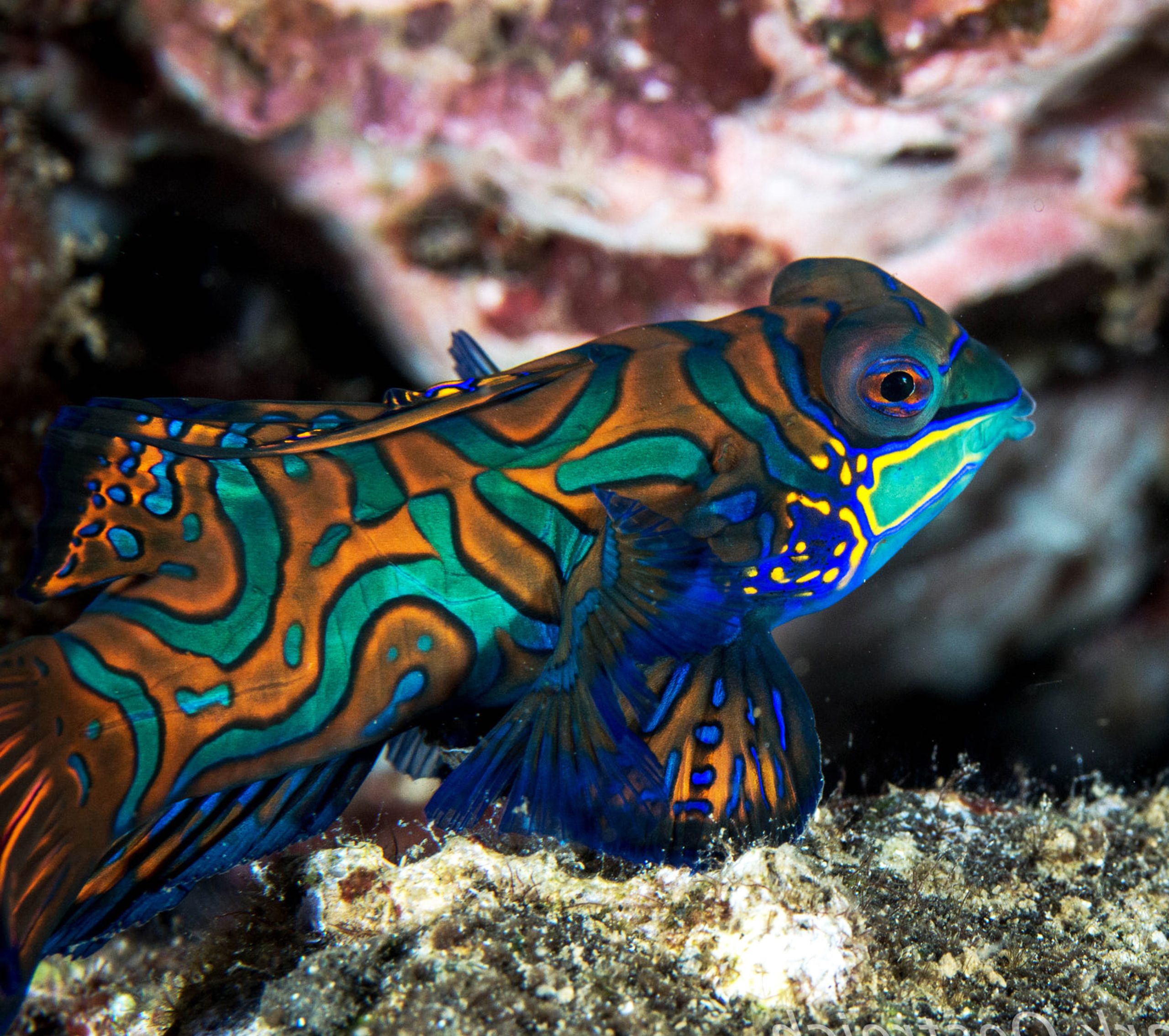
The Mandarin Dragonet (Synchiropus splendidus), also called the Mandarinfish or Mandarin Goby, is one of the most colorful fish in the saltwater aquarium hobby. Its body is covered in intricate blue, orange, green, and yellow markings that make it look more like a living piece of artwork than a typical reef fish. Native to sheltered reefs and lagoons of the western Pacific, Mandarin Dragonets spend much of their day moving slowly across live rock and sand while searching for tiny prey.
Although they are peaceful and reef-safe, Mandarin Dragonets are not always beginner-friendly. Their care depends heavily on diet and aquarium maturity. A newly established tank may look healthy but still lack the copepods and small crustaceans this species relies on. A mature system with abundant live rock, a healthy pod population, and minimal food competition gives a Mandarin Dragonet the best chance to thrive.
Yes, Mandarin Dragonets are considered highly reef safe. They do not typically nip at corals, harass larger invertebrates, or attack other community fish. Their calm personality makes them a strong choice for peaceful reef systems with corals, snails, shrimp, and other nonaggressive livestock.
Mandarin Dragonets do produce a protective mucus coating with an unpleasant taste that may deter predators. This does not usually pose a risk to aquarium owners, but it is best to avoid handling the fish unless necessary. Their delicate bodies and fins can be easily damaged during capture or transfer.
Mandarin Dragonets are carnivorous and spend most of the day hunting copepods, amphipods, small worms, and other tiny organisms living in rockwork and sand. A healthy aquarium for a Mandarin Dragonet should have a strong, self-sustaining pod population supported by mature live rock, refugium space, or regular copepod additions. Many wild-collected fish will ignore flakes, pellets, and larger frozen foods at first, which is why they can slowly lose weight in tanks that appear otherwise healthy. Some captive-bred Mandarin Dragonets learn to accept frozen mysis shrimp, enriched brine shrimp, finely chopped seafood, or small pellets. Still, these foods should supplement rather than fully replace natural grazing opportunities. Feed carefully and watch the fish’s body shape, as a rounded belly and full body profile are better signs of success than whether it occasionally takes prepared food.
A Mandarin Dragonet usually reaches around 3 inches long, though some individuals grow slightly larger. Their compact size can make them seem suitable for a small aquarium, but their feeding needs require more planning than their body size suggests.
For long-term success, a mature 75-gallon aquarium is often a better choice than a newly established smaller tank. Larger tanks generally support more live rock, more natural food production, and a greater margin for error if pod populations fluctuate.
A male and female Mandarin Dragonet can sometimes live together in a large, mature aquarium with abundant live food. The easiest way to tell them apart is by the dorsal fin, as males usually have a much taller first dorsal spine.
Two males should not be housed together because they may fight over territory and food. Keeping a pair also doubles the demand for copepods, so the aquarium must be able to support both fish without either one becoming thin or underfed.
With stable water conditions, adequate nutrition, and a constant food source, Mandarin Dragonets can often live 5 to 10 years in captivity. Their lifespan is commonly shortened when they are placed in young aquariums that cannot provide enough copepods over time.
The biggest challenge is not disease or aggression. It is preventing slow starvation. A Mandarin Dragonet may appear active while still losing weight, so regular observation is essential. A visibly pinched stomach or hollow area behind the head can indicate that the fish is not getting enough food.
Mandarin Dragonets are peaceful toward most fish, corals, and invertebrates. They are unlikely to chase community fish or claim a large territory in the way many damsels, clownfish, and dottybacks do.
Their main aggression is directed toward other male Mandarin Dragonets. In most community tanks, they are far more likely to be outcompeted for food than to cause problems themselves. Keeping them with peaceful fish helps them spend more time grazing naturally instead of hiding.
Mandarin Dragonets are often moderately priced, with many standard wild-collected specimens commonly selling for $35 to $70. Captive-bred Mandarin Dragonets usually cost more, often ranging from approximately $70 to $150, because they are raised in controlled environments and may be more likely to accept frozen foods or pellets.
A lower purchase price should not be the deciding factor with this species. The ongoing cost of producing or purchasing live copepods can be more significant than the cost of the fish itself. Before buying one, make sure the aquarium has enough natural food available and that the fish is not competing with other pod-eating species.
Mandarin Dragonets do best with calm tank mates that will not bully them or consume the same food supply. Because they move slowly and hunt throughout the day, they can struggle in aquariums filled with aggressive feeders or fish that constantly patrol the rockwork for pods.
Potential tank mates include:
Avoid aggressive dottybacks, six-line wrasses, large wrasses, triggerfish, lionfish, eels, groupers, and other predators. It is also wise to avoid keeping the Mandarin Dragonet with fish that heavily compete for copepods, including certain wrasses and dragonets, unless the aquarium is very large and pod production is exceptionally strong.
Mandarin Dragonets are available through online marine fish retailers and local saltwater aquarium stores. Choose an alert fish with a full body profile, clear eyes, intact fins, and a visible interest in hunting around live rock or feeding areas.
Where to buy Mandarin Dragonet:
The Mandarin Dragonet can be one of the most rewarding fish in a reef aquarium, but only when its nutritional needs come first. A mature tank with established live rock, dependable copepod production, and peaceful tank mates gives this remarkable species the environment it needs to stay healthy, active, and beautifully colored for years.