Glossary:
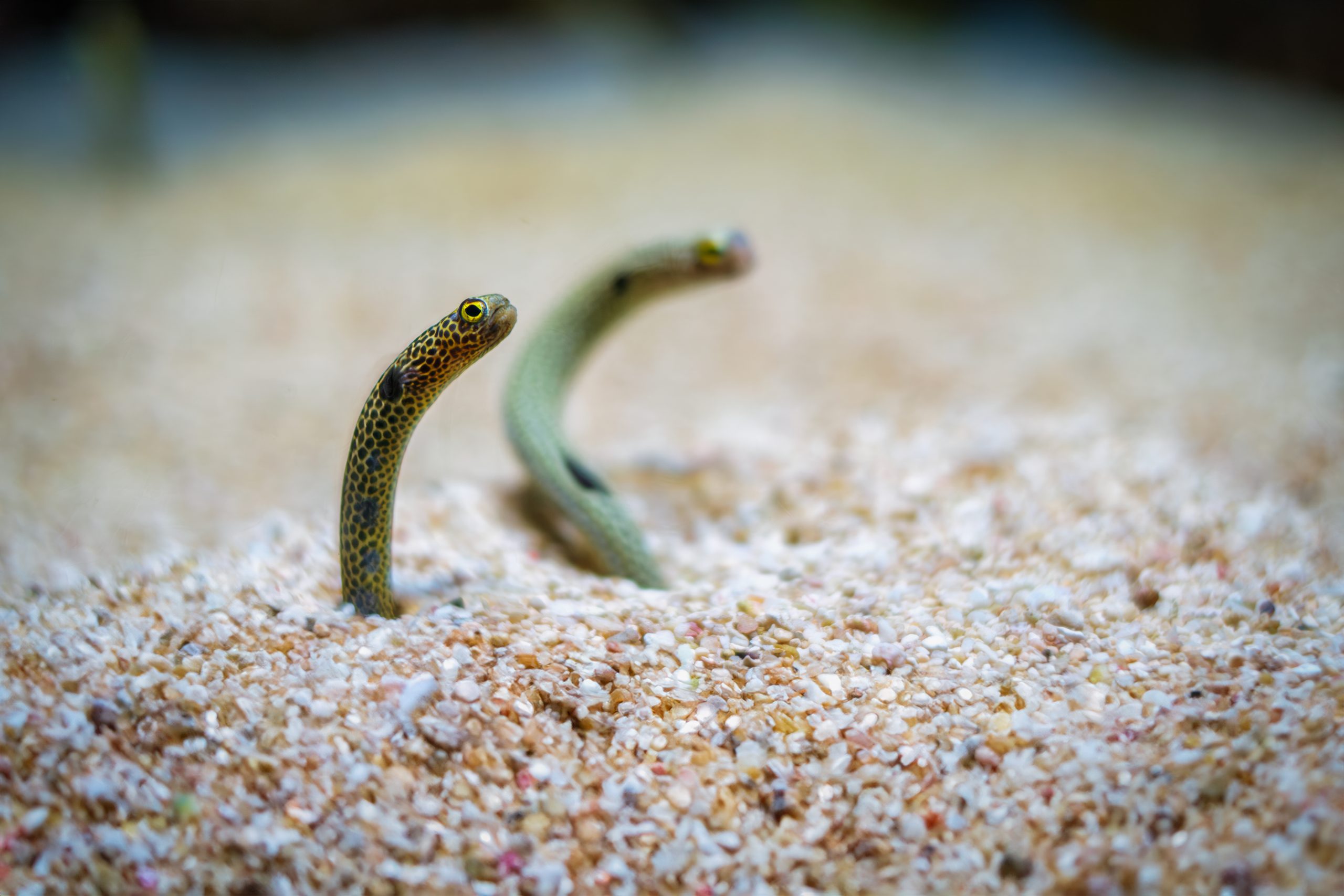
The Garden Eel (Heteroconger hassi), often called the Spotted Garden Eel, is one of the most unusual fish available for a saltwater aquarium. Rather than swimming around rockwork like a typical reef fish, Garden Eels live in permanent sand burrows and extend their bodies into the current to catch drifting food. When several are kept together, their movement can resemble sea grass swaying across the substrate.
Garden Eels are peaceful and visually impressive, but they are a specialized species for advanced aquarists. They need a mature aquarium, a large uninterrupted sand bed, a dependable supply of planktonic foods, and tank mates that will not disturb their colony. A deep sand area of at least 8 to 12 inches is essential, along with a tank large enough to support a small group rather than a single eel.
Garden Eels are generally reef safe in terms of coral and invertebrate behavior. They do not nip at corals, hunt ornamental shrimp, or damage live rock. Their focus is on catching suspended plankton while remaining anchored in their individual burrows.
The challenge is building a reef aquarium around their habitat needs. Garden Eels require a broad section of soft, fine sand that is free from heavy rockwork and sand-shifting fish. Large anemones, aggressive corals, digging wrasses, jawfish, and sand-sifting gobies can create problems by disturbing the colony or making the eels feel unsafe. A reef setup can work, but the eel colony should have its own protected sand zone.
Garden Eels are planktivores that feed on zooplankton and other tiny foods carried through the water column. In captivity, they need frequent small feedings of foods such as live copepods, rotifers, enriched brine shrimp, finely sized mysis shrimp, and high-quality frozen plankton blends. The food should move through the colony with a steady, moderate current rather than dropping immediately onto the sand. Garden Eels usually will not leave their burrows to compete for meals, so the aquarium must deliver food directly into the water above them. An automatic feeder or a carefully planned feeding routine can make a major difference in helping the group stay nourished.
Spotted Garden Eels can grow to roughly 15 to 16 inches long. However, much of their body stays inside the sand burrow, so they may appear much smaller when only the upper half is visible.
Their length is only part of the space requirement. A group needs a wide, deep sand bed and a tank of at least 125 gallons for long-term care.
Yes. Garden Eels are naturally colonial and best kept in groups rather than alone. A minimum of three is a reasonable starting point, while a larger colony can be even more natural in a sufficiently large aquarium.
Introduce the group at the same time and provide a large area of fine sand so each eel can establish its own burrow. Avoid overcrowding the tank with fish that will compete for the same suspended foods.
The lifespan of Garden Eels is not well documented in home aquariums because they are difficult to keep long-term. With stable water quality, reliable feeding, and a low-stress colony setup, plan for a commitment of at least several years. Successful specimens may live 5 to 10 years or longer.
Their biggest long-term risk is slow starvation. A Garden Eel may remain active in its burrow while still losing weight if enough food is not reaching it.
Garden Eels are very peaceful. They do not chase other fish, defend large areas of the aquarium, or bother corals and most invertebrates.
Their behavior is defensive rather than aggressive. When frightened, they retreat into the sand, which is why calm tank mates and a stable environment are so important.
Garden Eels are usually sold individually, with prices often ranging from around $70 to $150 per eel. Cost can vary based on size, shipping conditions, availability, and retailer. Because they are best kept in groups, the total investment is often higher than the listed price of one fish.
Before buying Garden Eels, confirm that the retailer has multiple healthy specimens available and that they are eating. A low price does not make up for an eel that has been weakened during shipping or has not adapted to aquarium feeding.
Garden Eels should be housed with calm fish that will not raid their burrows, compete heavily for suspended food, or repeatedly patrol the sand bed. A species-focused aquarium or a lightly stocked peaceful reef tank is usually the most reliable approach.
Potential tank mates include:
Avoid aggressive damsels, triggerfish, puffers, large wrasses, hawkfish, lionfish, eels, sand-sifting gobies, jawfish, and burrowing invertebrates. These animals can stress Garden Eels, outcompete them for food, or collapse their burrows.
Garden Eels are usually found through specialty saltwater livestock retailers rather than every local fish store. Availability can be limited, so ask whether several healthy, feeding specimens can be purchased together.
Where to buy Garden Eel:
Garden Eels can create one of the most memorable displays in a marine aquarium, but they need a setup built around their specific behavior. With a mature tank, deep sand, regular planktonic feedings, and peaceful companions, a Garden Eel colony can become a fascinating long-term feature of an advanced reef aquarium.