
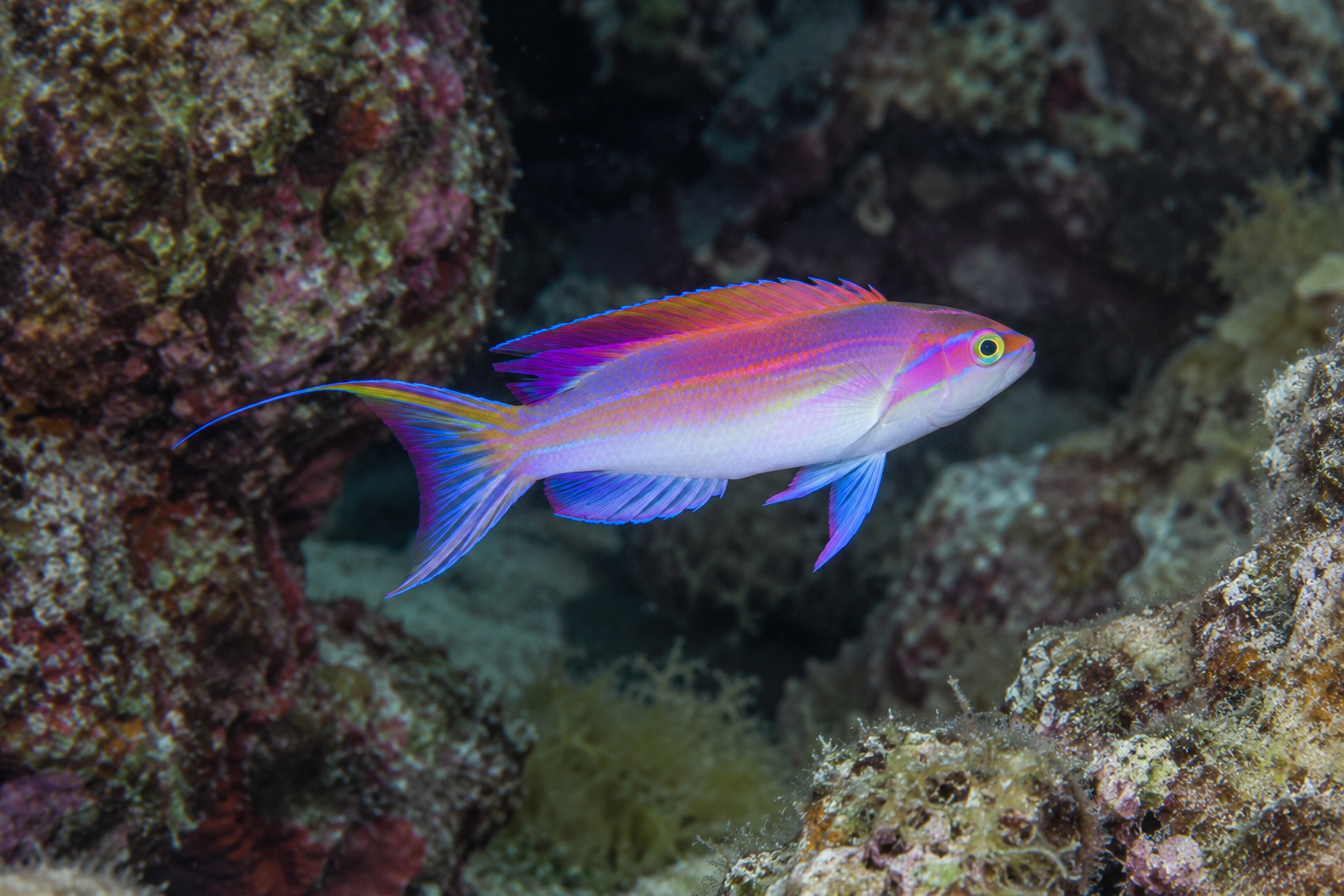
Fairy Wrasse Care Guide
Glossary:
- Care Guide & Requirements
- Reef Safe
- Prices
- Food & Diet
- Facts
- Tank Mates & Environment
- FAQs
Fairy Wrasses (Cirrhilabrus species) are among the most colorful and active fish available for reef aquariums. Depending on the species, they may display vivid shades of red, pink, orange, purple, blue, yellow, or green, often with bright markings that become even more intense when the fish is displaying. Their constant movement in the middle and upper portions of the aquarium gives a reef tank energy without the aggressive behavior associated with many larger saltwater fish.
These wrasses are found throughout the Indo-Pacific, where they live on reef slopes, in rubble zones, and in areas with abundant coral cover. Most Fairy Wrasses are peaceful, reef compatible, and adaptable to captive life when they are introduced into a stable aquarium. However, they are excellent jumpers and need a fully secured lid or mesh cover from the first day. They also do best with calm tank mates that will not outcompete them for food or force them into hiding.
Is the Fairy Wrasse reef safe?
Fairy Wrasses are considered reef safe. They do not normally nip at corals, damage clam mantles, or disturb live rock and aquascaping. They are also generally safe with ornamental shrimp, snails, crabs, and other larger reef invertebrates.
Their diet focuses on tiny planktonic foods and meaty particles drifting through the water column. Because they do not spend their time digging through sand or grazing on corals, Fairy Wrasses are a strong choice for mixed reef aquariums. Their biggest compatibility concern is usually not the reef itself, but aggressive fish that may chase them or keep them from feeding.
Fairy Wrasse food and diet
Fairy Wrasses are carnivores that feed on zooplankton, tiny crustaceans, and small, meaty foods in the wild. In captivity, they usually accept frozen mysis shrimp, enriched brine shrimp, copepods, finely chopped clam, shrimp, squid, and high-quality marine pellets or flakes. Feed small portions once or twice each day, with more frequent feedings being helpful for active,e smaller species. A varied diet supports stronger coloration, healthy body condition, and consistent activity. Fairy Wrasses are fast swimmers but may lose food competition to larger tangs, angelfish, or triggerfish, so make sure food reaches multiple areas of the aquarium.
Fairy Wrasse FAQs
How big can a Fairy Wrasse get?
Most Fairy Wrasses reach around 3 to 5 inches long, although adult size varies by species. Smaller species may be appropriate for moderate-sized reef tanks, while larger and more active varieties need more open swimming room.
A 50-gallon aquarium is a practical starting point for many Fairy Wrasses. Larger tanks are better for keeping multiple wrasses because they provide more swimming space, more room for separate territories, and additional hiding areas within the rockwork.
Can you keep Fairy Wrasses together?
Fairy Wrasses can sometimes be kept together, especially when they are different species with different coloration and body patterns. A single male with one or more females may also work in a larger, carefully planned aquarium.
The biggest risk is adding two males of the same or closely related species to a smaller tank. They may compete aggressively, especially if both fish have similar coloration or if one tries to establish dominance. Introducing several compatible wrasses at the same time can reduce territorial behavior.
How long do Fairy Wrasses live?
With stable water quality, a varied diet, and peaceful tank mates, Fairy Wrasses can often live around 5 to 8 years in captivity. Some species may live longer in a well-maintained aquarium with consistent care.
Their lifespan is most often affected by jumping, poor nutrition, chronic stress, and aggression from tank mates. A secure lid and reliable feeding routine are two of the most important factors in long-term success.
Are Fairy Wrasses aggressive?
Fairy Wrasses are generally peaceful toward unrelated fish. They rarely bother corals, invertebrates, gobies, clownfish, or other typical community reef species.
Aggression is most likely between males of the same species or similarly colored wrasses competing for the same territory. In a spacious aquarium with plenty of rockwork and compatible companions, most Fairy Wrasses remain active, social, and easygoing residents.
Fairy Wrasse price
Fairy Wrasse prices vary widely depending on the species, coloration, rarity, origin, and availability. More common species are often reasonably priced, while highly sought-after varieties can cost several hundred dollars or more. Captive-bred Fairy Wrasses may also be available for certain species, although availability can differ from one retailer to another.
When choosing a Fairy Wrasse, prioritize health and feeding behavior over color alone. Look for a fish that is swimming actively, breathing normally, showing full body condition, and eating prepared foods. Avoid individuals with cloudy eyes, torn fins, faded coloration, or a noticeably thin body.
Fairy Wrasse facts
- Many Fairy Wrasses are protogynous hermaphrodites, meaning females can transition into males under the right social conditions.
- Males may intensify their colors and perform flashing displays to attract females or establish dominance.
- Fairy Wrasses are powerful jumpers and need a tightly fitted lid or mesh top.
What other fish are the best tank mates for the Fairy Wrasse?
Fairy Wrasses do best with peaceful to moderately active fish that will not intimidate them or outcompete them during feeding. They are usually confident once settled, but they may remain hidden if housed with overly aggressive species.
Potential tank mates include:
- Ocellaris Clownfish
- Percula Clownfish
- Cardinalfish
- Firefish Gobies
- Royal Grammas
- Peaceful gobies
- Smaller blennies
- Reef-safe dwarf angelfish
- Flasher Wrasses
- Other compatible Fairy Wrasses
- Reef-safe tangs in appropriately sized aquariums
Avoid triggerfish, lionfish, eels, large hawkfish, aggressive dottybacks, large predatory wrasses, and highly territorial fish. Larger aggressive tangs can also be problematic if they dominate the aquarium or prevent the Fairy Wrasse from feeding.
Where to buy Fairy Wrasse
Fairy Wrasses are commonly available through online marine livestock retailers and local saltwater aquarium stores. Because coloration and availability vary by species, ask whether the fish is eating prepared foods and has been properly acclimated before purchasing.
Where to buy Fairy Wrasse:
- LiveAquaria
- Blue Zoo Aquatics
- Saltwaterfish.com
- Dr. Reef’s Quarantined Fish
- Local saltwater aquarium specialty stores
Fairy Wrasses are an excellent choice for aquarists looking for movement, color, and reef compatibility without adding a highly aggressive fish. With a secure lid, varied feeding plan, and peaceful tank mates, a Fairy Wrasse can become one of the most active and visually striking fish in a saltwater aquarium.