
Glossary:
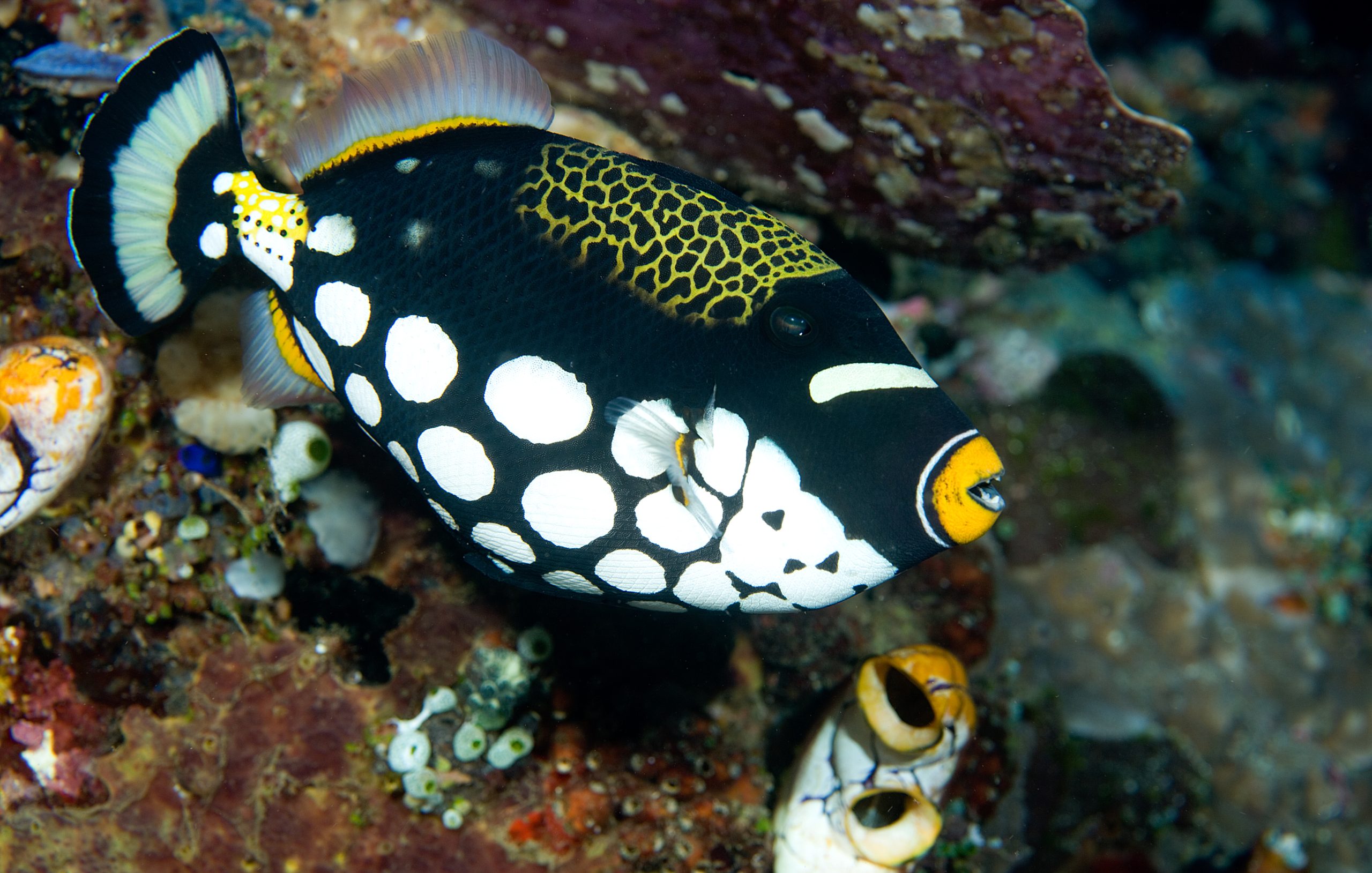
The Clown Triggerfish (Balistoides conspicillum) is one of the most recognizable fish in the saltwater aquarium hobby. Its black body is covered in bold white spots, while the upper half features yellow markings, dark bands, and a bright yellow snout. Juveniles are especially eye-catching, but adults develop into large, powerful fish with an equally strong personality.
Native to the Indo-Pacific, Clown Triggerfish live around reefs, drop-offs, and areas with plenty of rockwork. They are highly intelligent, active, and capable of recognizing feeding routines and familiar people. However, their beauty comes with serious care requirements. A full-grown Clown Triggerfish needs a very large aquarium, strong filtration, a varied diet, and tank mates that can tolerate an aggressive predator. This species is best reserved for experienced aquarists with a long-term fish-only system.
Clown Triggerfish are not reef safe. They may eat ornamental shrimp, crabs, snails, clams, sea urchins, and other invertebrates that would normally be part of a reef cleanup crew. They may also pick at corals, move unsecured rocks, or damage fragile reef structures while searching for food.
A fish-only-with-live-rock aquarium is usually the safest environment for a Clown Triggerfish. The aquarium should use large, stable rock structures that cannot easily be shifted or knocked over. Avoid delicate corals, decorative invertebrates, and loose aquascaping, as this triggerfish is naturally curious and powerful enough to disturb much of its environment.
Clown Triggerfish are carnivores that need a varied marine-based diet. Suitable foods include chopped shrimp, squid, clam, mussel, scallop, krill, mysis shrimp, and high-quality frozen carnivore blends. Harder foods, such as shell-on shrimp or clams can be offered regularly to support natural feeding behavior and help keep the fish’s teeth worn down. Juveniles may need smaller meals more often, while established adults can usually be fed once daily or several times per week with appropriately sized portions. Avoid relying on one food source, especially fatty foods such as krill, because dietary variety is important for long-term health. Their messy eating habits can create a significant bioload, so powerful filtration, protein skimming, and regular water changes are essential.
Clown Triggerfish can reach approximately 16 to 20 inches long as adults. Their thick body, powerful jaws, and active behavior mean they need far more space than their juvenile size suggests.
A 300-gallon aquarium is a realistic minimum for long-term care, although larger systems are strongly preferred. An aquarium with a long footprint provides better swimming room, more opportunities for tank mates to avoid each other, and space for stable rockwork without making the tank feel crowded.
Keeping multiple Clown Triggerfish together is not recommended for most home aquariums. Adults can become highly territorial and may seriously injure or kill another triggerfish competing for the same food, caves, or swimming space.
Even in very large systems, success is unpredictable. For most aquarists, one Clown Triggerfish is the safest and most manageable choice. Adding a second triggerfish should only be considered in an exceptionally large tank with a carefully planned stocking list.
With excellent water quality, a varied diet, and enough space, Clown Triggerfish can live for 15 years or longer in captivity. Their lifespan depends heavily on proper nutrition, stable water conditions, and avoiding injuries from incompatible tank mates.
Because this species can live for many years, it should be treated as a long-term commitment. Planning for its adult size from the beginning is important, as relocating a large, aggressive triggerfish later can be difficult.
Clown Triggerfish are highly aggressive, particularly as they mature. Juveniles may initially appear shy or relatively peaceful, but adult fish can become territorial and may chase, bite, or intimidate other tank mates.
Aggression often becomes more noticeable around feeding time or when another fish enters the triggerfish’s preferred area. A large aquarium, structured rockwork, and robust tank mates can reduce conflict, but this species should never be considered a peaceful community fish.
Clown Triggerfish are often among the more expensive triggerfish species because of their distinctive appearance, popularity, and size. Price can vary substantially based on availability, fish size, origin, shipping distance, and whether the fish has been quarantined or conditioned to eat prepared foods before sale.
The purchase price should only be one part of the decision. A juvenile may appear manageable at first, but it can eventually require a much larger aquarium, substantial food, heavy-duty filtration, and more frequent maintenance. Look for a fish with clear eyes, intact fins, normal breathing, and a strong feeding response before purchasing one.
Clown Triggerfish need large, sturdy tank mates that are not easily bullied and are too large to be considered prey. Even then, compatibility is never guaranteed. A Clown Triggerfish that is peaceful as a juvenile may become much more aggressive with age, especially around food or preferred territory.
Potential tank mates in a very large fish-only aquarium include:
Avoid clownfish, firefish, small gobies, ornamental shrimp, crabs, snails, clams, sea stars, and delicate reef fish. Other triggerfish can also be risky, especially in a tank that does not offer enough space for separate territories. Introduce tank mates carefully, monitor behavior closely, and be prepared to separate fish if aggression becomes persistent.
Clown Triggerfish are commonly found through specialty marine livestock retailers and local saltwater aquarium stores. Choose a fish that is alert, eating prepared foods, and showing no signs of damaged fins, cloudy eyes, or abnormal breathing.
Where to buy Clown Triggerfish:
The Clown Triggerfish is an unforgettable fish for aquarists who can provide the space and structure it requires. Its bold pattern and intelligent behavior make it a spectacular centerpiece, but its adult size, feeding needs, and aggression demand a carefully planned fish-only aquarium.