
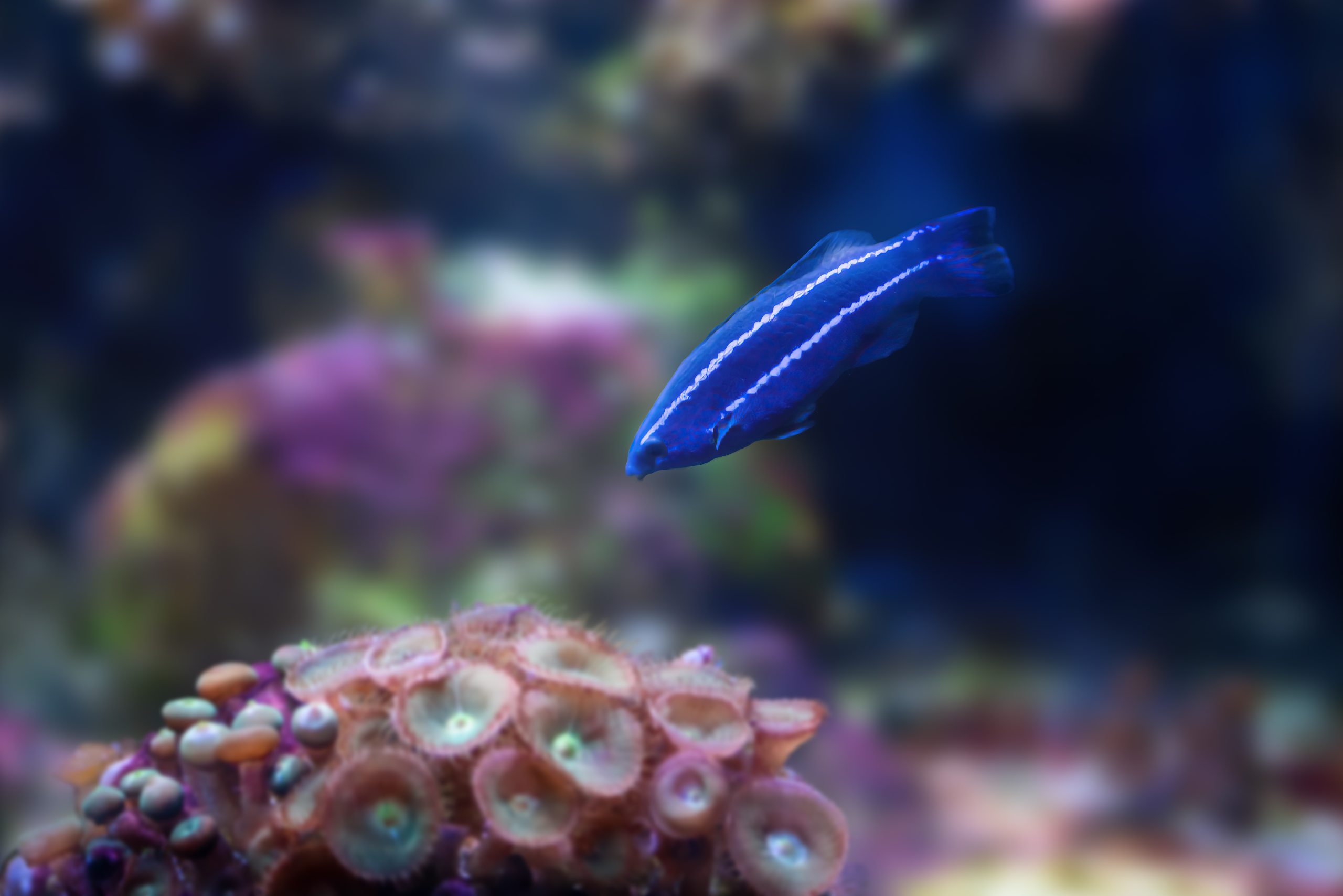
Bluestreak Cleaner Wrasse Care Guide

Glossary:
  1. Care Guide & Requirements
  2. Reef Safe
  3. Prices
  4. Food & Diet
  5. Facts
  6. Tank Mates & Environment
  7. FAQs
 
The Bluestreak Cleaner Wrasse (Labroides dimidiatus) is one of the most recognizable and fascinating reef fish. Known for its sleek black stripe that runs from snout to tail across a bright blue body, this wrasse plays a vital role in the wild as a “cleaner” for other fish. Found throughout the Indo-Pacific, they set up cleaning stations on reefs where larger fish visit to have parasites, dead skin, and loose scales removed. Their unique behavior, vibrant appearance, and constant activity make them an eye-catching species in aquariums, though they come with special challenges in captivity.

Is the Bluestreak Cleaner Wrasse reef safe?

Yes, this wrasse is reef safe. They do not nip at corals or disturb invertebrates, focusing instead on feeding interactions with other fish. However, aquarists should know that these wrasses may pester tank mates by trying to “clean” them excessively if they aren’t receiving enough food. While harmless, this can stress more timid fish.

Bluestreak Cleaner Wrasse food and diet

Diet is where these wrasses present their biggest challenge. In nature, they survive primarily on parasites and mucus picked off other fish. This makes them notoriously difficult to maintain in aquariums if they refuse prepared foods. Many newly imported individuals starve without proper acclimation.

In captivity, success often depends on training them to accept substitute foods such as:

  • Mysis shrimp
  • Enriched brine shrimp
  • Finely chopped seafood (clam, squid, fish)
  • Specialized frozen diets for carnivores
  • High-quality pellets (once accustomed)

It’s important to feed multiple small meals daily. Some aquarists find success housing them with larger fish species that tolerate being “cleaned,” allowing the wrasse to exhibit its natural feeding behavior alongside supplemental prepared foods.

Bluestreak Cleaner Wrasse price

Cleaner wrasses are generally affordable compared to rarer marine fish. They typically cost between $30 and $60, depending on the supplier and size of the specimen. Since they are commonly collected from the wild, pricing may vary with seasonal availability and shipping regions.

Bluestreak Cleaner Wrasse facts

  • They are one of the few marine species that provide a cleaning service for other fish, earning protection in the wild from much larger predators.
  • Larger fish, including groupers and even moray eels, will patiently wait at a wrasse cleaning station rather than eat the wrasse.
  • Juveniles are more likely to adapt to aquarium life than fully grown adults.
  • They are constantly active swimmers, rarely staying still except when cleaning another fish.
  • Their black lateral stripe mimics other species, such as cleaner gobies, which evolved similar coloration to benefit from the same ecological niche.

Where to buy Bluestreak Cleaner Wrasse

Bluestreak Cleaner Wrasse are widely available through online and specialty marine fish stores. Some reliable options include:

The Bluestreak Cleaner Wrasse is a fascinating and visually striking addition to marine aquariums, but it is best suited for experienced aquarists due to its challenging diet and care requirements. With the right environment, careful feeding strategy, and compatible tank mates, this species can become an active and rewarding centerpiece in a reef system.

Bluestreak Cleaner Wrasse FAQs

How many Bluestreak Cleaner Wrasse should you have?

It is best to keep only one per tank. Cleaner wrasses can be aggressive toward their own kind, particularly in smaller aquariums. In extremely large reef tanks (200+ gallons), a male-female pair might coexist, but in most home setups a single specimen is the safest option.

What are the tank requirements for the Bluestreak Cleaner Wrasse?

A minimum 55-gallon tank is recommended to provide enough swimming space. Key considerations include:
  • Plenty of open water for active swimming
  • Rockwork with caves and ledges for shelter
  • Tank lid or mesh cover, as they are prone to jumping
  • Water parameters:
    • Temperature: 74–80°F
    • pH: 8.1–8.4
    • Salinity: 1.020–1.025
    • Moderate to strong flow
Because they are constant swimmers, pristine water quality and stable conditions are essential. These wrasses do not do well in unstable or newly established systems.

Are Bluestreak Cleaner Wrasse aggressive?

They are not aggressive in the traditional sense but can become bothersome to tank mates. If a wrasse attempts to clean other fish too frequently, it may cause stress. Otherwise, they are generally peaceful and spend most of their time swimming or cleaning.

What other fish are the best tank mates for the Bluestreak Cleaner Wrasse?

They do best in community or reef tanks with medium to large fish that appreciate their cleaning services. Good companions include:
  • Tangs
  • Angelfish
  • Wrasses of other species
  • Groupers
  • Large clownfish
Avoid housing them with very timid species, as the constant cleaning attempts may overwhelm shyer fish. Also, avoid aggressive predators that may view them as prey.