Christmas Wrasse Care Guide

Glossary:
  1. Care Guide & Requirements
  2. Reef Safe
  3. Prices
  4. Food & Diet
  5. Facts
  6. Tank Mates & Environment
  7. FAQs
 
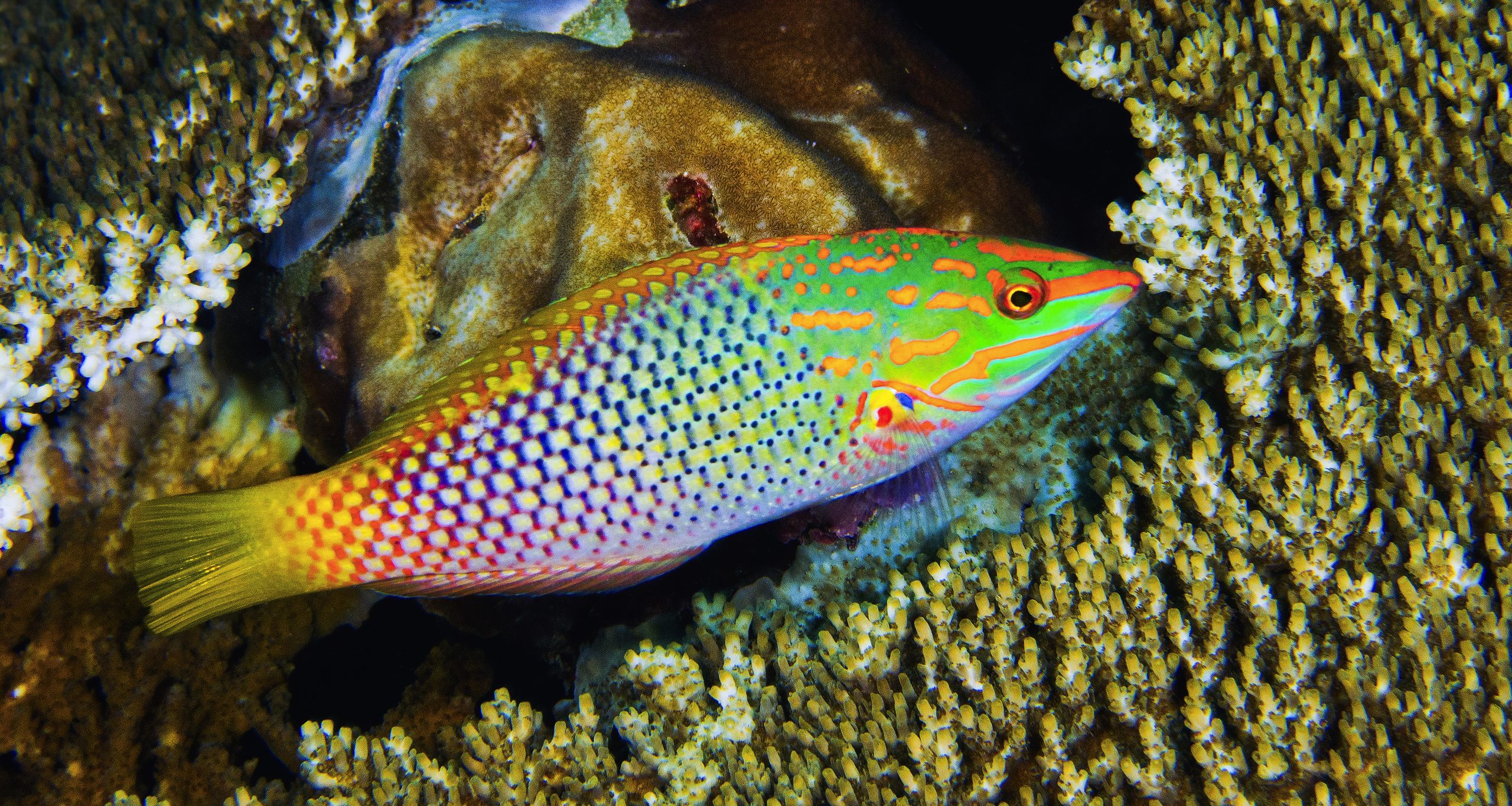
The Christmas Wrasse (Halichoeres claudia and related species in the Halichoeres genus) is a brightly colored saltwater fish that stands out in reef aquariums thanks to its festive mix of reds, greens, yellows, and blues. Its common name comes from the vivid, holiday-like coloration that often appears to shimmer under aquarium lighting. Native to the Indo-Pacific, the Christmas Wrasse is hardy, active, and relatively easy to care for, making it a popular choice for aquarists who want a showy, reef-safe wrasse.

Is the Christmas Wrasse reef safe?

Yes, the Christmas Wrasse is reef safe. They do not harm corals and will not bother most invertebrates. In fact, they are often considered beneficial because they eat pests such as flatworms, nudibranchs, and bristleworms. However, very small ornamental shrimp and feather dusters may be at risk if the wrasse is hungry, so aquarists should exercise caution when keeping them with tiny invertebrates.

Christmas Wrasse food and diet

In the wild, Christmas Wrasses feed on small crustaceans, worms, and other invertebrates found in the sand and rockwork. In captivity, they adapt well to a variety of foods. A healthy diet should include:

  • Mysis shrimp
  • Enriched brine shrimp
  • Chopped clam or squid
  • Frozen carnivore blends
  • Copepods (live or frozen)
  • High-quality pellets and flakes

Feeding once or twice daily is sufficient. They are also active foragers that will naturally hunt for small organisms in the live rock and sand.

Christmas Wrasse price

Christmas Wrasses are moderately priced, with most specimens costing between $40 and $90 depending on size and location of collection. Their affordability, combined with their beauty and utility, makes them a common offering at online and local saltwater fish retailers.

Christmas Wrasse facts

  • They can grow up to 6 inches in length, making them manageable for medium-sized aquariums.
  • Like many wrasses, they bury themselves in the sand at night or when frightened.
  • Their coloration becomes more intense as they mature, with males typically more vibrant than females.
  • They are active swimmers that constantly patrol the tank.
  • Their striking coloration has earned them popularity in both reef and fish-only aquariums.

Where to buy Christmas Wrasse

Christmas Wrasses are widely available at marine fish suppliers. Trusted sources include:

The Christmas Wrasse is a colorful, hardy, and active addition to marine aquariums. Its striking coloration, pest-control benefits, and relatively peaceful temperament make it a favorite for reef keepers. With proper tank size, sand for burrowing, and compatible tank mates, the Christmas Wrasse can thrive for many years, becoming both a functional and beautiful part of your saltwater system.

Christmas Wrasse FAQs

How many Christmas Wrasse should you have?

It is best to keep one Christmas Wrasse per tank. They may show aggression toward their own kind or similar wrasse species if space is limited. In larger aquariums (125+ gallons), some aquarists successfully keep multiple wrasses by mixing species carefully, but a single specimen is recommended for most setups.

What are the tank requirements for the Christmas Wrasse?

Christmas Wrasses thrive in aquariums of at least 75 gallons, with plenty of swimming space and sand for burrowing. Their preferred environment should include:
  • A fine sand bed (2–3 inches deep) for burying at night
  • Plenty of live rock for shelter and foraging
  • Open swimming areas
  • A secure lid, as they are excellent jumpers
  • Water parameters:
    • Temperature: 74–80°F
    • pH: 8.1–8.4
    • Salinity: 1.020–1.025
They are hardy once established but require sand beds to thrive, so they are not suited for bare-bottom tanks.

Are Christmas Wrasse aggressive?

Christmas Wrasses are generally peaceful but can be semi-aggressive toward other wrasses or similarly shaped fish. They are much less aggressive than species like the Six Line Wrasse, making them a better choice for community tanks. They usually coexist well with a wide variety of reef fish.

What other fish are the best tank mates for the Christmas Wrasse?

Christmas Wrasses are versatile and mix well with many community reef species. Suitable tank mates include:
  • Clownfish
  • Gobies
  • Blennies
  • Tangs
  • Fairy wrasses
  • Anthias
  • Dwarf angelfish
Avoid housing them with highly aggressive species such as large triggers or groupers, which may harass or outcompete them.