
Glossary:
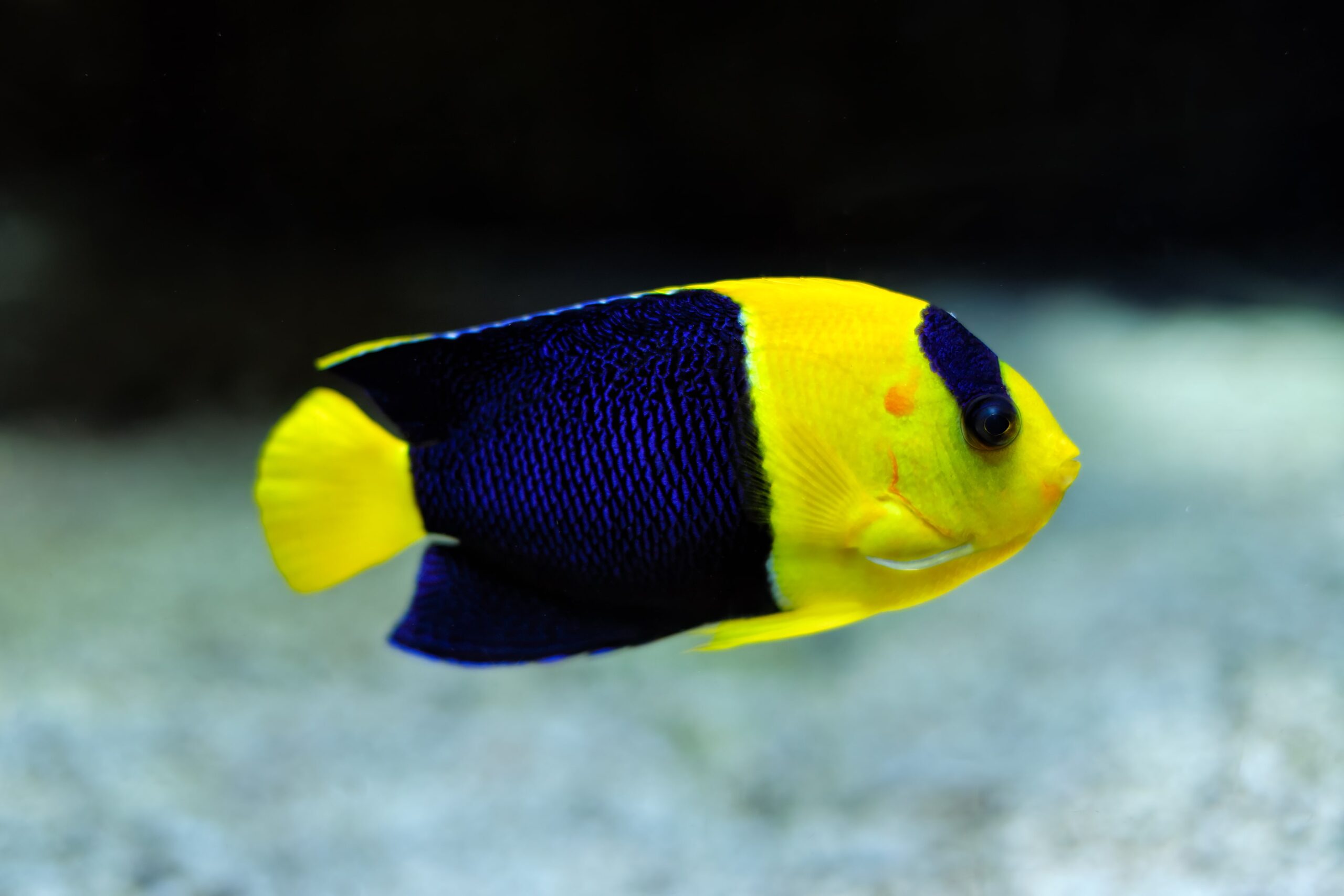
The Bicolor Angelfish (Centropyge bicolor) is a bold dwarf angelfish known for its dramatic split-color appearance. The front half of the body is usually bright yellow, while the rear section is deep blue, creating a striking contrast that makes this fish easy to spot in a saltwater aquarium. It is also known as the Oriole Angelfish, Blue-and-Gold Angelfish, or Two-Color Angelfish.
Native to the Indo-Pacific, Bicolor Angelfish are found around coral-rich reefs, lagoons, and areas with abundant rockwork. Their color and active grazing behavior make them appealing to aquarists, but they require more planning than some other dwarf angelfish. They can be territorial, may nip at corals, and need a mature aquarium with natural algae growth and plenty of live rock.
Bicolor Angelfish are not considered reliably reef safe. Some individuals may leave corals alone, but many develop a habit of nipping at fleshy coral polyps, zoanthids, soft corals, large-polyp stony corals, and clam mantles. Their natural grazing behavior can become a problem in a coral-heavy aquarium.
A fish-only or fish-only-with-live-rock aquarium is usually the safest choice for this species. In a reef tank, there is always some risk that the fish will target prized corals after settling in. Keeping the angelfish well fed, providing plenty of live rock, and avoiding an overly sparse aquarium may reduce the temptation to nip, but it does not eliminate the risk.
Bicolor Angelfish are omnivores that need both plant-based foods and meaty marine nutrition. In a mature tank, they spend much of the day grazing on algae, biofilm, and tiny organisms growing across live rock. Their diet should also include spirulina-based flakes or pellets, dried seaweed such as nori, frozen herbivore blends, mysis shrimp, enriched brine shrimp, and finely chopped clam, shrimp, or squid. Feed small portions once or twice each day, while keeping algae-based foods available several times per week. Consistent feeding helps maintain body condition and may reduce territorial behavior, but the fish should still have ample live rock to explore and graze between meals.
A Bicolor Angelfish can grow to approximately 5 to 6 inches long. That makes it larger than several other common dwarf angelfish, so it needs enough swimming room and rockwork to establish a territory.
A 70-gallon aquarium is a practical minimum for one adult Bicolor Angelfish. Larger tanks are better when keeping it with tangs, wrasses, other active fish, or a more elaborate live-rock layout.
Keeping multiple Bicolor Angelfish together is risky in most home aquariums. They may become aggressive toward one another, particularly when they are similar in size or when the tank does not provide enough separate territory.
A male-female pair may sometimes work in a large, carefully planned aquarium, but this is not a beginner stocking choice. For most aquarists, one Bicolor Angelfish is the safest and most reliable long-term setup.
With stable water quality, a balanced diet, and low stress, Bicolor Angelfish can often live around 5 to 10 years in captivity. Some may live longer in well-maintained systems with consistent care.
Their lifespan is strongly affected by acclimation, nutrition, disease prevention, and aquarium maturity. A mature tank with plentiful live rock and stable water conditions gives this species a much stronger chance of long-term success.
Bicolor Angelfish are semi-aggressive. They are usually most territorial around their preferred rockwork, feeding sites, and hiding areas. Their behavior may become more noticeable as they mature, particularly toward other dwarf angelfish and similar grazing fish.
They are not typically aggressive toward every fish in the aquarium, but they can bully timid tank mates in cramped systems. Giving them adequate space, abundant rockwork, and compatible tank mates helps keep their territorial side manageable.
Bicolor Angelfish are often considered mid-range dwarf angelfish in terms of cost. Pricing can vary based on size, condition, collection location, shipping, and retailer availability. Smaller juveniles are often less expensive than larger, established specimens, while quarantined or conditioned fish may cost more.
Instead of choosing based only on price, look for an alert fish, grazing on rockwork, and willing to eat prepared foods. Avoid specimens that appear thin, breathe heavily, hide constantly, or have cloudy eyes and damaged fins. A healthy Bicolor Angelfish is more likely to adjust successfully than one that has already been stressed during shipping.
Bicolor Angelfish do best with fish that are confident enough to coexist with a semi-aggressive grazer, but not so aggressive that they constantly harass it. They usually establish a territory around rockwork, so a larger tank with multiple caves, ledges, and separate structures can reduce conflict.
Potential tank mates include:
Avoid housing a Bicolor Angelfish with other dwarf angelfish in a smaller aquarium. Fish with a similar shape, grazing style, or preferred territory may become targets for repeated chasing. Large predatory species such as triggerfish, lionfish, groupers, and eels are also poor companions because they may intimidate or eat the angelfish.
Bicolor Angelfish are available from many online marine livestock retailers and local saltwater aquarium stores. Choose a fish that is actively grazing, eating prepared foods, and showing no visible signs of stress or disease.
Where to buy Bicolor Angelfish:
The Bicolor Angelfish is a colorful and active choice for aquarists who can provide a mature tank, a varied diet, and plenty of rockwork. While it is not a dependable reef-safe fish, it can become a standout resident in a properly planned fish-only or live-rock-based saltwater aquarium.