
Glossary:
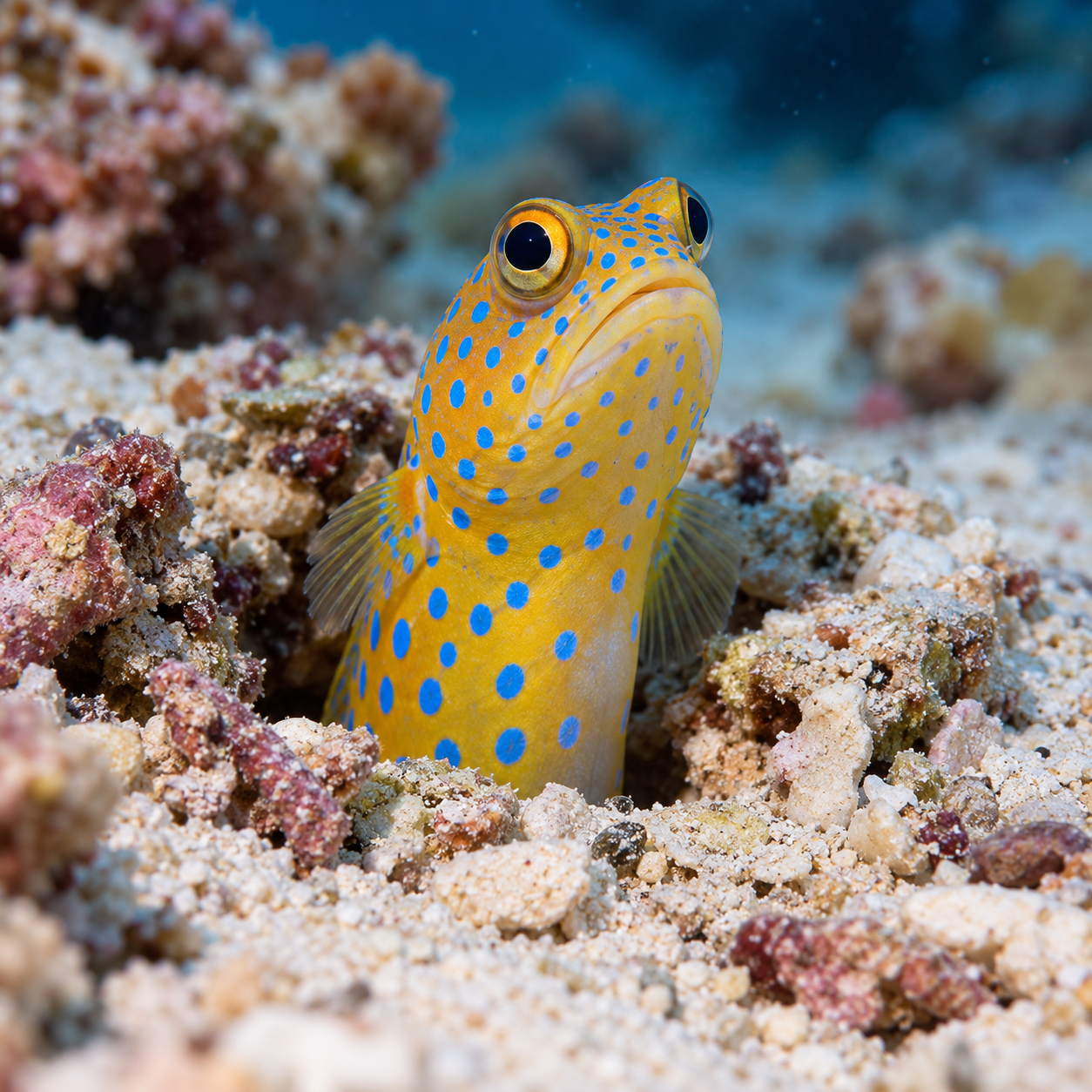
The Blue Spot Jawfish (Opistognathus rosenblatti) is one of the most memorable fish available for a saltwater aquarium. This species has a pale body covered in vivid blue spots, yellow markings around the face, and a watchful personality that makes it entertaining to observe. Native to the Sea of Cortez and the Gulf of California, Blue Spot Jawfish spend much of their day hovering over a carefully built sand burrow, retreating quickly when they feel threatened.
Blue Spot Jawfish are peaceful, reef-compatible, and full of character, but they need a very specific environment to succeed. They require a deep sand bed, rubble for burrow building, cooler stable water, and a tightly secured lid. They are also more sensitive than many common reef fish, which makes them best suited for aquarists who can provide a mature, carefully maintained aquarium.
The main concern is their digging behavior. A Blue Spot Jawfish may carry shells, pebbles, small rubble pieces, and sand around its chosen territory to reinforce its burrow. Rockwork must be stable before the fish is added, preferably resting directly on the tank bottom rather than loose sand. Very small shrimp, tiny crabs, or other bite-sized invertebrates could also be at risk if the jawfish is hungry.
Blue Spot Jawfish usually grow to around 3 to 4 inches long. Their compact size can make them seem appropriate for a small aquarium, but their need for a deep sand bed and stable water quality means they benefit from more space than many similarly sized fish.
Blue Spot Jawfish do best with calm fish that will not invade their burrow, steal all of their food, or frighten them into hiding. They are usually peaceful outside of their immediate territory, but they can become defensive if another fish repeatedly approaches their sand bed.
Ocellaris Clownfish
Percula Clownfish
Royal Grammas
Cardinalfish
Firefish
Purple Firefish
Peaceful gobies
Blennies
Fairy Wrasses
Small reef-safe tangs in appropriately sized tanks
Avoid large predatory fish, aggressive dottybacks, triggerfish, large wrasses, hawkfish, lionfish, eels, and fish that constantly patrol the bottom of the aquarium. Sand-sifting species can also be problematic because they may disrupt the jawfish’s burrow or compete for the same space.
For most home aquariums, one Blue Spot Jawfish is the safest choice. They can become territorial toward others of their species, especially when space is limited or when each fish is competing for suitable burrow locations.
In a very large aquarium with a broad sand bed and multiple separated territories, experienced aquarists may attempt more than one. However, success is not guaranteed, and close monitoring is important. A single Blue Spot Jawfish is typically the most dependable setup.
Temperature stability is especially important. Since this species comes from subtropical waters, it may not thrive in an aquarium that stays at the high end of typical reef temperatures year-round. Maintaining a cooler, consistent environment gives it a better chance of long-term success.
They can become defensive near their burrow, especially if another fish repeatedly enters the same area. This behavior is usually territorial rather than openly aggressive. Providing enough open sand, stable rockwork, and peaceful companions helps keep the jawfish confident and visible.
Blue Spot Jawfish are sometimes available from specialty saltwater livestock sellers, though inventory varies by season and supply. Choose a fish that appears alert, healthy, and willing to eat before bringing it home.
Where to buy Blue Spot Jawfish:
The Blue Spot Jawfish is a colorful, unusual, and rewarding reef fish for aquarists who can meet its specific needs. A mature tank with cool, stable water, a protected sand bed, secure rockwork, and a tightly fitted lid can provide this species with the environment it needs to become an engaging long-term resident.