
Glossary:
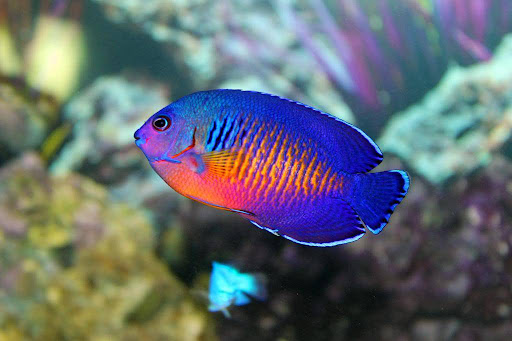
The Coral Beauty Angelfish (Centropyge bispinosa) is a colorful dwarf angelfish known for its dark blue to purple body, bright orange markings, and constant activity around live rock. Native to the Indo-Pacific, this fish is often seen moving through reef crevices and grazing on algae-covered surfaces. Its manageable size and bold coloring make it a popular choice for aquarists who want an angelfish without committing to the space requirements of a large marine angel.
Coral Beauty Angelfish are usually hardy once established, but they are not completely carefree. They do best in a mature aquarium with stable water quality, plenty of natural rockwork, and a varied diet. They can also become territorial as they settle into the tank, especially around their favorite grazing areas. With enough space and well-matched tank mates, however, they can become an active, long-term centerpiece in a reef or fish-only aquarium.
Coral Beauty Angelfish are considered reef safe with caution. Many individuals live peacefully in reef tanks and never cause visible damage to corals. Others may occasionally nip at soft corals, fleshy large-polyp stony corals, zoanthids, or clam mantles. Their behavior varies from fish to fish, so there is no guarantee that every Coral Beauty will ignore coral tissue.
A mature reef tank with abundant live rock and regular feedings may reduce the chance of excessive coral nipping because the fish have more natural grazing opportunities. Still, aquarists with valuable coral collections should watch closely during the first several weeks after adding a new coral. If the fish begins repeatedly targeting a specific coral or clam, it may need to be moved to a different aquarium.
Coral Beauty Angelfish are omnivores that need a balanced mix of marine plant matter and protein. They naturally graze on algae, biofilm, and tiny organisms growing on live rock, but they should also receive prepared foods. Offer a rotating diet of spirulina-based pellets or flakes, dried seaweed such as nori, frozen herbivore blends, mysis shrimp, enriched brine shrimp, and finely chopped clam, shrimp, or squid. Feed small portions once or twice daily, while offering algae-based foods several times per week. A tank with mature live rock gives this fish something to explore and graze between feedings, which can support better body condition and reduce boredom-driven aggression.
A Coral Beauty Angelfish usually grows to around 4 inches long. While it is much smaller than many large angelfish species, it is active and needs enough room to establish a territory around live rock.
A 55-gallon aquarium is often considered a practical minimum for one adult Coral Beauty Angelfish. A 70-gallon or larger tank is even better for a mixed community setup, particularly when the aquarium includes wrasses, tangs, or several other active fish.
Keeping more than one Coral Beauty Angelfish together can be difficult. Two adult fish may fight if they are introduced into a tank with limited rockwork or not enough space for separate territories.
A compatible pair may sometimes work in a large, carefully planned aquarium, but this is best attempted by experienced aquarists. For most home aquariums, one Coral Beauty Angelfish is the safest and most dependable option.
With stable water quality, a varied diet, and compatible tank mates, Coral Beauty Angelfish can often live around 7 to 10 years in captivity. Some may live longer in a well-maintained aquarium with strong filtration, consistent feeding, and limited stress.
Their lifespan can be affected by poor acclimation, disease, unstable water conditions, and repeated aggression from tank mates. A mature aquarium with established live rock gives them a stronger foundation for long-term health.
Coral Beauty Angelfish are considered semi-aggressive. They are usually peaceful toward many unrelated fish, but they can become territorial around their preferred rockwork, feeding areas, and hiding spaces.
Aggression is most likely toward other dwarf angelfish and similarly shaped grazing fish. Giving the Coral Beauty plenty of room, multiple rock structures, and tank mates with different habits can help keep its territorial behavior manageable.
Coral Beauty Angelfish are often moderately priced compared with other marine angelfish. Many specimens are commonly listed in the range of about $60 to $130, though price can vary based on fish size, collection region, conditioning, shipping, and whether the fish is captive-bred.
A healthy fish is worth more than a low initial price. Look for a Coral Beauty that is alert, swimming normally, picking at rockwork, and willing to eat. Avoid fish that appear thin, have damaged fins, breathe heavily, remain hidden constantly, or show faded coloration. Buying a strong specimen can make acclimation much easier.
Coral Beauty Angelfish tend to do best with fish that are peaceful to semi-aggressive and able to respect their space around live rock. They are often more territorial toward fish with a similar shape, diet, or grazing pattern than toward unrelated community fish.
Potential tank mates include:
Avoid adding another dwarf angelfish to the same small or medium-sized aquarium. Two fish competing for the same rockwork and grazing territory may fight persistently. Large predators such as triggerfish, lionfish, eels, and groupers are also poor choices because they may harass or eat a Coral Beauty Angelfish.
Coral Beauty Angelfish are commonly available through online marine livestock retailers and local saltwater aquarium stores. Choose a fish that is active, feeding, and visibly healthy before adding it to your tank.
Where to buy Coral Beauty Angelfish:
The Coral Beauty Angelfish is a rewarding choice for aquarists who want a colorful dwarf angelfish with an active personality. While it is not guaranteed to be completely reef safe, many hobbyists successfully keep this species in mixed coral tanks by providing a mature environment, consistent nutrition, and thoughtful tank mate selection.