Glossary:
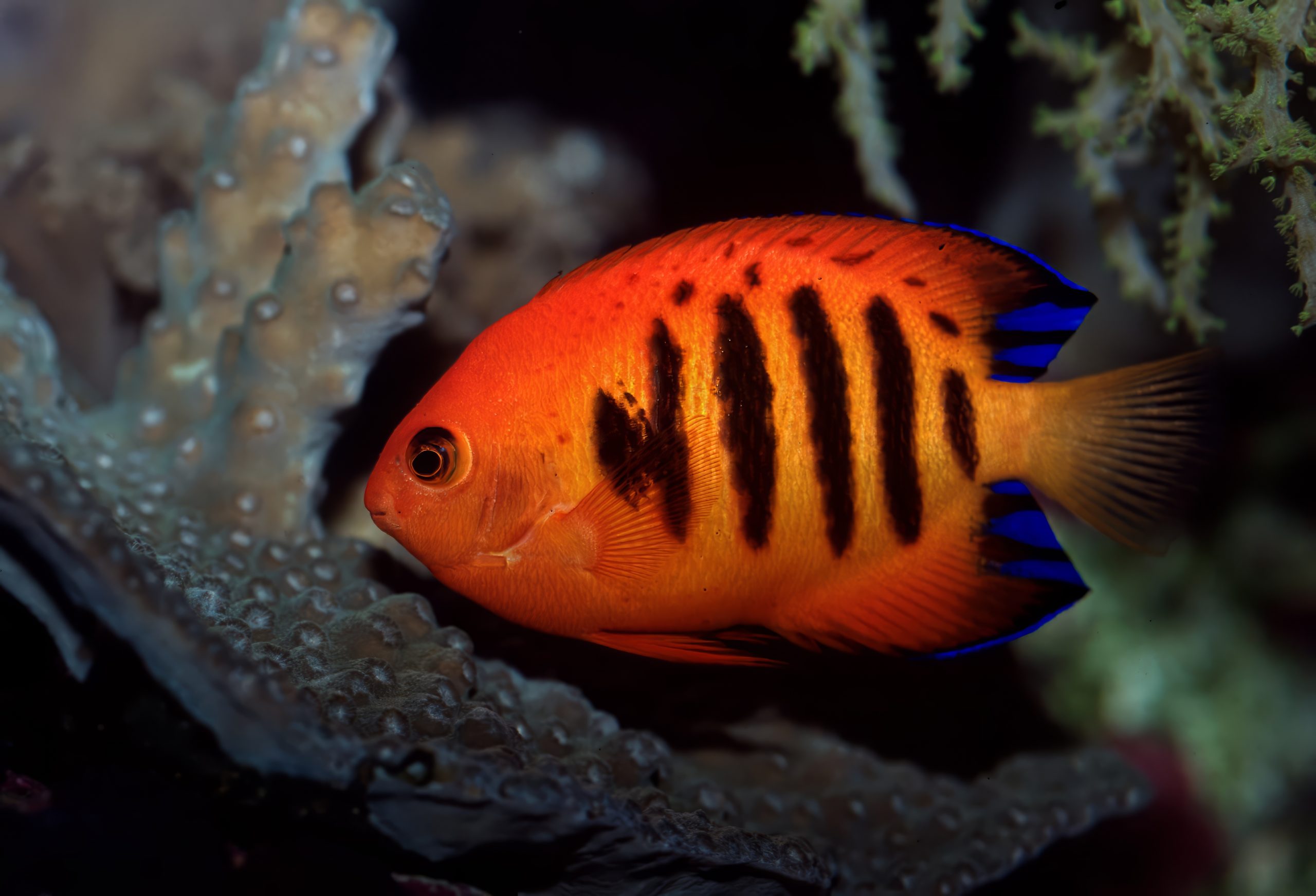
The Flame Angelfish (Centropyge loricula) is one of the most recognizable dwarf angelfish in the saltwater aquarium hobby. Its fiery orange-to-red body, dark vertical bars, and electric blue accents along the fins give it a striking appearance that stands out against live rock and coral. Native to reefs throughout the central and western Pacific, this species spends much of its time weaving through rockwork and grazing on natural growth.
A Flame Angelfish can be a rewarding fish for an established marine aquarium, but it should not be treated as a simple decorative addition. It needs a mature tank with plenty of live rock, stable water quality, and room to establish its own territory. A 55-gallon tank is a practical minimum for one Flame Angelfish, though 70 gallons or more provides the fish with additional swimming room and makes tank mate selection easier.
Flame Angelfish are considered reef safe with caution. Some individuals live in reef tanks for years without touching corals, while others may repeatedly nip at certain coral species or clam mantles. The risk is usually highest with fleshy LPS corals, zoanthids, soft corals, and clam mantles, although behavior can vary from one fish to another.
Adding a Flame Angelfish to a mature tank with regular feedings and abundant live rock may reduce the chance of constant grazing on corals. However, there is never a complete guarantee. Aquarists with expensive coral collections should be prepared to monitor the fish closely after introduction and have a backup plan if nipping becomes persistent.
Flame Angelfish are omnivores that need a varied diet containing both marine plant matter and protein-rich foods. In a healthy aquarium, they will naturally graze on algae and microorganisms growing on live rock, but that should not be their only food source. Offer a rotating menu of spirulina-based flakes or pellets, dried seaweed, frozen herbivore blends, mysis shrimp, enriched brine shrimp, and finely chopped clam, shrimp, or squid. Feed small portions once or twice per day, while giving the fish occasional access to nori or another marine algae source. A well-fed Flame Angelfish is more likely to maintain its color, body condition, and natural grazing behavior.
A Flame Angelfish typically grows to around 4 inches long. Although it is smaller than many full-size angelfish species, it remains active throughout the day and needs enough open water to move comfortably between rock structures.
A mature aquarium of at least 55 gallons is usually recommended for one Flame Angelfish. Larger systems are especially helpful when the tank also includes tangs, wrasses, additional angelfish, or a coral-heavy reef layout.
Keeping more than one Flame Angelfish can be difficult. Two adults are likely to fight unless they are a compatible male and female pair in a very large aquarium with plenty of rockwork and separate territories.
For most home aquariums, one Flame Angelfish is the safest option. Introducing the fish after more peaceful residents have settled in can also help limit territorial behavior. A single Flame Angelfish usually becomes less confrontational when it is not competing with another dwarf angelfish for the same grazing areas.
With stable water conditions, a varied diet, and low stress, Flame Angelfish can often live around 7 to 10 years in captivity. Their long-term success depends heavily on proper acclimation, disease prevention, and avoiding chronic aggression from tank mates.
A newly imported Flame Angelfish may be stressed from collection and shipping, so a careful quarantine process and gradual introduction to the display tank can make a meaningful difference. Consistent feeding and a mature environment help support a longer lifespan.
Flame Angelfish are semi-aggressive. They are often peaceful toward unrelated fish, but they may become territorial toward other dwarf angelfish, similarly shaped grazers, or fish that frequently enter their preferred rockwork.
Their aggression is usually manageable in a properly sized aquarium with plenty of cover. Problems are more likely in smaller tanks, overcrowded systems, or aquariums with multiple territorial fish competing for the same area.
Flame Angelfish prices can vary based on collection location, fish size, retailer, shipping conditions, and whether the fish was captive-bred or wild collected. Standard specimens are typically more expensive than common entry-level reef fish, while premium locality fish and captive-bred options may cost noticeably more.
When comparing sellers, focus on the fish’s condition rather than only the listed price. A healthy Flame Angelfish should be alert, swimming normally, grazing on rockwork, and showing interest in food. Avoid fish with cloudy eyes, ragged fins, labored breathing, faded coloration, or visible signs of illness.
Flame Angelfish are semi-aggressive fish that usually do best with community species that are confident but not overly combative. They need tank mates that will respect their territory without becoming predators or constant rivals. A larger tank with multiple rock structures helps prevent one fish from controlling the entire aquarium.
Potential tank mates include:
Avoid pairing a Flame Angelfish with another dwarf angelfish in a small or medium tank. Similar body shape, diet, and territory preferences can lead to repeated fighting. Large predators, including triggerfish, lionfish, eels, and groupers, should also be avoided because they may intimidate or eat the angelfish.
Flame Angelfish are commonly available through online marine livestock retailers and local saltwater aquarium stores. Choose a fish that is active, alert, visibly grazing, and willing to eat before bringing it home.
Where to buy Flame Angelfish:
The Flame Angelfish is a colorful and engaging choice for aquarists who can provide a mature tank, a varied diet, and carefully selected tank mates. While its reef safety is not guaranteed, many hobbyists successfully keep this striking dwarf angelfish in reef aquariums with attentive monitoring and proper care.