
Glossary:
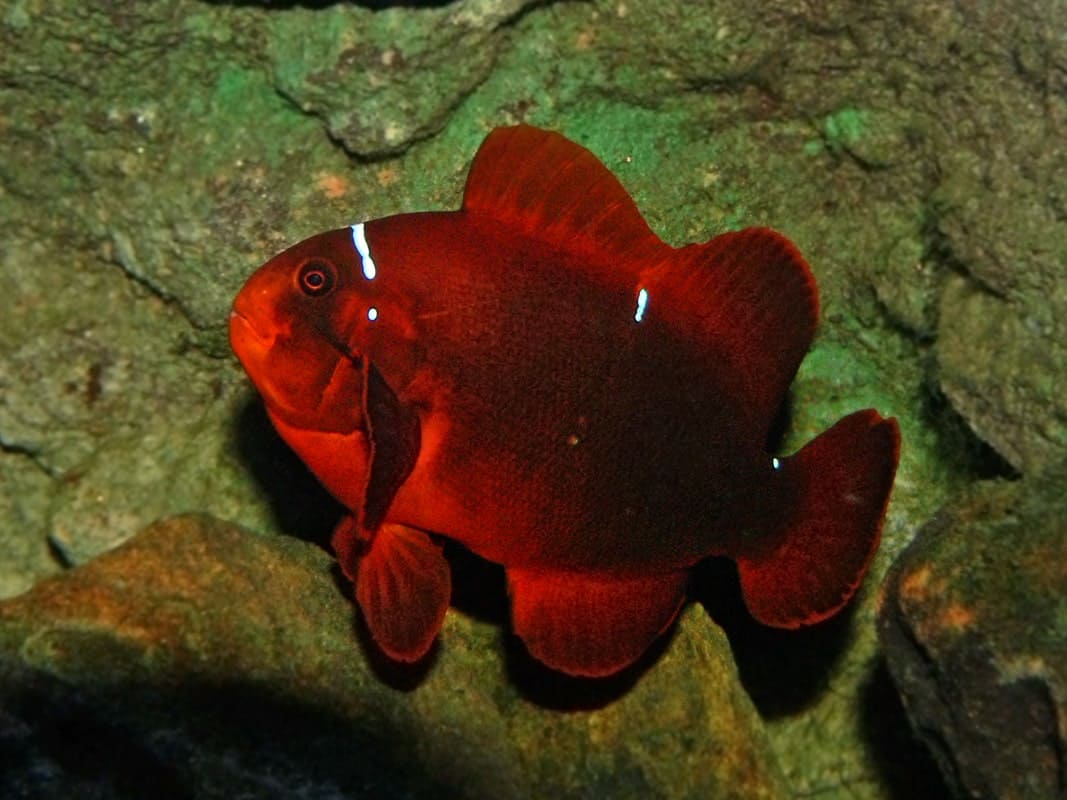
The Maroon Clownfish (Premnas biaculeatus) is one of the largest and most visually dramatic clownfish available for saltwater aquariums. Its deep burgundy to nearly black body is contrasted by bright white or golden stripes, depending on the color variety. Gold Stripe Maroon Clownfish are especially popular because their markings can become richer and more pronounced as they mature.
This species is hardy, intelligent, and usually quick to settle into a stable aquarium. However, Maroon Clownfish have a reputation for being much more territorial than common Ocellaris or Percula Clownfish. A young Maroon Clownfish may appear calm at first, but a mature female can fiercely defend an anemone, a favorite coral, or a section of rockwork. For that reason, this fish is best for aquarists who can provide adequate space and choose tank mates carefully.
Maroon Clownfish are generally reef safe. They do not usually eat corals, pick at clam mantles, or hunt larger ornamental invertebrates. They can live successfully in coral-heavy reef systems as long as their behavior is monitored.
The biggest concern is not coral damage but territorial behavior. A Maroon Clownfish that adopts a host anemone may repeatedly chase nearby fish away from that area. It may also fan sand or move small pieces of rubble when establishing a nesting site. Secure loose coral frags and leave enough open space around the fish’s chosen territory to prevent conflicts.
Maroon Clownfish are omnivores that are usually easy to feed once acclimated. A healthy diet should include a rotation of frozen mysis shrimp, enriched brine shrimp, finely chopped clam, shrimp, squid, and high-quality marine pellets or flakes. Foods containing spirulina, algae, or marine vegetable matter can provide a useful variety alongside protein-rich items. Feed small portions once or twice per day, giving the fish only what it can eat within a few minutes. Because Maroon Clownfish tend to rush toward food, distributing meals in more than one area can help slower tank mates eat without being pushed aside.
Female Maroon Clownfish can reach about 6 inches in length, while males are often closer to 2.5 to 3 inches. Their size difference is especially noticeable in bonded pairs. Because females can grow large and become territorial, a minimum aquarium size of 55 gallons is a practical choice for a pair or for a full-grown adult with tank mates.
A compatible male and female pair can live together successfully. The safest approach is to introduce two juveniles together or buy a verified bonded pair. As they mature, one fish will become dominant and develop into the larger female.
Keeping multiple unrelated Maroon Clownfish together is not recommended in most home aquariums. They can fight intensely once they establish territories. A single fish or one bonded pair is the safest long-term arrangement.
With stable water conditions, a nutritious diet, and low stress, Maroon Clownfish can often live 10 to 15 years in captivity. Some may live even longer in well-maintained aquariums. Consistent water quality and avoiding aggressive tankmate conflicts are important for their longevity.
Yes, Maroon Clownfish are among the more aggressive clownfish species. Their behavior becomes more pronounced as they mature, particularly if they have claimed an anemone or nesting site. They may chase fish that pass too closely and may even nip at an aquarist’s hand during maintenance.
Their temperament is manageable when the tank is large enough, and tank mates are carefully selected. Adding the Maroon Clownfish after less aggressive fish have had time to establish territories can also help reduce problems.
Maroon Clownfish are available in a wide range of prices depending on their color pattern, size, and origin. Standard White Stripe Maroon Clownfish often sell for approximately $40 to $80. Gold Stripe varieties can cost more, especially when they have established adult coloration. Designer strains, including Lightning Maroon Clownfish, may be significantly more expensive.
Captive-bred Maroon Clownfish are often the better choice for home aquariums. They are typically accustomed to prepared foods, adapt well to aquarium conditions, and reduce pressure on wild populations. When selecting a fish, look for alert behavior, clean fins, clear eyes, and a strong feeding response.
The best tank mates for a Maroon Clownfish are fish that are confident enough to coexist with a territorial clownfish without becoming aggressive predators. Larger peaceful or semi-aggressive reef fish often work well when the aquarium provides separate territories, open swimming lanes, and plenty of rockwork.
Potential tank mates may include:
Avoid adding other clownfish species, especially in smaller tanks. Maroon Clownfish may also fight with damselfish, dottybacks, and other fish that occupy the same area of the aquarium. Large triggerfish, lionfish, eels, and groupers are poor choices because they may see a Maroon Clownfish as prey.
Maroon Clownfish are commonly sold by saltwater fish retailers, especially captive-bred White Stripe and Gold Stripe varieties. Look for an active fish that is eating and has no visible signs of stress, damage, or disease.
Where to buy Maroon Clownfish:
The Maroon Clownfish is an excellent choice for aquarists who want a colorful, hardy fish with a big personality. It requires more planning than many smaller clownfish, but with a suitable tank, a varied diet, and compatible companions, it can become a standout resident for many years.