
Glossary:
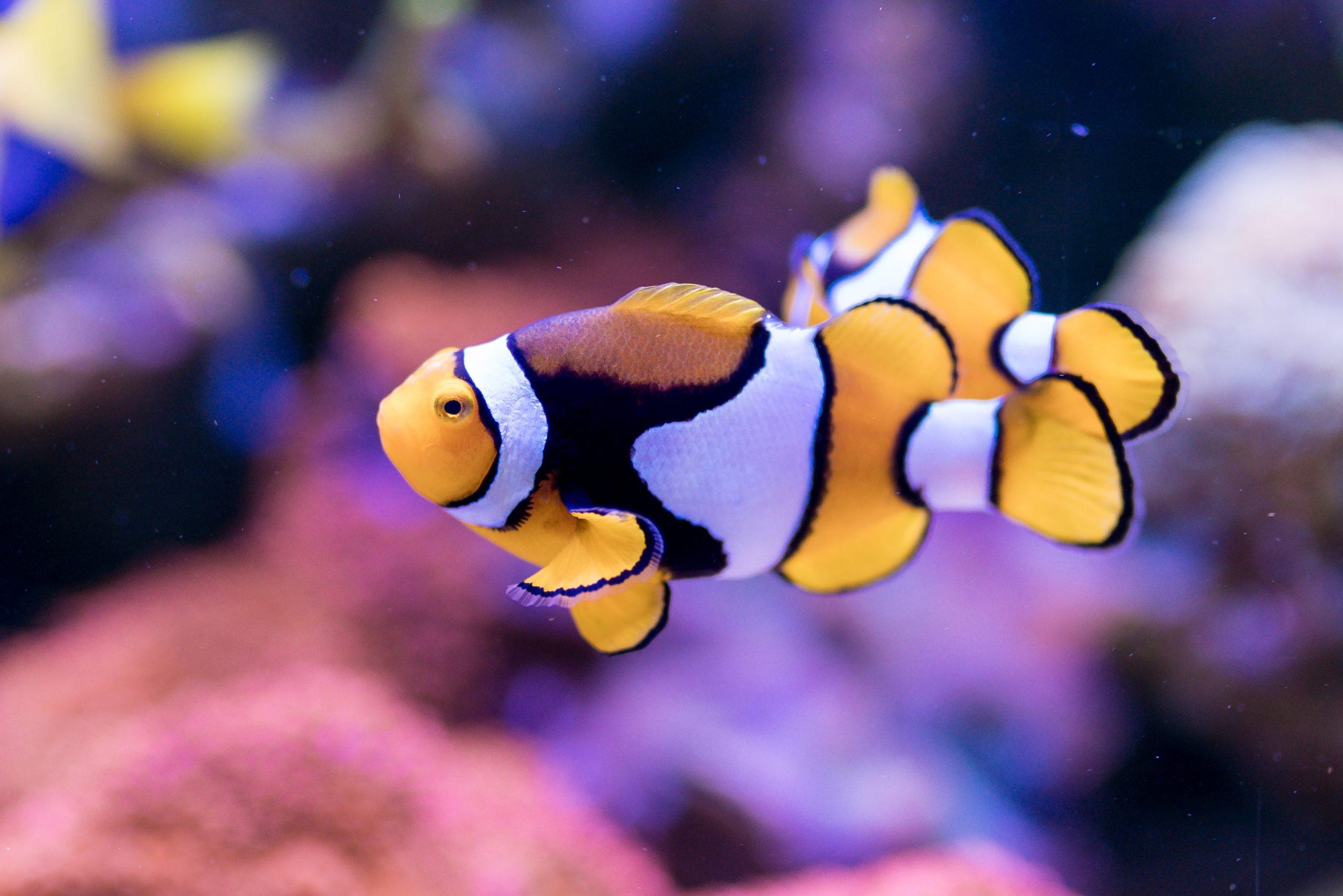
The Picasso Clownfish is a designer variety of the True Percula Clownfish (Amphiprion percula). Rather than being a separate clownfish species, “Picasso” describes its unusual white barring, which may appear broken, widened, irregular, or connected in abstract patterns. Each fish can look different, giving the variety its art-inspired name.
Most Picasso Clownfish have an orange body with black edging around the white markings, although the amount of black can change as the fish matures. They are commonly captive-bred, which makes them well-adapted to aquarium life and usually comfortable with prepared foods. Picasso Clownfish are a strong choice for reef keepers who want a colorful, hardy fish with more distinctive markings than a standard Percula Clownfish.
Yes, Picasso Clownfish are considered reef safe. They generally leave coral tissue, clams, snails, shrimp, and other reef invertebrates alone. Their day is usually spent swimming around their territory, investigating rockwork, and staying close to a preferred host such as an anemone, coral colony, or sheltered corner of the aquarium.
An anemone is not required to keep a Picasso Clownfish healthy. Many captive-bred fish thrive without one, especially in mixed reef aquariums. If you add an anemone, expect the clownfish to become more defensive of that section of the tank. They may chase fish that repeatedly swim through their chosen area, but they rarely cause problems for the corals themselves.
Picasso Clownfish are omnivores and are usually very easy to feed in a mature saltwater aquarium. Their diet should include a combination of frozen mysis shrimp, enriched brine shrimp, finely chopped shrimp, clam, squid, and high-quality marine pellets or flakes. Frozen omnivore blends and foods containing spirulina can add useful variety and support overall conditioning. Feed one or two small meals daily, giving only as much food as the fish can finish within a few minutes. Picasso Clownfish are often eager eaters, so spreading food across the tank can help quieter fish get their share during feeding time.
Most Picasso Clownfish grow to around 3 to 4 inches long. Females are typically larger than males, especially once a pair has formed. Their manageable adult size makes them suitable for many home aquariums, but they still need enough space to establish a territory.
A 30-gallon aquarium is a practical minimum for one fish or a bonded pair. A larger tank is better when keeping them with multiple community fish, anemones, or corals that require stable water conditions.
Yes, Picasso Clownfish can be kept as a bonded pair. The safest option is to purchase a confirmed pair or introduce two juveniles that can establish their hierarchy naturally. Over time, the dominant fish becomes female while the smaller fish remains male.
Keeping more than two Picasso Clownfish in the same aquarium is not recommended for most home setups. Unrelated adults may fight, especially if they compete for the same host, anemone, or rockwork area. A single clownfish or one established pair is the most reliable arrangement.
With proper care, Picasso Clownfish can commonly live 10 to 15 years in captivity. Some may live longer in stable, well-maintained aquariums. Their lifespan depends on water quality, nutrition, disease prevention, tank mate compatibility, and overall stress levels.
Captive-bred specimens often have an advantage because they are raised on prepared foods and are familiar with aquarium conditions before they reach a retailer.
Picasso Clownfish are usually less aggressive than Maroon or Tomato Clownfish, but they can still become territorial. Their behavior is most noticeable when they mature, form a pair, or begin defending an anemone or nesting site. They may chase fish that come too close, but are rarely considered overly aggressive in a properly sized community aquarium.
Aggression is easier to manage when the aquarium has ample room, several distinct territories, and tank mates that are not overly shy or combative.
Picasso Clownfish are generally more expensive than standard Ocellaris or Percula Clownfish because of their designer patterning and captive breeding background. Most standard Picasso Clownfish sell for $60 to $150, though prices can increase for fish with highly unusual markings, premium bloodlines, or well-developed black coloration.
A juvenile with less dramatic white patterning may develop more defined markings as it grows, so an expensive fish is not always necessary to get an attractive adult. When selecting one, look for an active fish that is eating, breathing normally, and showing no torn fins, cloudy eyes, or visible signs of disease.
Picasso Clownfish are generally peaceful to semi-aggressive, depending on their age, tank size, and whether they have claimed a host. They are usually easy to combine with other reef-safe fish that do not compete for the same territory. A larger aquarium with multiple rock formations helps each fish establish its own space.
Good tank mate options include:
Avoid combining a Picasso Clownfish with large predatory fish such as lionfish, eels, groupers, or aggressive triggerfish. It is also best to avoid mixing different clownfish species in smaller tanks, as clownfish often become territorial toward one another. Damselfish and dottybacks may also cause conflict if the aquarium does not provide enough room.
Picasso Clownfish are commonly available through marine livestock retailers, particularly sellers that carry captive-bred designer clownfish. Choose a fish that is alert, eating well, and free of visible damage or disease symptoms.
Where to buy Picasso Clownfish:
The Picasso Clownfish is a distinctive, reef-safe, and hardy addition to a saltwater aquarium. Its designer markings make it more visually unique than a standard Percula Clownfish, while its dependable care needs make it approachable for newer reef keepers. With a varied diet, a stable environment, and well-matched tank mates, this fish can become a long-term centerpiece in a reef or fish-only aquarium.