
Glossary:
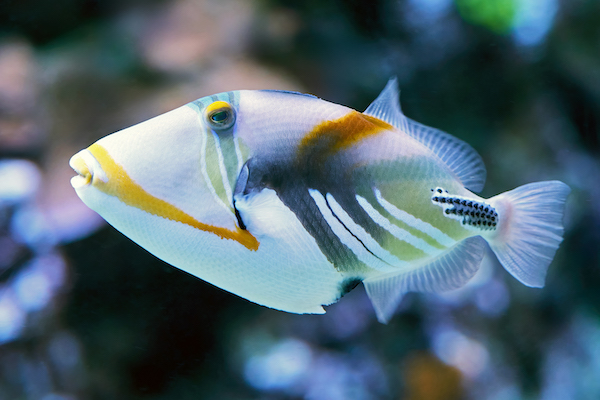
The Picasso Triggerfish (Rhinecanthus aculeatus) is a bold, colorful marine fish with an unmistakable painted appearance. Its body features sharp black markings, blue facial lines, yellow accents, and a pale underside that gives it the look of a hand-decorated reef fish. It is also known as the Humu Picasso Triggerfish, Lagoon Triggerfish, or the Hawaiian name Humuhumunukunukuāpuaʻa.
Native to shallow lagoons and reef flats throughout the Indo-Pacific, Picasso Triggerfish are active, intelligent, and highly aware of their surroundings. They often recognize feeding routines and may quickly become one of the most noticeable fish in a large aquarium. However, their curious nature, strong jaws, and territorial behavior mean they are not a peaceful community fish. They are best suited for experienced aquarists with a spacious fish-only aquarium and a carefully planned stocking list.
Picasso Triggerfish are not considered reef safe. They may eat or injure ornamental shrimp, crabs, snails, clams, sea urchins, and other invertebrates commonly kept in reef tanks. Their natural foraging behavior also leads them to investigate rockwork, move loose objects, and pick at animals living around the substrate.
They may not always target coral tissue directly, but a Picasso Triggerfish can still damage a reef aquarium by knocking over coral frags, disturbing delicate aquascaping, or eating the cleanup crew. A fish-only-with-live-rock aquarium is generally the safest option. Use large, stable rock structures that are difficult for the fish to shift or undermine.
Picasso Triggerfish are omnivores with a strong preference for meaty marine foods. Their diet should include chopped shrimp, squid, clam, mussel, scallop, mysis shrimp, krill, frozen carnivore blends, and high-quality marine pellets. Offer shell-on foods such as clams, mussels, or shrimp regularly to support natural feeding behavior and help wear down their continuously growing teeth. Feed juveniles smaller portions once or twice daily, while adults can usually be fed a controlled portion once daily or several times per week. Avoid relying on one food source, as dietary variety is important for color, body condition, and long-term health. Because these fish are messy eaters, strong filtration, protein skimming, and regular water changes are essential.
Picasso Triggerfish can reach approximately 10 to 11 inches long as adults. Their size, active swimming behavior, and territorial habits mean they need much more room than their juvenile appearance suggests.
A 125-gallon aquarium is a practical minimum for a smaller individual, but a 180-gallon or larger tank is a better long-term choice for an adult. The aquarium should include open swimming space, stable rockwork, and several caves or overhangs where the fish can retreat at night.
Keeping more than one Picasso Triggerfish together is not recommended in most home aquariums. They can become territorial toward members of their own species and may fight over food, caves, and swimming space.
In an exceptionally large aquarium, experienced aquarists may attempt more than one triggerfish species, but compatibility is never guaranteed. For most home systems, one Picasso Triggerfish is the safest and most manageable arrangement.
With strong water quality, a varied diet, a spacious aquarium, and compatible tank mates, Picasso Triggerfish can often live around 10 to 15 years in captivity. Some may live longer with exceptional long-term care.
Their lifespan depends heavily on stable water conditions and proper nutrition. Poor water quality, repeated stress, cramped living space, and injuries from aggressive tank mates can all shorten the life of this species.
Picasso Triggerfish are considered semi-aggressive. Juveniles may initially seem peaceful or shy, but adults often become more territorial and assertive. They may chase smaller fish, defend their preferred rockwork, and become especially protective around feeding time.
They are usually less aggressive than a Clown Triggerfish, but they should still be treated as a dominant fish in a community. A large aquarium, strong tank mates, and a carefully planned stocking order can help limit conflict.
Picasso Triggerfish are commonly available compared with many larger triggerfish species, but price can vary based on size, origin, retailer, shipping costs, and conditioning. Smaller juveniles are often less expensive, while larger adults may cost more because they require additional space and care during shipping.
A healthy fish is more important than finding the lowest price. Look for a Picasso Triggerfish with clear eyes, full body condition, intact fins, normal breathing, and a strong feeding response. Avoid fish that appear thin, remain hidden constantly, have damaged skin, or show unusual spots or labored breathing.
Picasso Triggerfish need sturdy tank mates that are too large to be viewed as prey and confident enough to tolerate a semi-aggressive fish. Even a triggerfish that behaves well as a juvenile may become more assertive with age, especially around food or preferred caves.
Potential tank mates include:
Avoid ornamental shrimp, crabs, snails, clams, sea stars, small gobies, firefish, dartfish, and delicate reef fish. Other triggerfish can also be risky because they may compete for territory or trigger aggressive behavior. Monitor all new additions closely, especially when the Picasso Triggerfish is already established.
Picasso Triggerfish are regularly available through specialty saltwater livestock retailers and local aquarium stores. Before purchasing one, make sure your tank is large enough for its adult size and does not contain invertebrates or delicate fish that could become targets.
Where to buy Picasso Triggerfish:
The Picasso Triggerfish is a colorful and intelligent addition to a well-planned fish-only aquarium. Its unique pattern, active personality, and hardiness make it rewarding to keep, but its adult size, appetite, and territorial nature require plenty of space and thoughtful long-term care.