Glossary:
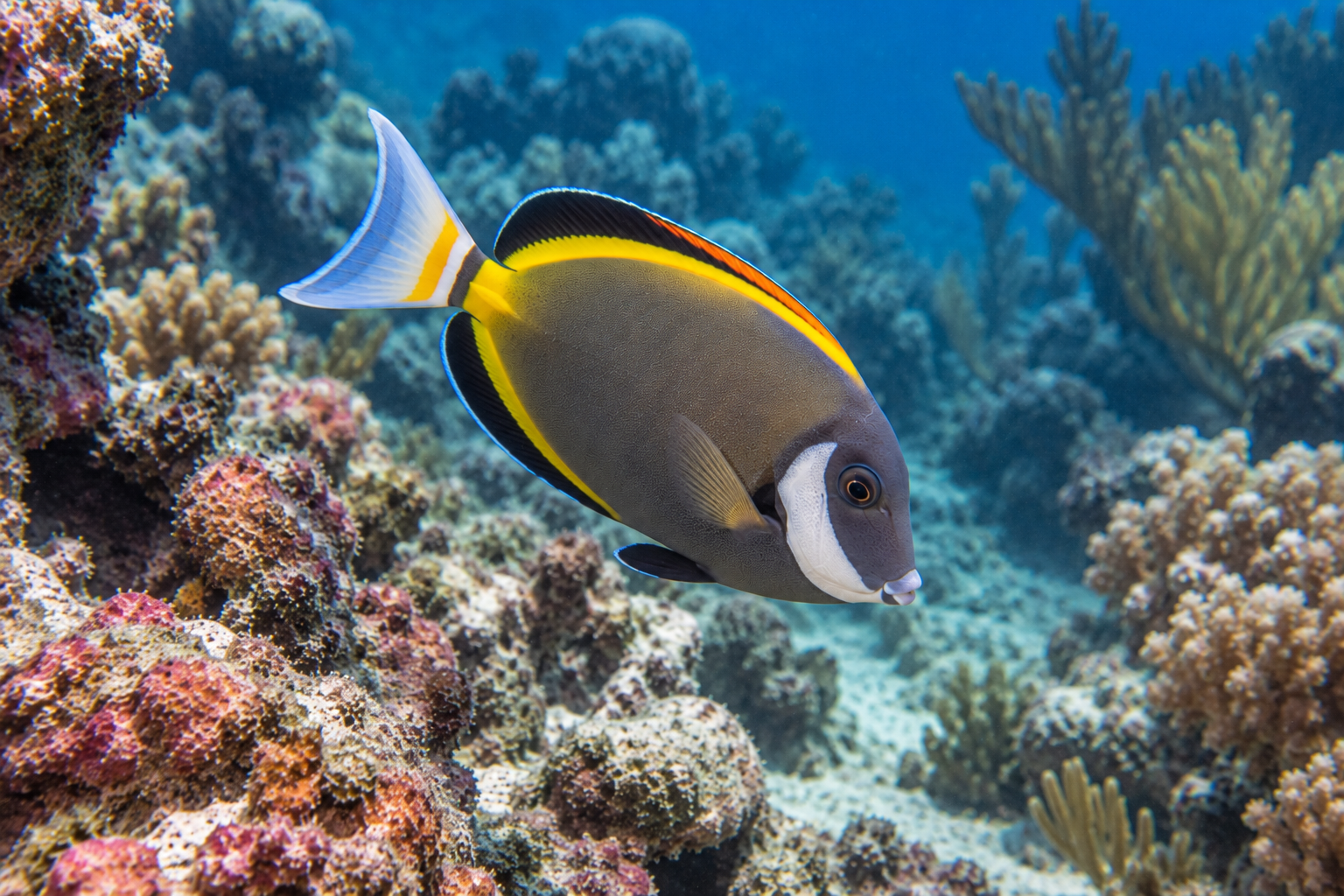
The Powder Brown Tang (Acanthurus japonicus) is a striking surgeonfish with a deep brown body, white face markings, bright orange near the shoulder, and blue edging along its fins. Its bold coloring and constant grazing behavior make it a sought-after addition to large saltwater aquariums. This species is sometimes also called the White-Faced Surgeonfish, and it should not be confused with the similar-looking Acanthurus nigricans, which is also sold under the Powder Brown Tang name.
Native to the Indo-Pacific, the Powder Brown Tang spends much of its time swimming across reef faces and grazing on algae-covered surfaces. It is beautiful but demanding. This species is sensitive to stress, prone to marine ich, and needs excellent water quality from the start. It is best suited for experienced aquarists with a mature aquarium, strong filtration, and enough space for an active adult tang.
Powder Brown Tangs are generally considered reef safe. They do not typically nip at coral tissue, damage clam mantles, or hunt ornamental shrimp and crabs. Their main focus is grazing on algae, biofilm, and plant material growing on rockwork and aquarium surfaces.
A well-fed Powder Brown Tang can work well in a large reef tank, especially when marine algae is readily available. However, this is a fast-moving fish that may accidentally knock over loose corals or disturb unsecured aquascaping. Mount corals firmly and provide wide swimming lanes so the tang can move through the aquarium without constantly brushing against coral structures.
Powder Brown Tangs are primarily herbivores, although they benefit from occasional meaty foods for variety. Their diet should be built around dried marine seaweed such as nori, spirulina-based flakes or pellets, algae sheets, and frozen herbivore blends. Offer seaweed regularly on a clip so the fish can graze throughout the day, which matches its natural feeding behavior. Smaller portions of mysis shrimp, enriched brine shrimp, copepods, and quality omnivore blends can be offered as supplements. Feeding several smaller meals throughout the day, when possible, helps support digestion, body condition, color, and immune health. An algae-rich diet is especially important because underfed tangs are more vulnerable to stress and illness.
Powder Brown Tangs can grow to about 8 inches long. Their adult size, high activity level, and need for open swimming space mean they should not be housed in small aquariums.
A 125-gallon aquarium is generally the minimum for a smaller individual, while a 180-gallon or larger system with a long footprint is better for long-term care. A six-foot tank gives the fish more room to swim naturally and reduces stress as it matures.
Keeping more than one Powder Brown Tang together is not recommended in most home aquariums. They can become aggressive toward members of their own species, especially when space is limited, or one fish establishes territory first.
A pair or group may only work in an exceptionally large aquarium with abundant swimming room, separate feeding zones, and plenty of rockwork. For most aquarists, one Powder Brown Tang is the safest and most predictable long-term choice.
With excellent water quality, proper nutrition, disease prevention, and enough space, Powder Brown Tangs can often live around 10 to 15 years in captivity. Their lifespan can be shortened by poor acclimation, chronic stress, limited swimming room, and recurring disease.
This species is especially susceptible to marine ich and other stress-related illnesses. Quarantine, stable water parameters, and a mature aquarium are important steps before introducing one to a display tank.
Powder Brown Tangs are semi-aggressive. They are often peaceful toward unrelated fish, but they may become territorial toward other surgeonfish, rabbitfish, or algae grazers that compete for the same food and swimming areas.
Their behavior is usually more manageable in a large tank with plenty of open water and consistent access to algae-based foods. Introducing the Powder Brown Tang after less aggressive fish are already established may also help reduce territorial behavior.
Powder Brown Tangs are often moderately to highly priced compared with common beginner tangs. Pricing can vary based on size, collection region, retailer, shipping costs, availability, and whether the fish has been quarantined or conditioned before sale. Many healthy specimens may fall within a general range of about $100 to $250.
A low price should never be the only reason to choose a Powder Brown Tang. Look for a fish that is alert, actively grazing, eating prepared foods, and breathing normally. Avoid fish with a pinched stomach, faded coloring, cloudy eyes, torn fins, white spots, or labored breathing. Healthy specimens that are already eating are much more likely to adjust successfully.
Powder Brown Tangs do best with fish that are peaceful to semi-aggressive, large enough to coexist with an active surgeonfish, and unlikely to compete directly for the same territory. They may become territorial toward other tangs, particularly fish with a similar body shape, color pattern, or algae-grazing behavior.
Potential tank mates include:
Avoid aggressive triggerfish, large groupers, lionfish, eels, predatory puffers, and highly territorial surgeonfish. Keeping multiple tangs can work in a very large aquarium, but they should have different body shapes, enough swimming space, and multiple algae feeding areas to reduce conflict.
Powder Brown Tangs are available through many specialty marine livestock retailers and local aquarium stores. Before purchasing one, make sure your aquarium is mature, adequately sized, and equipped with a varied algae-based feeding plan.
Where to buy Powder Brown Tang:
The Powder Brown Tang is a beautiful but advanced saltwater fish that rewards careful planning. In a large, stable aquarium with strong water quality, regular algae feedings, and compatible tank mates, this active surgeonfish can become a colorful long-term centerpiece.