
Glossary:
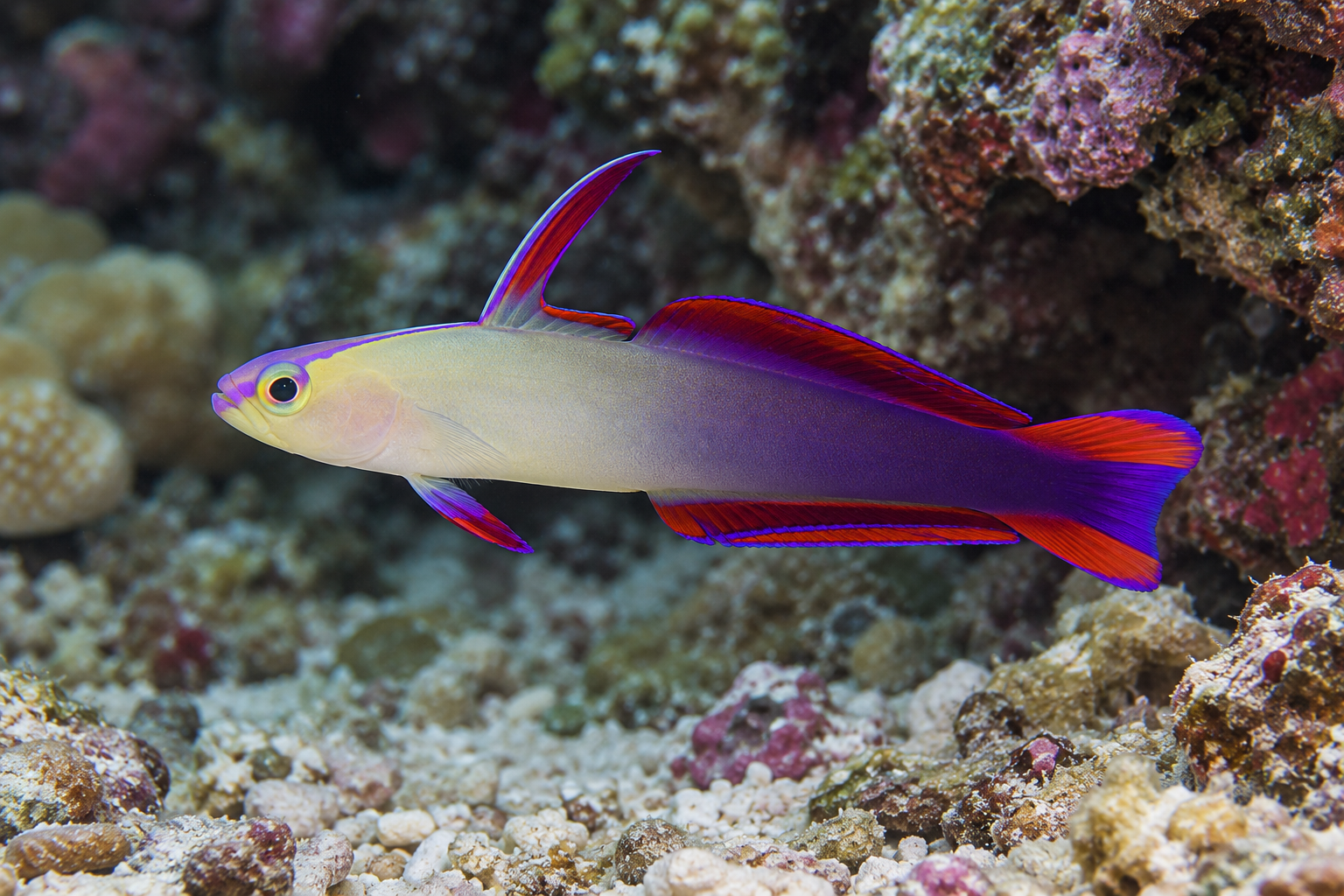
The Purple Firefish (Nemateleotris decora), also known as the Purple Dartfish or Decorated Dartfish, is a graceful reef fish with a pale front half, a vivid purple body, and yellow to pink highlights around the head and fins. Its flowing dorsal fin and hovering swimming style make it a standout choice for aquarists who want color without adding a highly aggressive fish to the tank.
Native to reef slopes and rubble zones throughout the Indo-Pacific, Purple Firefish spend much of their time hovering close to a protected retreat. They are peaceful, compact, and generally easy to feed, but they can be shy when first introduced. A calm aquarium, stable water conditions, and a secure lid are essential, as this species is known to jump when startled.
Yes, Purple Firefish are considered reef safe. They do not normally nip at coral tissue, disturb clam mantles, or hunt ornamental shrimp, snails, or crabs. Their peaceful nature makes them a strong fit for mixed reef tanks with corals and other nonaggressive livestock.
Anemones are not necessary for Purple Firefish, but rockwork is important. They need caves, crevices, or sheltered spaces where they can retreat when they feel threatened. A fish that has a dependable hiding area is more likely to spend time out in the open rather than remaining hidden all day.
The main concern with Purple Firefish is stress from tank mates. Large, territorial, or fast-moving fish can intimidate them, leading them to hide, skip meals, or jump out of the aquarium. A mesh lid or tightly fitted cover is a must before adding one.
Purple Firefish are planktivores that feed on small drifting organisms in the water column. In captivity, they usually accept frozen mysis shrimp, enriched brine shrimp, copepods, finely chopped shrimp or clam, and small marine pellets or flakes. A varied diet is more beneficial than feeding one food repeatedly, especially when helping a newly introduced fish regain strength after shipping. Offer small portions once or twice per day, placing some food near the Firefish’s preferred shelter so it has a chance to eat before faster tank mates take over. Purple Firefish do not require large meals, but regular feeding and clean water are important for maintaining their color and overall condition.
A Purple Firefish can grow to approximately 3 to 4 inches long. Its slim body and smaller adult size make it appropriate for many home aquariums, but it still needs room to establish a safe territory.
A 20-gallon aquarium is generally a practical minimum for one Purple Firefish. A larger aquarium is preferable when keeping one with several tank mates, as extra space gives the fish more room to retreat and reduces stress.
Purple Firefish can sometimes be kept as a bonded pair. The safest option is to purchase a confirmed pair or to introduce two juveniles into separate hiding locations simultaneously.
Keeping multiple unrelated Purple Firefish together can lead to territorial behavior, especially in smaller aquariums. For most hobbyists, a single fish or a bonded pair is the most dependable long-term arrangement. Mixing a Purple Firefish with other dartfish species should also be done carefully, as they may compete for the same areas of the tank.
With stable water quality, proper feeding, and compatible tank mates, Purple Firefish can often live around 3 to 5 years in captivity. Their lifespan may be longer in a carefully maintained aquarium where they are protected from chronic stress, disease, and jumping accidents.
A secure lid has a major impact on long-term success. Even a healthy Purple Firefish can jump when startled by sudden movement, an aggressive tank mate, or changes during aquarium maintenance.
Purple Firefish are peaceful toward most community fish. They do not usually chase unrelated tank mates, defend large sections of the aquarium, or create issues with corals and invertebrates.
However, they can be territorial toward other Purple Firefish or similarly shaped dartfish when space is limited. Their behavior is usually defensive rather than openly aggressive. In most cases, this species is more likely to be bullied than to become the bully.
Purple Firefish are usually more expensive than standard Firefish because of their richer coloration and lower availability. Most specimens are priced between $60 and $120, though costs can vary by retailer, size, shipping region, and current supply.
Captive-bred Purple Firefish are not as common as captive-bred clownfish, so many available fish are wild-collected. Choose a specimen that is alert, breathing normally, and showing interest in food. Avoid fish with faded color, frayed fins, cloudy eyes, visible spots, or labored breathing.
Purple Firefish do best with calm, reef-safe fish that will not crowd their hiding space or dominate feeding time. They are more likely to thrive in a peaceful community aquarium than in a tank built around aggressive or highly territorial species.
Suitable tank mates include:
Avoid aggressive dottybacks, large clownfish, lionfish, groupers, eels, triggerfish, and predatory wrasses. These fish may bully or eat a Purple Firefish. Very active damsels can also be a problem in smaller tanks because the Firefish may feel pressured to remain in hiding.
Purple Firefish are available through many reputable marine livestock retailers and specialty aquarium stores. Before purchasing, make sure your tank is fully cycled, equipped with a secure lid, and stocked with peaceful fish.
Where to buy Purple Firefish:
The Purple Firefish is a colorful and peaceful addition to a reef aquarium when given a secure, low-stress environment. Its distinctive coloring, manageable size, and calm personality make it a strong choice for aquarists who want a refined centerpiece fish without the complications of a highly aggressive species.