Glossary:
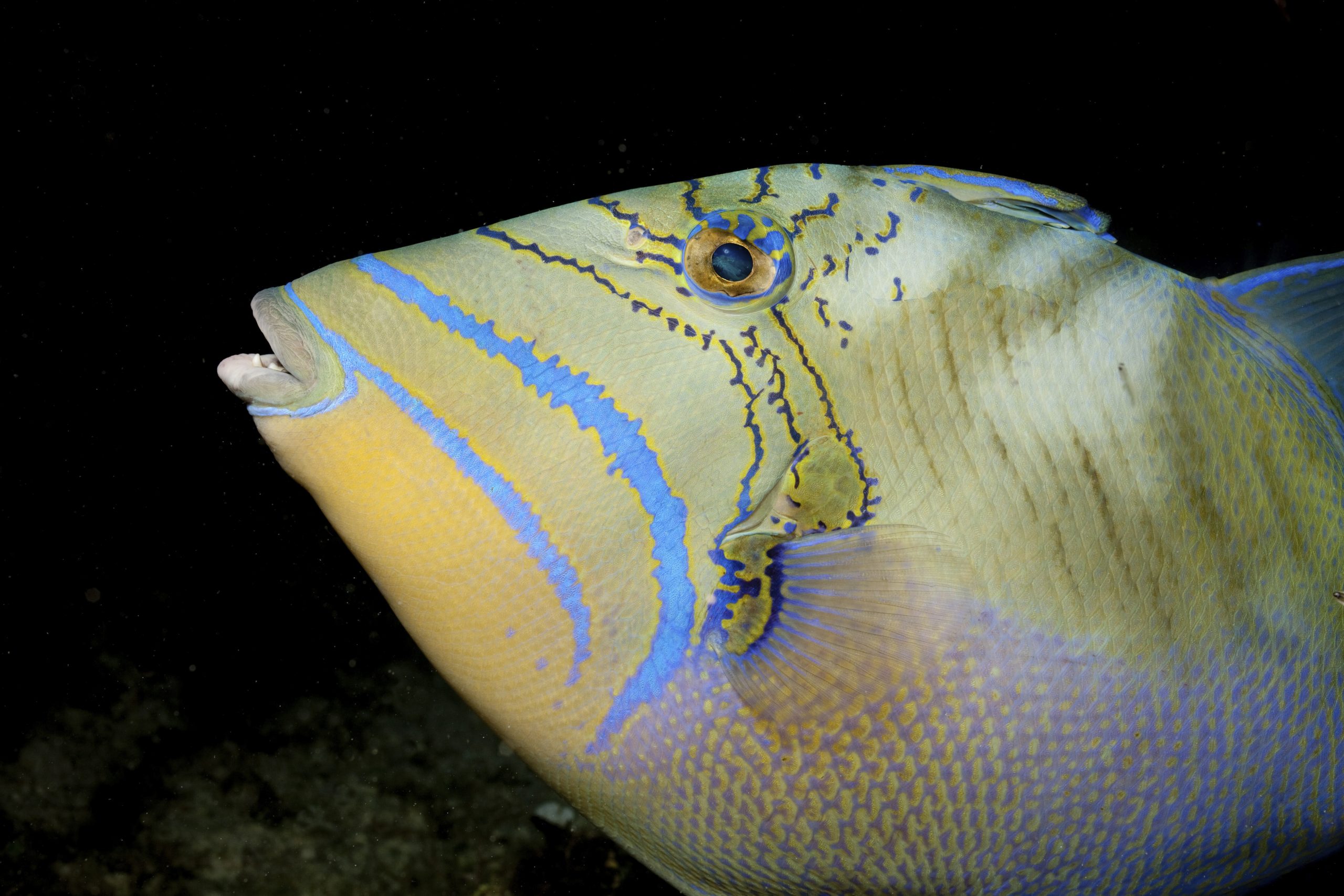
The Queen Triggerfish (Balistes vetula) is a large, powerful Atlantic triggerfish known for its bright blue, green, yellow, and gold coloration. Its bold face markings, strong jaws, and confident behavior make it a striking centerpiece for a very large saltwater aquarium. Native to the Caribbean, Gulf of Mexico, and western Atlantic, Queen Triggerfish are often found around reefs, rocky areas, and open coastal environments where they hunt invertebrates and patrol their territory.
This species is not suited for a typical community reef tank. Queen Triggerfish grow large, produce substantial waste, and often become increasingly territorial as they mature. They require a spacious, fish-only system, strong filtration, secure rockwork, and tank mates that can tolerate a dominant, potentially aggressive fish. For advanced aquarists with the right setup, a Queen Triggerfish can become a long-term showpiece with a lot of personality.
Queen Triggerfish are not reef safe. They may eat ornamental shrimp, crabs, snails, clams, sea urchins, and other invertebrates commonly kept in reef aquariums. Their powerful jaws are designed for crushing hard-shelled prey, which makes a standard cleanup crew an unreliable choice.
They can also move rocks, disturb sand, and knock over loose coral frags while searching for food. While a Queen Triggerfish may not focus on coral tissue itself, its foraging behavior can still damage a reef aquarium. A fish-only-with-live-rock setup is usually the most practical option. Rockwork should be large, stable, and securely positioned so the fish cannot shift or undermine it.
Queen Triggerfish are carnivorous and require a varied diet of marine-based foods. Suitable options include chopped shrimp, squid, clams, mussels, scallops, krill, mysis shrimp, and high-quality frozen carnivore blends. Shell-on foods such as clams, mussels, or shrimp should be offered regularly to encourage natural feeding behavior and help wear down their teeth. Juveniles may need smaller meals once or twice daily, while adults can usually be fed controlled portions once per day or several times per week. Avoid relying too heavily on a single item, especially fatty foods like krill, as dietary variety supports better nutrition and long-term health. Their messy eating habits create a heavy bioload, so strong filtration, protein skimming, and routine water changes are essential.
Queen Triggerfish can grow to around 20 to 24 inches long as adults. Their thick body, strong jaws, and active swimming behavior mean they need much more space than their juvenile size suggests.
A 300-gallon aquarium is a realistic minimum for long-term care, but a 400-gallon or larger system is a more responsible choice for a full-grown adult. A long tank footprint provides better swimming space and allows tank mates more room to avoid territorial conflict.
Keeping multiple Queen Triggerfish together is not recommended in most home aquariums. They can be highly territorial toward members of their own species and may fight over food, caves, or swimming space.
Even in a very large aquarium, success is unpredictable. For most aquarists, one Queen Triggerfish is the safest arrangement. Adding other triggerfish should only be considered in an exceptionally large system with a carefully planned stocking list and close observation.
With stable water quality, a varied diet, plenty of space, and compatible tank mates, Queen Triggerfish can often live 10 to 15 years or longer in captivity. Their lifespan depends heavily on proper nutrition, low stress, and long-term aquarium stability.
Because this fish can become large and live for many years, it should be treated as a serious long-term commitment. Poor water quality, cramped housing, repeated aggression, and improper feeding can significantly shorten its lifespan.
Queen Triggerfish are highly aggressive, especially as they mature. Juveniles may appear relatively calm at first, but adults can become territorial and may chase, bite, or intimidate other fish that enter their preferred area.
Aggression is often most noticeable around food, caves, and favored sections of rockwork. A large aquarium and strong tank mates can reduce conflict, but this species should never be considered a peaceful community fish.
Queen Triggerfish are less commonly available than many smaller triggerfish species, and their price can vary based on size, source, retailer, shipping costs, and conditioning. Smaller juveniles may cost a few hundred dollars, while larger, healthy specimens can be more expensive due to their size and specialized shipping needs.
The initial price is only one part of the commitment. A full-grown Queen Triggerfish needs a large aquarium, powerful equipment, frequent maintenance, and a steady supply of varied marine foods. Look for a fish with clear eyes, intact fins, steady breathing, full body condition, and a strong feeding response. Avoid specimens that appear thin, have damaged skin, hide constantly, or show signs of stress.
Queen Triggerfish should only be kept with large, durable fish that are too big to be viewed as prey and confident enough to handle a dominant tank mate. Even within compatible species, behavior can change as triggerfish grow. An individual who seems manageable as a juvenile may become much more assertive as an adult.
Potential tank mates in a very large fish-only aquarium include:
Avoid small gobies, firefish, clownfish, ornamental shrimp, crabs, snails, clams, sea stars, and delicate reef fish. Other triggerfish can also be risky, especially in tanks without enough space for separate territories. Monitor all tank mates carefully and be prepared to separate fish if aggression becomes persistent.
Queen Triggerfish are sometimes available through specialty marine livestock retailers and local saltwater aquarium stores. Before purchasing one, make sure your tank is large enough for its adult size and does not contain invertebrates or smaller fish that could become targets.
Where to buy Queen Triggerfish:
The Queen Triggerfish is a dramatic and rewarding fish for advanced aquarists with a large, stable fish-only aquarium. Its vivid coloration and intelligent behavior make it unforgettable, but its adult size, appetite, and aggressive nature require careful planning from the beginning.