Glossary:
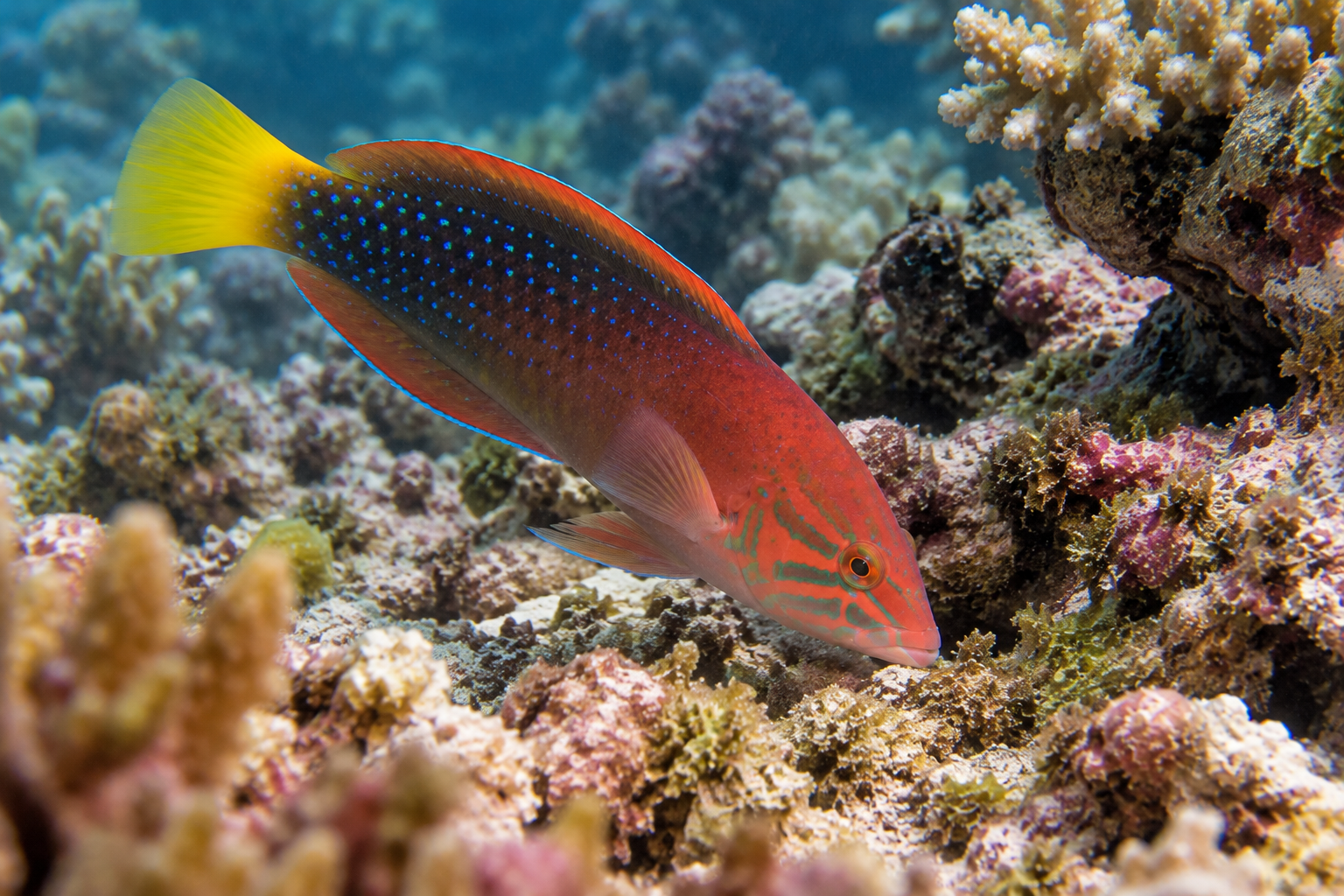
The Red Coris Wrasse (Coris gaimard), also known as the Yellowtail Coris Wrasse, is one of the most dramatic fish in the saltwater aquarium hobby because it undergoes significant changes as it matures. Juveniles are bright red or orange with white spots and dark edging, while adults develop a greenish-blue body, orange facial markings, and a vivid yellow tail. This striking transformation often makes juvenile and adult fish look like entirely different species.
Native to the Indo-Pacific, Red Coris Wrasses are active hunters that spend the day moving through rockwork and sand in search of small invertebrates. They are hardy once established, but they are not a small reef-safe wrasse. Adults become large, require a deep sand bed for sleeping, and may eat shrimp, snails, crabs, and other ornamental invertebrates. This species is best suited for experienced aquarists with a large fish-only or fish-only-with-live-rock aquarium.
Red Coris Wrasses are not considered reef safe. They usually do not target coral tissue directly, but they can cause major problems in a reef aquarium by hunting ornamental shrimp, crabs, snails, clams, worms, and other small invertebrates. They are also strong foragers that may flip over rocks, coral frags, and loose decorations while searching for food.
A fish-only-with-live-rock aquarium is usually a better environment for this species. Any rockwork should be firmly secured before adding the wrasse, especially because adults are powerful enough to shift loose pieces while digging and exploring. A Red Coris Wrasse may be coral compatible in the narrow sense that it does not typically eat corals, but it is not cleanup-crew safe.
Red Coris Wrasses are carnivorous and naturally feed on small crustaceans, worms, mollusks, and other invertebrates found around reefs and in sandy areas. In captivity, they should receive a varied diet of frozen mysis shrimp, chopped clam, squid, shrimp, scallop, krill, enriched brine shrimp, and quality marine carnivore pellets. Feed smaller portions once or twice daily, adjusting the amount as the fish grows. Adults have strong appetites and can create a significant bioload, so avoid overfeeding and maintain strong filtration. Prepared foods should form the foundation of the diet, even though the wrasse may continue hunting for small organisms around the aquarium between meals.
Red Coris Wrasses can reach around 12 to 16 inches long as adults. Although juveniles are often sold at only a few inches long, they grow into large, active fish that require substantial swimming space and a deep sand bed.
A 180-gallon aquarium is a more realistic minimum for long-term care, while a larger system is even better for a full-grown adult. The aquarium should provide open swimming space, stable rockwork, and at least 3 to 4 inches of soft sand for burrowing.
Keeping multiple Red Coris Wrasses together is not recommended for most home aquariums. Adults may become territorial toward members of their own species, particularly when they compete for food, sleeping areas, or open swimming space.
For most aquarists, one Red Coris Wrasse is the safest choice. It may coexist with certain other wrasse species in a very large aquarium, but similarly shaped, highly active wrasses can still cause competition and stress.
With stable water quality, a varied diet, secure substrate, and compatible tank mates, Red Coris Wrasses can often live 10 years or longer in captivity. Their long-term success depends heavily on being housed in a tank that can support their full adult size.
The biggest risks are limited swimming room, insufficient sand for burrowing, poor nutrition, and injuries from aggressive tank mates. A secure lid is also important because this species can jump when startled.
Red Coris Wrasses are generally considered semi-aggressive. Juveniles are often shy and relatively peaceful, but adults can become more assertive around food, rockwork, and preferred areas of the aquarium.
They are most likely to show aggression toward smaller invertebrates, similar wrasse species, and animals that compete for the same food sources. In a large fish-only aquarium with durable tank mates, their behavior is often manageable.
Red Coris Wrasses are commonly sold as juveniles due to their bright red coloration and smaller size. Juveniles are often less expensive than larger adults, with pricing often varying by size, retailer, condition, shipping, and availability. Larger specimens can be more difficult to find and more expensive because of their adult size and care requirements.
When choosing a Red Coris Wrasse, look for one that is alert, swimming upright, and actively interested in food. Its body should appear full rather than thin or pinched. Avoid fish with faded coloration, torn fins, cloudy eyes, heavy breathing, or visible skin damage. A healthy juvenile should be eating prepared foods before being added to a home aquarium.
Red Coris Wrasses should be kept with medium to large fish that can handle an active, semi-aggressive tank mate. They are often manageable with unrelated fish, but they may become more territorial as they mature. Tank mates should also be too large to be mistaken for prey and should not constantly harass the wrasse.
Potential tank mates include:
Avoid ornamental shrimp, crabs, snails, clams, small gobies, firefish, and other small invertebrates or fish. Large aggressive triggerfish, lionfish, eels, predatory puffers, and oversized groupers can also be poor choices because they may intimidate, injure, or eat the wrasse.
Red Coris Wrasses are available through specialty saltwater livestock retailers and local aquarium stores. Before purchasing one, make sure your aquarium has a deep sand bed, secure rockwork, a tightly fitting lid, and enough space for the fish as adults.
Where to buy Red Coris Wrasse:
The Red Coris Wrasse is a colorful and fascinating fish for aquarists prepared for its adult size and active hunting behavior. With a spacious fish-only aquarium, deep sand bed, varied diet, and compatible tank mates, this wrasse can become a long-lived and constantly engaging centerpiece.