
Glossary:
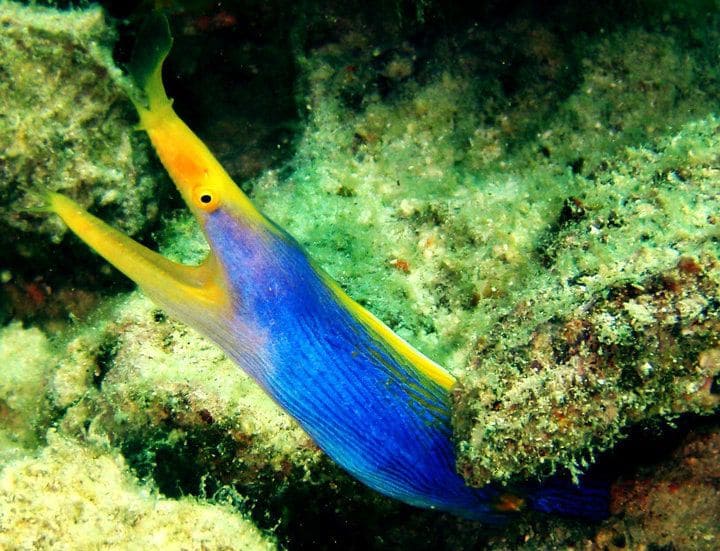
The Ribbon Eel (Rhinomuraena quaesita) is one of the most distinctive moray eels in the saltwater aquarium hobby. Its long, narrow body, dramatic dorsal fin, and flared nostrils give it a completely different appearance from the thicker-bodied morays commonly kept in fish-only tanks. Ribbon Eels are most often seen in black, blue, or yellow color phases, with blue individuals commonly called Blue Ribbon Eels and yellow individuals often called Yellow Ribbon Eels.
This eel is visually impressive, but it is not an easy species to keep. Ribbon Eels are known for being difficult to acclimate, highly selective about food, and prone to refusing prepared meals after shipping. Their specialized feeding needs, large adult size, and escape-artist behavior make them better suited for advanced aquarists with an established, secure aquarium and experience caring for demanding marine predators.
Ribbon Eels are reef safe with caution. They generally do not damage corals or actively disturb rockwork, which means they can live around many coral species. However, they are not safe with small fish, ornamental shrimp, crabs, or other small invertebrates that may be viewed as prey.
The bigger issue is that a reef tank may not be the most practical environment for a Ribbon Eel. These eels need secure caves, a tight-fitting lid, and carefully managed feeding. They can slip through small gaps around plumbing, cords, and aquarium covers. A fish-only-with-live-rock setup is often easier to manage because it allows the aquarist to build secure hiding spaces without worrying about an eel moving through delicate coral structures.
Ribbon Eels are carnivores that naturally feed on small fish and other meaty marine prey. Their diet can be difficult to manage in captivity because many newly imported specimens refuse frozen foods and only respond to live saltwater feeder fish. Some aquarists gradually transition a willing Ribbon Eel to strips of marine fish, squid, shrimp, clam, or other frozen seafood offered on feeding tongs, but this is not successful with every individual. Freshwater feeder fish should be avoided because they do not provide appropriate long-term nutrition. Feed small meals two or three times per week once the eel is established, and use long feeding tongs rather than your hands. A Ribbon Eel can strike quickly when it smells food, even if it is not intentionally trying to bite.
Ribbon Eels can reach approximately 3 to 4 feet in length as adults. Their slender bodies may make them appear less demanding than thicker moray species, but they still need substantial room to move, turn, and retreat into secure hiding places.
A 125-gallon aquarium is often considered a minimum starting point for a smaller Ribbon Eel, but a 180-gallon or larger system is a more realistic long-term option for an adult. The tank should include large PVC tubes, secure rock caves, or protected tunnels that allow the eel to hide without becoming trapped.
Keeping multiple Ribbon Eels together is possible only in a very large, carefully planned aquarium. The tank needs enough space, multiple secure hiding areas, and reliable feeding opportunities for each eel. Introducing two individuals at the same time is generally safer than adding a new eel to an established eel’s territory.
For most home aquariums, one Ribbon Eel is the most dependable choice. Multiple eels can compete for food or hiding spaces, and the difficulty of feeding even one Ribbon Eel makes pairs or groups a more advanced undertaking.
Ribbon Eels may live for many years in the wild, but their lifespan in captivity is often much shorter when they struggle to adapt to aquarium feeding. With excellent long-term care, stable water quality, and consistent nutrition, they may live several years in a home aquarium.
The primary challenge is preventing starvation after introduction. A Ribbon Eel that refuses food for an extended period can lose weight quickly. This species should only be purchased when the aquarist is prepared to monitor feeding behavior closely and provide appropriate live or prepared marine foods.
Ribbon Eels are usually shy and defensive rather than aggressively territorial. They often spend much of the day partially hidden in a cave with only their head visible. However, they are still predators and may eat small fish, shrimp, or other animals that fit into their mouths.
Most aggression occurs around food or when the eel feels threatened. Providing a secure hiding place, feeding with tongs, and avoiding undersized tank mates can help keep their behavior predictable and reduce stress for the rest of the aquarium.
Ribbon Eels are usually more expensive than many common moray eel species because of their unusual appearance and lower availability. Prices can vary substantially based on size, color phase, condition, retailer, and shipping location. Smaller specimens are often listed in the $150 to $400 range, while larger or conditioned individuals may cost more.
The purchase price is only part of the investment. A Ribbon Eel may require live marine foods during acclimation, specialized feeding tools, a large aquarium, and a secure cover system. Before purchasing one, make sure the tank is mature and that you have a realistic plan for getting the eel to eat consistently.
Ribbon Eels should only be kept with fish that are too large to fit in their mouths and calm enough not to harass them. Even though Ribbon Eels are often shy rather than openly aggressive, their predatory instincts can become a problem when smaller fish share the tank.
Potential tank mates include:
Avoid small clownfish, firefish, dartfish, small gobies, damsels, ornamental shrimp, crabs, and tiny reef invertebrates. Lionfish, aggressive triggerfish, large groupers, and highly territorial morays are also poor choices because they can intimidate the Ribbon Eel, compete aggressively for food, or cause injuries.
Ribbon Eels are sometimes available from specialty marine livestock retailers and local saltwater aquarium stores. Choose an eel that appears alert, has clear eyes, intact skin, and a confirmed feeding response whenever possible.
Where to buy Ribbon Eel:
The Ribbon Eel is an unforgettable fish, but its care requirements should be taken seriously. A large secure aquarium, patient acclimation, reliable feeding plan, and carefully selected tank mates are essential. For experienced aquarists prepared for the challenge, a healthy Ribbon Eel can become a remarkable long-term centerpiece in a saltwater aquarium.