
Glossary:
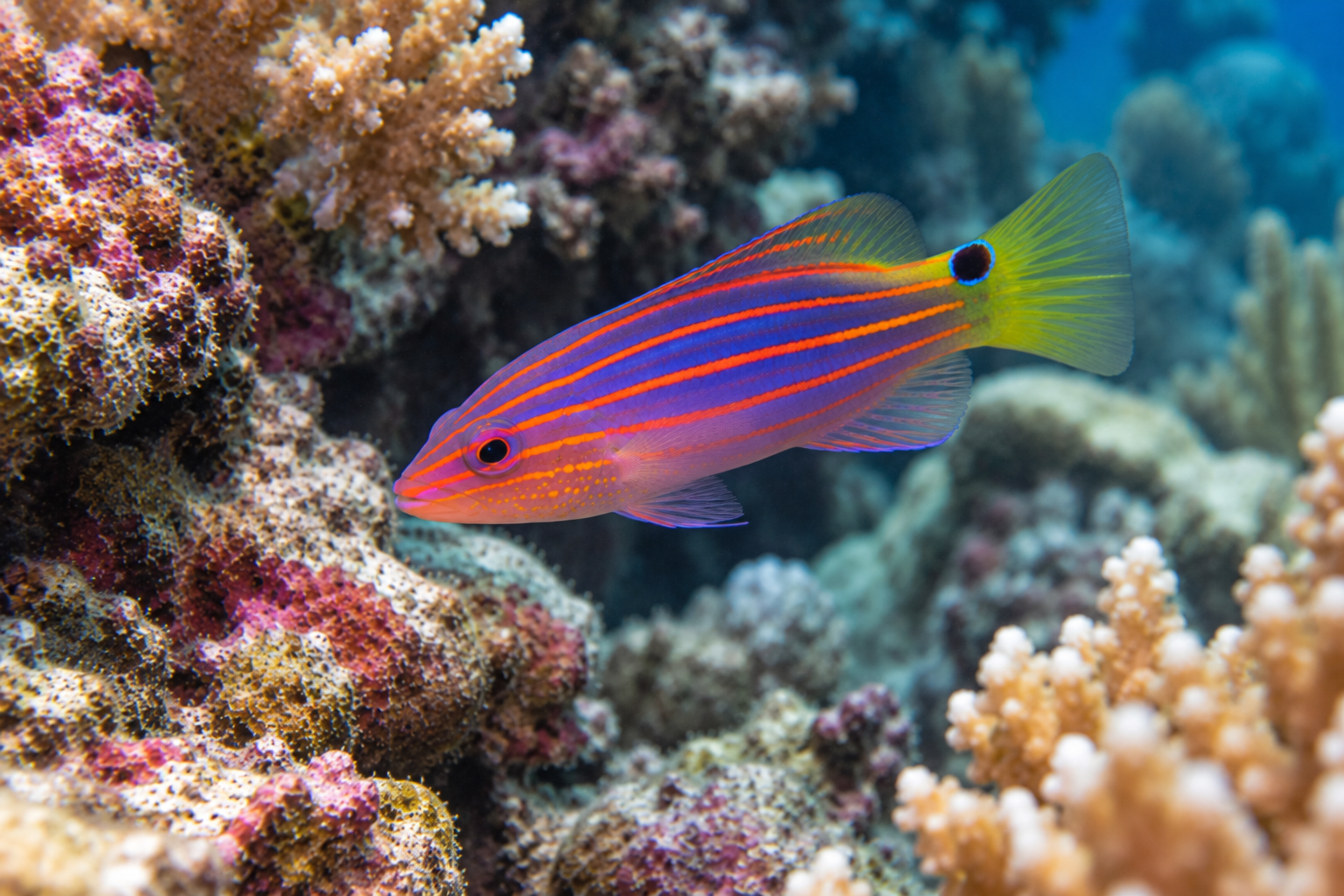
The Six Line Wrasse (Pseudocheilinus hexataenia) is a small but highly active saltwater fish known for the six bright blue horizontal lines running across its orange-red body. Its quick movement through live rock, vivid color, and habit of hunting small pests make it a popular choice for established reef aquariums. Native to the Indo-Pacific, this wrasse spends much of the day weaving through crevices and inspecting rockwork for tiny prey.
Although the Six Line Wrasse is hardy and compact, it is not always a simple community fish. As it matures, it can become territorial and may harass peaceful fish, especially other small wrasses, firefish, and similarly shaped species. It is usually best added after more peaceful tank mates have already settled into the aquarium. A mature tank with abundant rockwork, stable water quality, and a secure lid gives this species the best chance to thrive.
Six Line Wrasses are generally considered reef safe with caution. They do not normally nip at coral tissue, disturb clam mantles, or damage established coral colonies. Their active hunting behavior can be useful in a reef aquarium because they may eat flatworms, small bristleworms, pyramid snails, and other nuisance organisms hiding in live rock.
However, they are not completely safe with every invertebrate. A Six Line Wrasse may eat tiny ornamental shrimp, copepods, feather dusters, fan worms, small snails, or other small animals it can catch. It should be considered coral-safe, but not always cleanup-crew-safe. It is also important not to rely on one as a guaranteed solution for a pest outbreak, since feeding behavior varies by individual fish.
Six Line Wrasses are carnivores that naturally feed on tiny crustaceans, worms, copepods, and other small invertebrates. In captivity, they usually accept frozen mysis shrimp, enriched brine shrimp, copepods, finely chopped clam, shrimp, squid, and high-quality marine carnivore pellets. Feed small portions once or twice daily, while allowing the fish to continue exploring rockwork between meals. A varied diet helps maintain color, a healthy body condition, and strong activity levels. In a busy aquarium, make sure food reaches several areas of the tank because a Six Line Wrasse may be quick, but it can still lose feeding competition to larger fish.
Six Line Wrasses usually grow to around 3 inches long. Their small adult size makes them suitable for moderate-sized aquariums, but their constant movement and territorial nature mean they still need plenty of live rock and open swimming room.
A 30-gallon aquarium can work for one Six Line Wrasse, although a 40-gallon or larger tank is a better choice when keeping it with other fish. More space provides additional hiding areas and reduces the chance that the wrasse will dominate the entire aquarium.
Keeping multiple Six Line Wrasses together is not recommended for most home aquariums. They are territorial toward members of their own species and may fight persistently once one fish establishes control over the rockwork.
A pair or group would require an exceptionally large aquarium, extensive rockwork, and careful introduction, yet success remains unpredictable. For most aquarists, one Six Line Wrasse is the safest and most manageable option.
With stable water conditions, a varied diet, and compatible tank mates, Six Line Wrasses can often live around 5 to 8 years in captivity. Some may live longer in a mature aquarium with consistent feeding and low stress.
Their biggest risks are jumping, aggression from larger fish, and conflict with other wrasses. A secure lid and thoughtful stocking plan are essential for long-term success.
Six Line Wrasses are considered semi-aggressive. Juveniles are often peaceful when first introduced, but adults may become territorial and harass fish that occupy the same rockwork or compete for similar foods.
Their aggression is most likely directed toward other wrasses, firefish, dartfish, and smaller timid fish. Adding the Six Line Wrasse later in the stocking process and providing plenty of rockwork can help make its behavior more manageable.
Six Line Wrasses are usually among the more affordable wrasse species. Prices often range from $30 to $70, depending on the retailer, fish size, shipping costs, and local availability.
When choosing one, look for a fish that is alert, swimming actively, and picking through rockwork or showing interest in food. Avoid fish with a thin body, torn fins, cloudy eyes, labored breathing, or faded coloration. Because this wrasse is fast and easily startled, careful acclimation is important when introducing it to a new aquarium.
Six Line Wrasses do best with fish that are confident enough to coexist with an assertive small wrasse but not so aggressive that they constantly chase it. They usually settle in well with active community fish that use different areas of the aquarium.
Potential tank mates include:
Avoid keeping a Six Line Wrasse with firefish, timid dartfish, small peaceful wrasses, mandarins, or another Six Line Wrasse in a typical home aquarium. Other wrasses with similar body shapes and feeding habits may become targets, particularly after the Six Line establishes territory around the rockwork.
Six Line Wrasses are widely available through online marine livestock retailers and local saltwater aquarium stores. Before purchasing one, make sure your aquarium has a secure lid, established live rock, and tank mates that can handle a confident, active wrasse.
The Six Line Wrasse can be a colorful and useful addition to a mature reef aquarium, especially for aquarists who want an active fish that hunts through rockwork all day. With a secure lid, varied diet, and carefully chosen tank mates, this small wrasse can become one of the most engaging residents in a saltwater system.