Glossary:
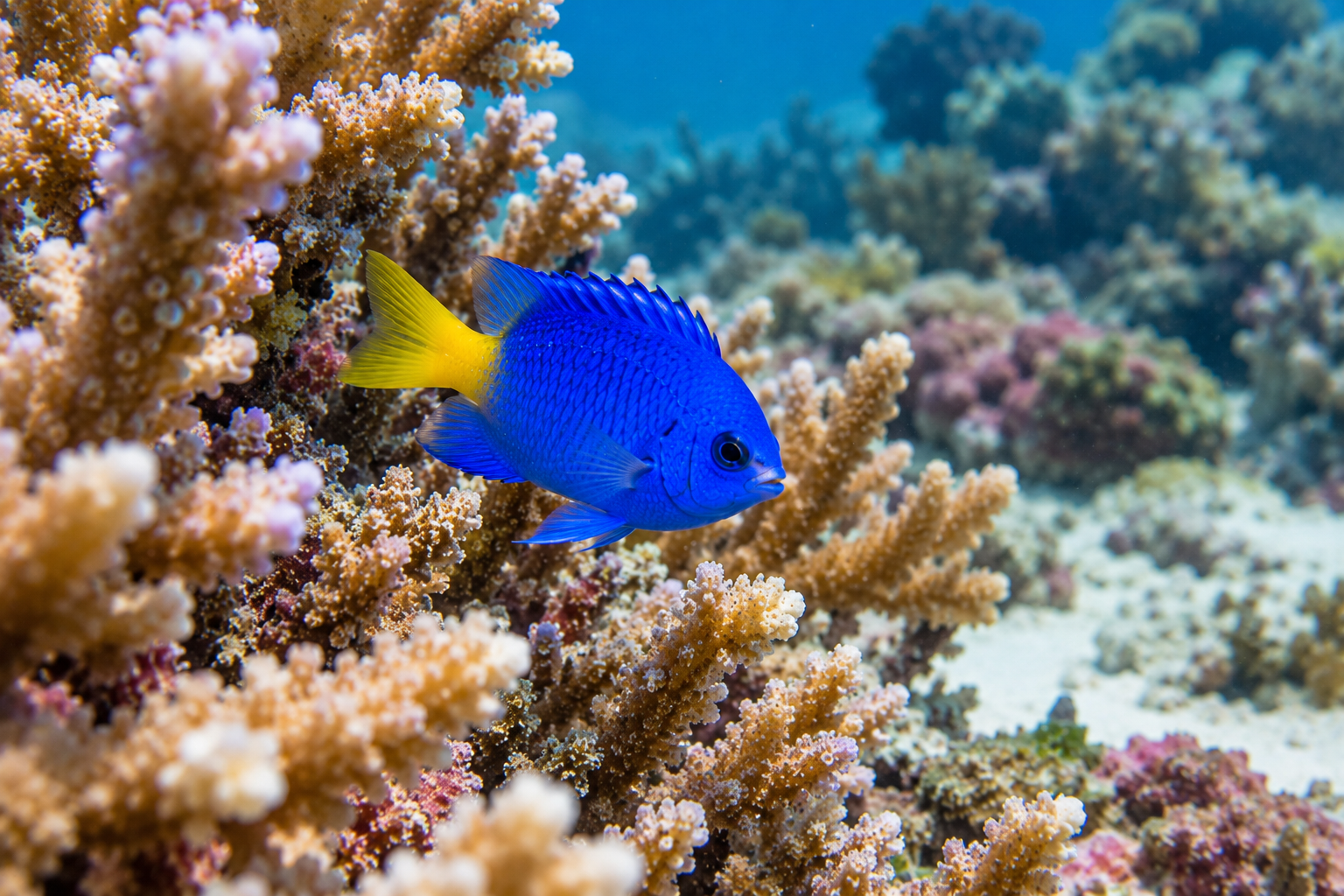
The Yellowtail Damselfish (Chrysiptera parasema) is a compact, eye-catching saltwater fish known for its electric blue body and bright yellow tail. Also called the Yellowtail Blue Damselfish, this species is a favorite among aquarists because it is affordable, durable, and well-suited to established reef aquariums. Its small size makes it appealing for tanks that cannot accommodate larger marine fish, while its vivid color gives even a simple aquascape an immediate pop of contrast.
Although Yellowtail Damselfish are often recommended for newer hobbyists, they still need thoughtful placement in a community aquarium. They can become protective of their rockwork, especially as they mature or when several damsels share limited space. A properly sized tank, plenty of hiding areas, and confident tank mates can make a major difference in controlling territorial behavior.
Yes, Yellowtail Damselfish are considered reef safe. They do not typically nip at corals, bother clam mantles, or hunt common ornamental shrimp and snails. Their natural habitat includes reef slopes and coral-rich areas of the Indo-Pacific, so they generally adapt well to aquariums set up with live rock and coral.
The main challenge is not reef compatibility but temperament. A Yellowtail Damselfish may claim a cave, ledge, or section of rockwork and chase fish that repeatedly enter its space. This is usually manageable in a tank with several separate hiding areas, but it can become more noticeable in smaller reef aquariums with limited territory.
Yellowtail Damselfish are omnivores that readily accept many common aquarium foods. A balanced diet can include frozen mysis shrimp, enriched brine shrimp, copepods, finely chopped shrimp or clam, and high-quality marine flakes or pellets. Foods that contain spirulina, algae, or marine vegetable matter are also helpful because these fish naturally consume a mix of tiny animal matter and plant-based material. Feed small amounts once or twice per day, offering only what the fish can finish within a few minutes. Since Yellowtail Damselfish can be quick and competitive eaters, adding food in multiple areas of the aquarium can help slower tank mates eat comfortably.
A Yellowtail Damselfish usually reaches about 2.5 to 3 inches long. Its small adult size allows it to fit comfortably in a variety of saltwater aquariums, but it still needs adequate space to establish a territory. A 30-gallon tank is a practical minimum for a single fish in a community setup, while larger aquariums offer more flexibility with tank mates.
The fish may be small, but its activity level and territorial instincts mean it should not be treated as a disposable addition to a tiny aquarium. Stable water conditions and enough rockwork are important for long-term success.
Yellowtail Damselfish can sometimes be kept in groups, but success depends heavily on aquarium size and aquascaping. In a larger tank with multiple caves, rock structures, and open escape routes, a small group may establish a workable social order.
For most home aquariums, it is safer to keep one Yellowtail Damselfish or introduce several juveniles at the same time. Adding a new damsel later can provoke aggressive behavior, as established fish may view it as an intruder. A tank of at least 55 gallons is recommended for keeping a small group.
With consistent care, Yellowtail Damselfish can often live around 8 to 12 years in captivity. Some may live longer in a well-maintained aquarium with stable water parameters, strong filtration, a varied diet, and limited aggression from tank mates.
Their lifespan can be shortened by poor water quality, overcrowding, frequent stress, or repeated territorial conflict. Choosing compatible fish and giving them enough space helps support a longer, healthier life.
Yellowtail Damselfish are semi-aggressive. They are generally more manageable than aggressive species such as Domino Damselfish, but they can still become territorial around rockwork, caves, and feeding areas. Their behavior is often most noticeable when they are kept in smaller tanks or with fish that occupy the same areas.
Their aggression can usually be controlled with thoughtful stocking. Give them plenty of places to retreat, avoid overloading the aquarium with similarly shaped damsels, and introduce less aggressive fish before adding the Yellowtail Damselfish whenever possible.
Yellowtail Damselfish are among the most budget-friendly fish in the saltwater aquarium hobby. Most specimens are commonly priced between $15 and $35, depending on the seller, fish size, shipping costs, and availability. Their low purchase price makes them an easy option for aquarists adding color to a new or established marine system.
Price should not be the only factor when choosing a fish. Select a Yellowtail Damselfish that is alert, swimming normally, eating readily, and free of torn fins, cloudy eyes, pale coloration, or visible spots. A healthy fish that is feeding well is usually a better long-term choice than the least expensive option available.
Yellowtail Damselfish can work well with other reef-safe fish that are not excessively timid or easily intimidated. They are usually less aggressive than some damsel species, but they still do best with tank mates that can maintain their own space without creating constant competition.
Potential tank mates include:
Avoid placing Yellowtail Damselfish with very delicate fish that may struggle during feeding or become stressed by chasing. Tiny firefish, shy dartfish, and extremely passive gobies may not be ideal in a crowded tank. They should also not be housed with large predatory fish, including lionfish, groupers, eels, or aggressive triggerfish.
Yellowtail Damselfish are widely available through online marine fish retailers and local saltwater aquarium shops. Look for a healthy fish that is active, feeding, and free of visible injuries or signs of disease before adding it to your aquarium.
The Yellowtail Damselfish is a colorful and practical choice for aquarists who want an affordable, reef-safe fish with plenty of energy. While its territorial side should not be overlooked, proper tank size, rockwork, and tank mate selection can help this striking blue-and-yellow fish become a long-term favorite in a saltwater aquarium.